



The Cult of Mediocrity
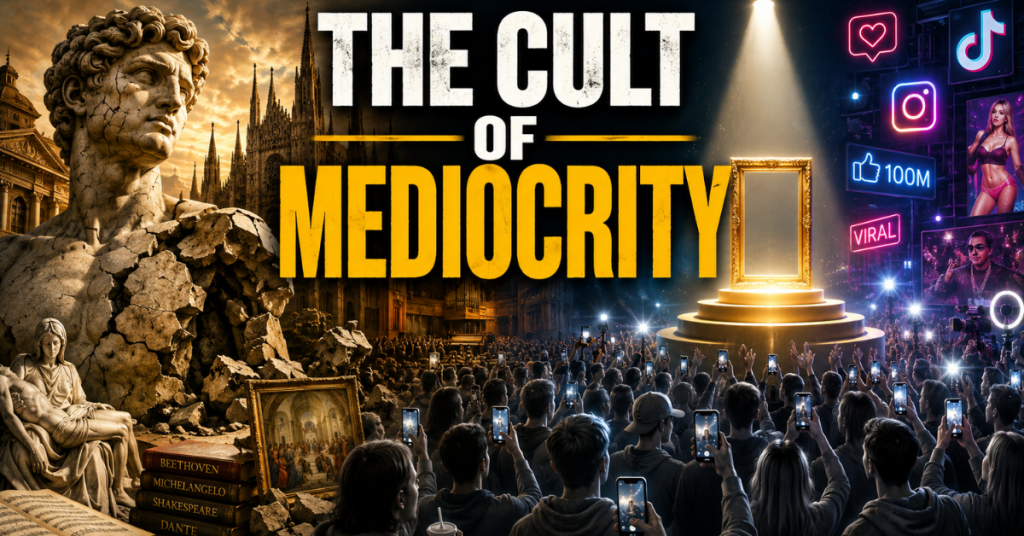
Art once served as a ladder rather than a mirror. The greatest civilizations understood this instinctively. They built cathedrals that caused ordinary people to look upward in awe, composed music that stirred the soul toward transcendence, painted heroes, saints, kings, warriors, mothers, martyrs, and visionaries not because human beings had already achieved greatness, but because greatness was something worth aspiring toward. Before a society learns to resent excellence, it first learns to stop recognizing it.
Art was not merely entertainment. It was civilizational instruction, meant to stir the soul away from the baser drives and create a stirring toward the divine.
Ayn Rand understood this principle perfectly in The Fountainhead, particularly through the character of Ellsworth Toohey. Toohey is one of the most unsettling villains in modern literature precisely because he does not seek power through strength, genius, or creation. Employing a strategy that has become commonplace today, he seeks power by lowering standards. He understands that if a civilization can be convinced to worship mediocrity, then greatness itself becomes suspicious and obsolete. Like the overachiever is mocked in elementary school, greatness becomes inverted and framed as arrogance and selfishness. Excellence becomes elitist. Beauty becomes oppressive. Talent becomes offensive. Because once the mediocre is exalted, anyone can pretend to be extraordinary.
Read the rest on Substack.
One of our country’s most important freedoms is that of free speech.
Agree with this essay? Disagree? Join the debate by writing to DailyClout HERE.