



Strait of Hormuz Reopens After Ceasefire
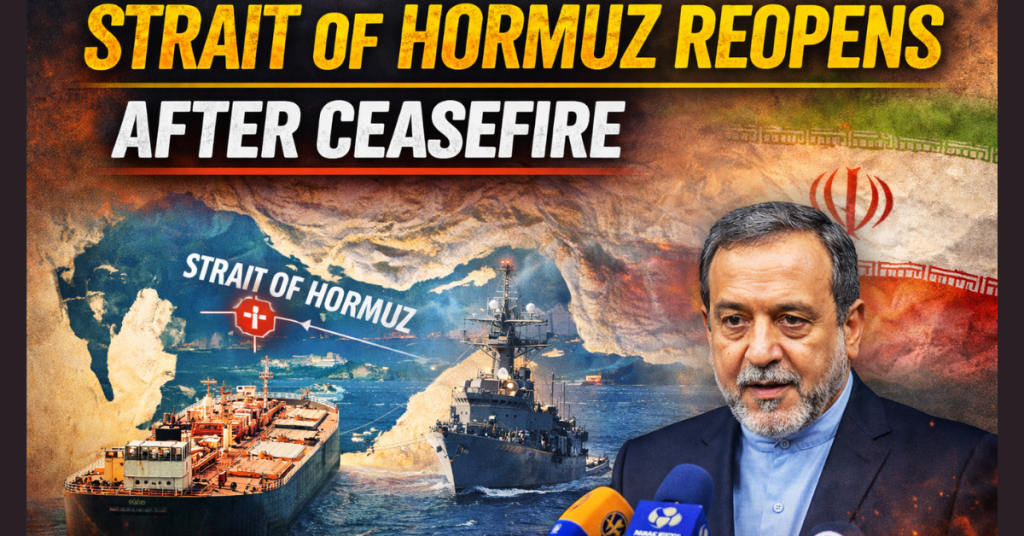
The Strait of Hormuz—one of the most critical chokepoints in the global energy system—has been declared “completely open” by Abbas Araghchi following a U.S.-mediated ceasefire that temporarily halted Israeli military operations in Lebanon.
The announcement, made via social media, signals a short-term de-escalation in a region that had been teetering on the edge of a broader conflict. For global markets and policymakers alike, the reopening is not just a logistical update—it’s a moment of fragile relief.
A Lifeline for Global Energy
Roughly 20% of the world’s oil supply flows through the Strait of Hormuz. Any disruption—real or threatened—has immediate consequences for:
- Oil prices
- Shipping insurance rates
- Global supply chains
- Military readiness in the region
Recent tensions had already pushed markets into a state of volatility. Even the possibility of restricted passage sent energy traders scrambling, with shipping firms rerouting vessels and insurers raising premiums.
The reopening, at least temporarily, restores a key artery of the global economy.
The Ceasefire Behind the Move
The decision to reopen the strait is tied directly to a ceasefire arrangement involving Israel’s operations against Hezbollah in Lebanon.
Backed by Iran, Hezbollah has long functioned as both a political force and a paramilitary group, complicating the balance of power within Lebanon and across the region.
According to diplomatic signals, Iran linked its willingness to keep Hormuz open—and potentially engage in broader negotiations—to a pause in Israeli military actions. That linkage underscores a key reality:
Energy routes are now bargaining chips in geopolitical negotiations.
Trump Responds
Donald Trump publicly welcomed the development, framing it as a positive outcome tied to U.S. diplomatic pressure.
His response reflects a broader strategic objective that has been building over recent years: stabilizing global energy flows while maintaining leverage over adversarial states like Iran.
The message was simple—keep the oil moving, avoid escalation, and maintain control over the economic battlefield.
A Temporary Calm—or Strategic Pause?
While the reopening is significant, analysts caution that it may be short-lived.
The language used by Iranian officials emphasizes that the strait will remain open “for the remaining period of ceasefire.” That qualifier matters.
If hostilities resume:
- Shipping could again be restricted
- Oil prices could spike sharply
- Military presence in the Gulf could increase
This creates a new kind of instability—not a full shutdown, but a conditional openness tied to ongoing negotiations.
The Bigger Strategic Picture
What’s unfolding is more than a regional conflict. It’s a test of how energy, diplomacy, and military strategy intersect in a multipolar world.
Three key dynamics are now in play:
1. Energy as Leverage
Iran has demonstrated its ability to influence global markets without firing a shot—simply by signaling control over a critical chokepoint.
2. Proxy Conflicts
Groups like Hezbollah allow state actors to project power indirectly, raising tensions without triggering full-scale war.
3. Conditional Stability
The reopening of Hormuz is not a resolution—it’s a pause, contingent on compliance from multiple actors with competing interests.
What Comes Next
For now, tankers are moving again, and markets have a moment to breathe.
But beneath the surface, nothing fundamental has changed.
The Strait of Hormuz remains a pressure point. The ceasefire remains fragile. And the broader conflict—spanning Iran, Israel, and U.S. interests—remains unresolved.
In today’s geopolitical landscape, even “open” waters can close overnight.
Subscribe to DailyClout so you never miss an update!