



Marshall Wants an “Annoyance Ordinance” — Critics Say City Hall Is Building a Speech Police State
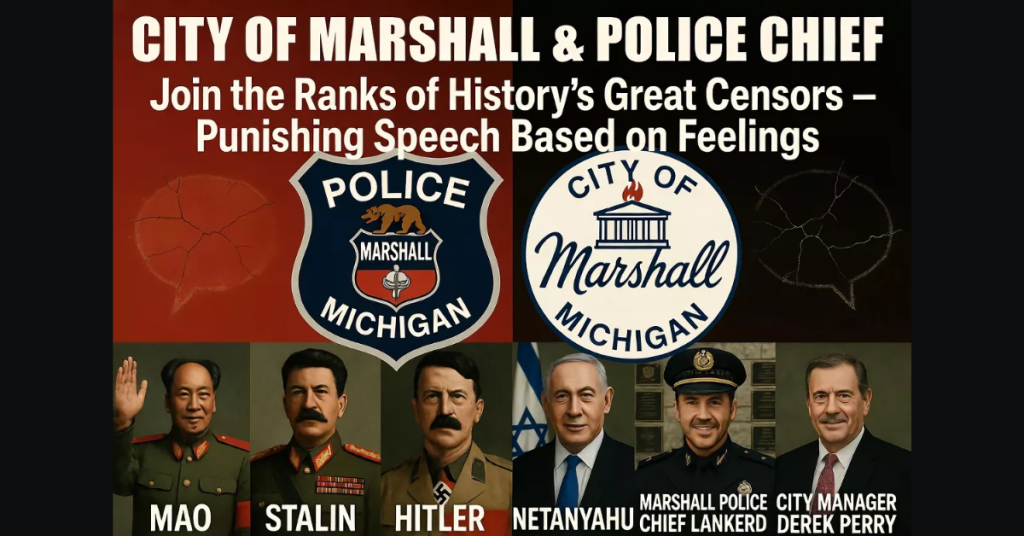
MARSHALL, MI — At the April 20, 2026 Marshall City Council meeting, officials are scheduled to hold a Public Hearing on proposed revisions to Section 132.02, the city’s harassing communications ordinance. According to city materials, the update was recommended after discussions involving the City Manager, Chief of Police, and other city officials who determined the ordinance should be modernized to address phones, cellphones, computers, and electronic communications.
What may be presented as a routine ordinance update is shaping up to be something much larger: a potential clash involving free speech, separation of powers, selective enforcement, and public trust.
The Ordinance Goes Beyond Threats
Some parts of the proposal are straightforward. Threatening physical harm, making false emergency reports, and intentionally disrupting communication systems are already recognized forms of unlawful conduct. But the revised language reportedly goes further by criminalizing communications made with intent to “alarm,” “annoy,” or “disturb the peace and quiet” of another person if that person actually feels frightened, intimidated, annoyed, harassed, or offended.
That creates immediate problems.
Who decides what is “annoying”?
Who determines what speech is “offensive”?
When criminal enforcement depends on subjective emotional reactions, citizens are left guessing where the legal line is.
Separation of Powers Concerns
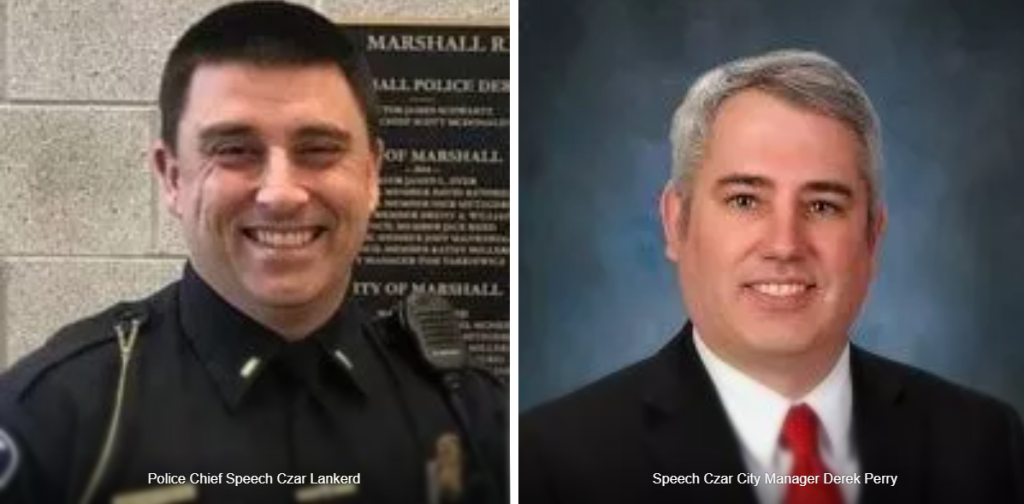
Another issue is who helped shape the ordinance?
Police are supposed to enforce laws, not write vague new speech restrictions they may later use against the public. When law enforcement helps craft criminal speech rules, the line between legislator and enforcer starts to blur. Not only that but the minute a police officer starts interfering with speech, they are a criminal by violating that persons First Amendment rights and speech entitlement.
Likewise, a City Manager is generally expected to administer policy and execute the decisions of elected officials—not exert undue influence over legislative direction or drive constitutional policy changes from behind the scenes.
Residents should reasonably ask:
Who drafted this language?
Who requested these changes?
Why was anyone steering speech policy?
Who benefits from these new powers?
Megasite Context and Public Distrust
These concerns do not exist in a vacuum. Marshall-area residents who protested or questioned the Marshall Megasite project have already faced paid political targeting, intimidation & harassment by Michigan Citizens for Jobs and Opportunity, a fictional entity created by the Clark-Hill law firm who had just been hired by the City of Marshall. So its okay for the city governments law firm to use its funds to target citizens who have been in vocal oppostion to the Marshall Megasite. Now the same governmental structure wants expanded authority over communications deemed annoying or alarming.
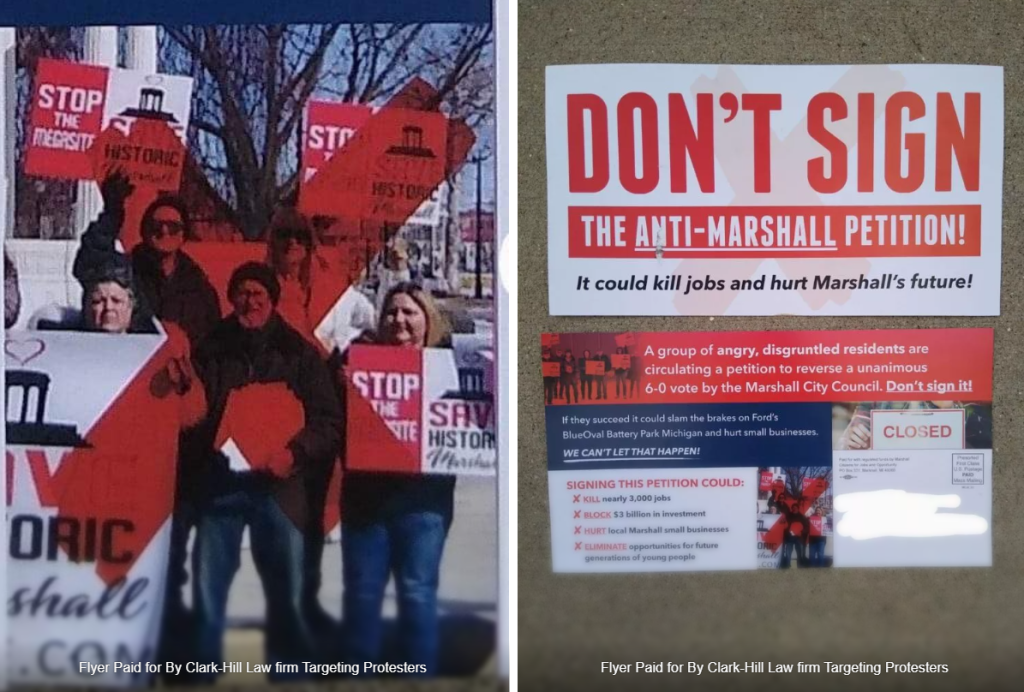
If critics of the Marshall Megasite have already been subject to targeting, then giving officials more discretion over speech enforcement looks less like public safety and more like retaliation infrastructure, under the appearance if legitimacy.
Does It Apply Both Ways?
If emotional discomfort becomes the standard, citizens may ask whether the ordinance applies equally to government conduct.
Could residents claim harassment when they receive:
Code enforcement letters?
Politically motivated scrutiny?
Repeated city demands?
Dismissive or threatening official communications?
Traffic citations?
Tax bills viewed as financial harassment?
If annoyance is the test, the government may not enjoy the same broad standards it seeks to impose.
What Courts Have Said
American courts have repeatedly recognized that offensive or unpleasant speech remains protected.
“It is well settled that the loss of First Amendment freedoms for even minimal periods of time constitutes irreparable injury…”
Elrod v. Burns, 427 U.S. 347, 373 (1976)
“Debate should be uninhibited, robust, and wide open, and may well include vehement, caustic, and sometimes unpleasantly sharp attacks.”
Linn v. United Plant Guard Workers of America, Local 114, 383 U.S. 53 (1966)
“The First Amendment’s freedoms of speech, press, religion, assembly, association, and petition for redress of grievances are made immune from state invasion…”
Gideon v. Wainwright, 372 U.S. 335 (1963)
The Legal Risks: Vagueness and Overbreadth
Cities can lawfully punish:
True threats
Stalking
Fraudulent reports
Coercion
Harassment campaigns tied to conduct
When laws begin punishing speech because someone feels annoyed, alarmed, or offended, they risk being struck down as unconstitional for being too broad, overly vauge and unconstitutional.
Marshall officials may claim this ordinance is about modernization and safety, But when police help shape speech laws, administrators influence legislation, critics of the Megasite already have been targeted, and protected speech risks being criminalized based on feelings, residents have every reason to demand answers.
Because in America, the government does not get to outlaw speech simply because it is irritating.
That is not public safety.
That is censorship wearing a municipal badge.
One of our country’s most important freedoms is that of free speech.
Agree with this essay? Disagree? Join the debate by writing to DailyClout HERE.