



Chinese researcher at Indiana University pleads guilty to smuggling biological materials
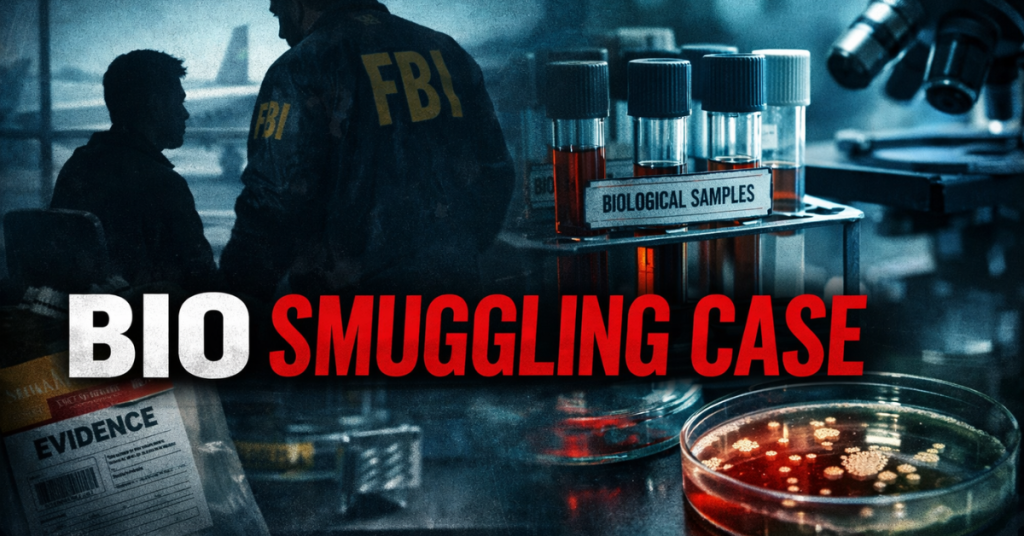
A Chinese national conducting research at Indiana University Bloomington has been sentenced to federal prison after admitting to illegally smuggling biological materials into the United States—an incident now fueling broader concerns about research security, foreign influence, and vulnerabilities inside federally funded programs.
A Quiet Operation Turns Criminal
Youhuang Xiang, 33, a postdoctoral researcher who entered the U.S. on a J-1 visa in 2023, pleaded guilty to charges tied to the unlawful importation of biological substances. According to the U.S. Department of Justice, Xiang was sentenced to more than four months in prison, fined, and will face supervised release following his incarceration.
The case began when investigators flagged suspicious packages shipped from China to Xiang’s address. The shipments were deceptively labeled as containing ordinary items—specifically women’s underwear—but authorities later determined they contained genetic material derived from E. coli bacteria.
The investigation, led by the Federal Bureau of Investigation, intensified after Xiang was questioned at O’Hare International Airport upon returning from a trip abroad. Under questioning, he admitted the true nature of the materials.
Federal Grants and Biosecurity Risks
Prosecutors stated that Xiang used resources tied to a federally funded grant from the United States Department of Agriculture to facilitate the activity—raising red flags about how taxpayer-funded research programs may be exploited.
U.S. Attorney Tom Wheeler warned that the case goes far beyond a simple customs violation.
“This conduct poses a very serious threat to public safety and to the health of our agricultural economy,” Wheeler said, underscoring the potential implications of unauthorized biological imports.
While E. coli is commonly used in legitimate research settings, its movement across borders without proper declaration or oversight can carry serious risks, particularly when tied to genetic research involving pathogens or crop systems.
What Was the Research About?
Though officials have not publicly detailed the exact purpose of Xiang’s work, archived university records suggest his research focused on host-pathogen interactions and engineering crop resistance—fields that sit at the intersection of agriculture, biotechnology, and biosecurity.
That overlap is precisely what has drawn heightened scrutiny in recent years, as governments grow increasingly concerned about dual-use research—scientific work that can be applied for both beneficial and potentially harmful purposes.
A Broader Pattern?
This case is not unfolding in a vacuum. In recent years, U.S. authorities have pursued multiple investigations involving undeclared biological materials, undisclosed foreign ties, and alleged misuse of research positions.
While each case is unique, they collectively point to a growing tension between open scientific collaboration and national security concerns.
Universities—long viewed as hubs of international cooperation—are now facing increasing pressure to monitor foreign partnerships, research funding sources, and the movement of sensitive materials more closely.
The Bigger Picture
The Xiang case highlights a difficult balancing act: maintaining the openness that drives scientific advancement while protecting against misuse of that openness.
For policymakers, the question is no longer theoretical. It is immediate and practical:
How do you safeguard critical research ecosystems without shutting the door on global collaboration?
And perhaps more urgently—how many similar incidents go unnoticed?