



Federal Indictment Targets Fauci Advisor in Explosive COVID Cover-Up Case
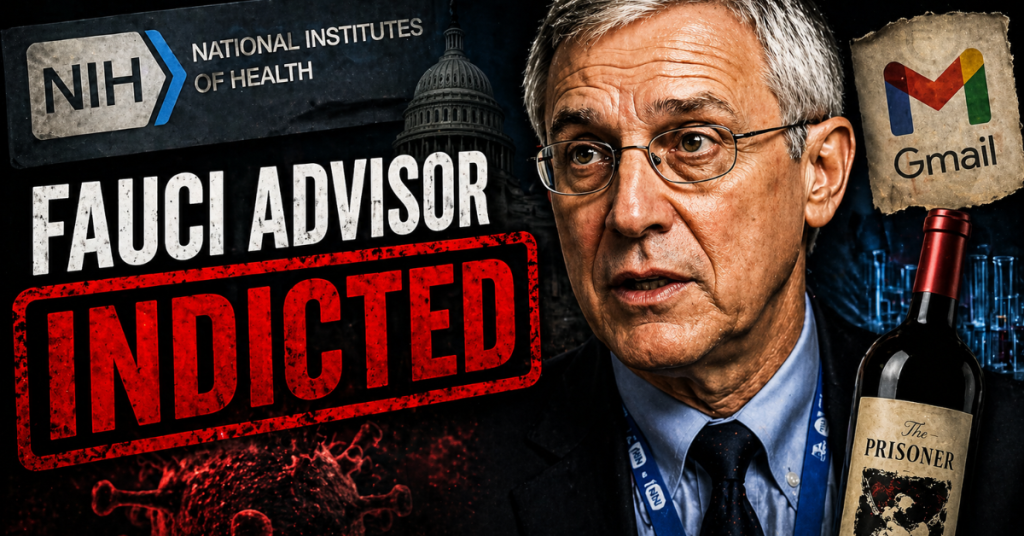
A longtime senior advisor to Dr. Anthony Fauci is now facing federal charges in a case that could reshape public understanding of how COVID-19’s origins were handled behind the scenes.
David Morens, who served as a key advisor at the National Institute of Allergy and Infectious Diseases (NIAID) for over a decade, has been indicted on charges related to conspiracy, obstruction, and alleged efforts to conceal communications about the origins of COVID-19.
The indictment, unsealed after his arrest, paints a picture not just of bureaucratic misconduct—but of a coordinated effort to control the narrative surrounding one of the most consequential global events in modern history.
Allegations of Concealment and FOIA Evasion
According to the charges, Morens and associates deliberately worked to avoid transparency laws, including the Freedom of Information Act, by using personal email accounts and informal communication channels.
Internal communications allegedly show Morens openly discussing strategies to evade oversight, even suggesting that sensitive documents be physically delivered rather than transmitted electronically to avoid detection.
This raises broader questions about whether critical public health discussions were intentionally shielded from scrutiny during a time when transparency was essential.
The Lab Leak Debate and Narrative Control
At the center of the case is the long-running debate over COVID-19’s origin—specifically whether the virus emerged naturally or from a lab-related incident.
Morens is accused of collaborating with individuals connected to EcoHealth Alliance, an organization previously involved in funding research tied to the Wuhan Institute of Virology.
Prosecutors allege that Morens used his position to promote the natural-origin theory while working behind the scenes to discredit the lab-leak hypothesis.
In one striking detail from the indictment, Morens allegedly offered to write a scientific commentary supporting natural spillover—without disclosing relevant conflicts—after receiving gifts from collaborators.
Quid Pro Quo and Questionable Incentives
The indictment includes allegations of a quid pro quo arrangement, where Morens received gifts—including high-end wine—in exchange for professional support and influence.
While such exchanges may seem minor on the surface, prosecutors argue they demonstrate a deeper ethical breach: the use of scientific authority to shape public understanding in exchange for personal benefit.
The case raises a critical issue—whether public health messaging during the pandemic was influenced by relationships and incentives that were never disclosed to the public.
Connections to Federal Funding and Gain-of-Function Research
The controversy also touches on funding streams tied to controversial “gain-of-function” research—experiments that enhance the transmissibility or virulence of pathogens.
NIAID funding routed through EcoHealth Alliance had previously supported work involving bat coronaviruses, some of which was conducted in collaboration with the Wuhan Institute.
Although that funding was terminated early in the pandemic, the timing and surrounding communications remain under scrutiny.
Political Fallout and Expanding Investigations
The indictment is already fueling renewed political attention in Washington.
Lawmakers have pointed to the case as evidence of broader systemic failures, with some calling for deeper investigations into agencies like the NIH and FDA.
Separately, concerns have been raised about how vaccine safety data was handled, with allegations that certain analytical systems may have obscured adverse event signals.
While those claims remain contested, they contribute to a growing perception among critics that key information may have been withheld during the pandemic.
A Turning Point for Accountability?
Morens’ case may ultimately serve as a test of whether accountability will extend beyond individual actors to the institutions themselves.
For years, debates over COVID-19’s origins have been marked by polarization, censorship concerns, and shifting narratives.
Now, with criminal charges on the table, the issue is moving out of the realm of speculation and into the legal system.
Whether this leads to broader revelations—or remains an isolated prosecution—could shape public trust in science, government, and media for years to come.