



California Funded CAIR Amid Hamas Controversy
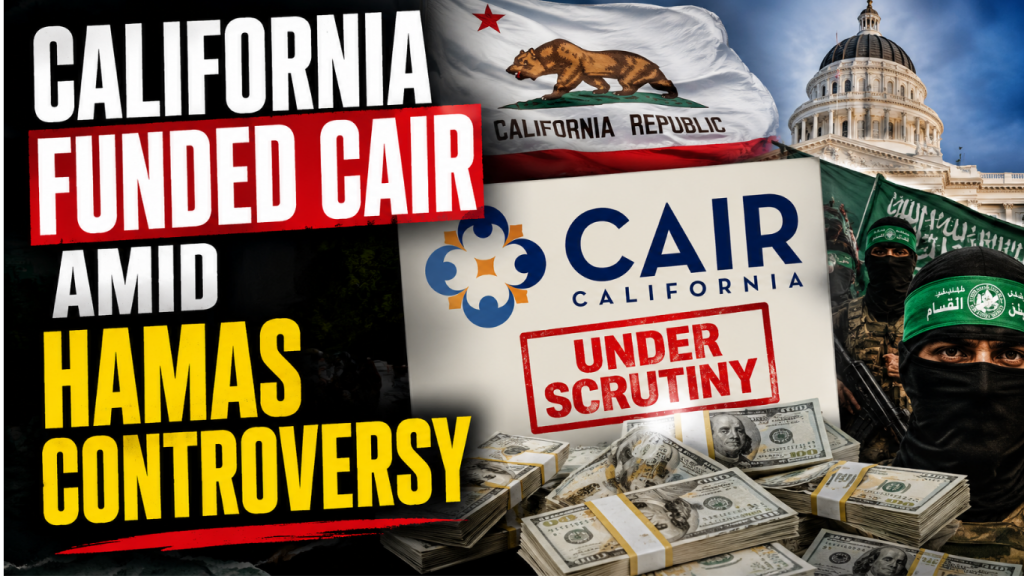
A California affiliate of the Council on American-Islamic Relations, better known as CAIR, is facing renewed scrutiny after reports revealed the organization received tens of millions in taxpayer-funded grants while federal investigators reportedly examine allegations involving financial misconduct and alleged extremist connections.
The controversy centers on CAIR-CA, the largest statewide branch of the national organization, which reportedly received at least $41 million in funding through California’s Department of Social Services over the last five years. According to the report, much of that money originated from federal programs designed to provide immigration-related legal assistance.
The allegations have reignited long-running debates surrounding CAIR’s historical ties to figures connected to the Muslim Brotherhood and Hamas. Critics point to evidence introduced during the 2007 Holy Land Foundation terrorism financing trial, where federal prosecutors argued that CAIR had associations with Hamas-linked networks operating in the United States. While CAIR itself was never criminally charged in the case, court records reportedly stated there was “ample evidence” connecting the organization to Hamas-related entities.
CAIR has consistently denied the allegations, maintaining that it is a civil rights organization dedicated to protecting Muslim Americans from discrimination and defending constitutional freedoms. In statements responding to the recent accusations, CAIR-CA representatives described the claims as part of a politically motivated “defamation campaign” and insisted all grants and public funds were lawfully administered and properly audited.
Still, critics argue the issue goes beyond rhetoric and enters the realm of national security and public accountability.
According to the report, CAIR’s co-founders, Omar Ahmad and Nihad Awad, were connected to the U.S.-Muslim Brotherhood’s Palestine Committee during the early 1990s. Researchers from George Washington University Program on Extremism have previously described that committee as part of a broader Hamas-support infrastructure operating inside the United States during that era.
The organization has also drawn criticism over public statements made by some of its California leadership following the October 7, 2023 Hamas terror attacks against Israel. The report cites social media posts from CAIR San Francisco Executive Director Zahra Billoo describing the attacks as “decolonization,” while CAIR-CA CEO Hussam Ayloush reportedly compared Israel to Nazi Germany and stated that “Israel should be attacked.”
Questions have also emerged about how grant money was distributed.
Documents cited in the investigation allege that CAIR-CA distributed millions in subgrants to dozens of outside organizations, including groups with alleged Islamist or Muslim Brotherhood-linked backgrounds. Among those named were chapters of the Muslim American Society, the Islamic Circle of North America, and the Islamic Society of Orange County.
Critics argue the arrangement raises major oversight concerns, particularly because California officials reportedly continued approving grant funding even after questions about CAIR-CA’s affiliations became public.
The debate has become increasingly political as Republican governors in states such as Texas and Florida have moved to distance state governments from CAIR. The report claims both governors designated the organization as linked to extremist activity, although such declarations do not amount to formal federal terrorist designations.
Meanwhile, advocacy organizations are pushing for a deeper federal investigation. The California-based nonprofit Intelligent Advocacy Network reportedly requested a Department of Justice forensic audit into CAIR-CA’s finances in 2025. According to the report, the DOJ later confirmed an investigation was underway.
The allegations arrive amid broader national disputes over immigration funding, nonprofit oversight, and the use of taxpayer dollars for politically connected organizations.
Supporters of CAIR argue the organization provides essential legal services and advocacy for Muslim communities facing discrimination, particularly in the wake of rising anti-Muslim sentiment after global conflicts and domestic political tensions. Opponents counter that any organization with alleged extremist ties should face heightened scrutiny before receiving federal or state funding.
As the investigation unfolds, the outcome could have major implications not only for CAIR-CA, but also for how governments vet nonprofit organizations receiving millions in public grants tied to immigration and social services programs.