



Federal grand jury charges Southern Poverty Law Center with fraud over hate ratings
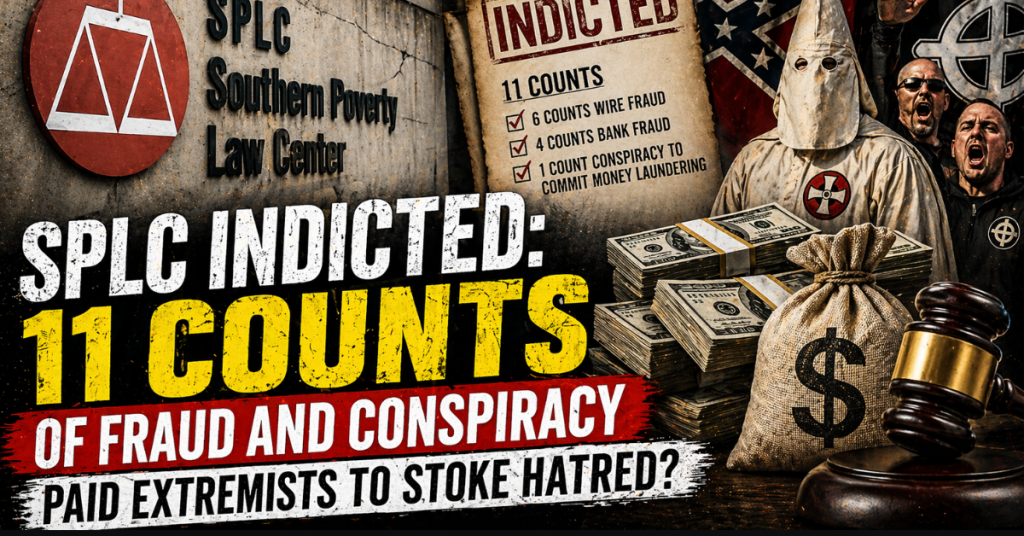
A federal grand jury indictment against the Southern Poverty Law Center (SPLC) has ignited a significant national conversation about the role of nonprofit watchdog groups, the use of informants, and the ethical boundaries of combating extremism.
According to statements from federal officials, the SPLC faces 11 counts, including wire fraud, bank fraud, and conspiracy to commit money laundering. Prosecutors allege that the organization, widely known for tracking extremist groups in the United States, paid individuals connected to those same groups—raising questions about whether those payments crossed from intelligence-gathering into active facilitation.
Allegations at the Center of the Case
At the heart of the indictment is the claim that the SPLC distributed at least $3 million to individuals affiliated with organizations such as the Ku Klux Klan, Aryan Nations, and other white supremacist groups. Federal authorities argue these payments were not merely for information, but may have contributed to the very extremism the organization publicly opposes.
Officials described the alleged conduct as a reversal of mission—suggesting that instead of dismantling hate groups, the organization may have played a role in sustaining or amplifying them through financial incentives.
The charges themselves are serious. Wire fraud and bank fraud typically involve deceptive financial practices, while conspiracy to commit money laundering suggests efforts to obscure the origin or purpose of funds. Together, these allegations frame the case as not just a question of tactics, but of legality and intent.
The SPLC’s Longstanding Approach
The SPLC has long acknowledged the use of informants as part of its investigative strategy. This approach is not unique. Law enforcement agencies, journalists, and research organizations have historically relied on embedded sources to gain insight into closed or dangerous networks.
During the Civil Rights era, similar methods were used to monitor violent groups targeting activists. According to past reporting from outlets like the Associated Press, the SPLC has defended its use of informants as a necessary tool to understand and expose extremist activity, often sharing findings with law enforcement.
Supporters of this model argue that infiltration is one of the few effective ways to gather credible intelligence from insular groups. Critics, however, have long questioned where the line should be drawn—particularly when financial compensation is involved.
Response From SPLC Leadership
SPLC leadership has pushed back on the allegations, emphasizing that the organization has not yet reviewed all the details of the indictment. CEO Bryan Fair stated that the group intends to “vigorously defend” itself, framing the investigation as part of a broader political and legal challenge.
He also pointed to the organization’s historical precedent, noting that informant use dates back decades and was considered essential during periods of heightened domestic violence and civil unrest.
Broader Implications
This case raises several complex issues that extend beyond a single organization:
- Use of Informants: At what point does paying for information risk incentivizing or sustaining harmful behavior?
- Nonprofit Accountability: How should watchdog groups be regulated when their operations involve covert or sensitive activities?
- Public Trust: Organizations that position themselves as moral or investigative authorities rely heavily on credibility. Allegations like these can reshape public perception, regardless of legal outcomes.
- Political Context: The SPLC has frequently been a target of criticism from political figures, particularly those aligned with former President Donald Trump. That context adds another layer to how the case is interpreted in the public sphere.
What Comes Next
As the case moves forward, the legal process will determine whether the SPLC’s actions violated federal law or fall within the bounds of investigative practice. Indictments are not convictions, and the burden now shifts to the courts to examine evidence, intent, and precedent.
In the meantime, the situation highlights a broader tension in modern America: the challenge of confronting extremism without becoming entangled in the very dynamics such efforts seek to expose.
However the case resolves, it is likely to shape future discussions around nonprofit oversight, investigative methods, and the balance between transparency and effectiveness in combating organized hate.