



China Trade Routes Tied to Iran Weapons Scheme Uncovered
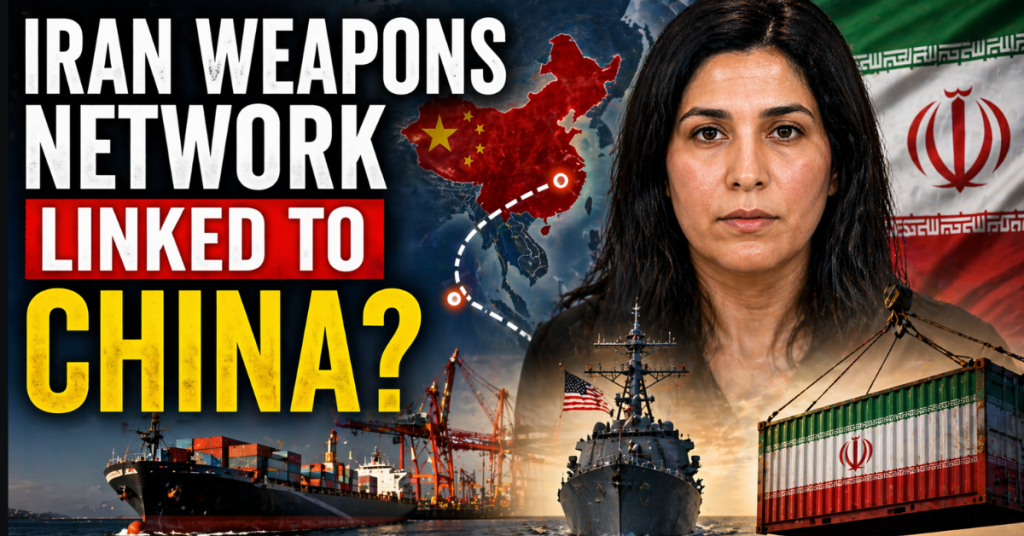
A recent arrest at a California airport and a dramatic U.S. naval seizure in the Middle East are beginning to paint a broader picture—one that suggests a complex, multinational network tied to Iran’s efforts to move weapons, materials, and influence across borders.
Federal authorities last week arrested Shamim Mafi at Los Angeles International Airport, accusing her of brokering massive weapons deals involving drones, explosives, and ammunition destined for Sudan. But that case may represent just one visible node in a much larger system now coming under scrutiny.
A $70 Million Deal—and a Global Trail
According to U.S. prosecutors, Mafi allegedly coordinated arms transactions worth more than $70 million, including Iranian-made drones and millions of rounds of ammunition. Investigators say the operation relied on a network spanning Iran, Turkey, Oman, and the United Arab Emirates—designed to bypass U.S. sanctions under the International Emergency Economic Powers Act.
Authorities also allege she maintained contact with individuals linked to the Islamic Revolutionary Guard Corps and Iran’s intelligence services, raising concerns that the activity may have extended beyond simple financial transactions into state-aligned operations.
But while that case unfolds in U.S. courts, developments at sea suggest the supply chain itself may be far more expansive.
Seized Cargo Ship Raises New Questions
In a separate but potentially related development, U.S. forces recently intercepted an Iranian-flagged cargo vessel in the Gulf of Oman after it allegedly attempted to run a naval blockade.
The ship, identified as the Touska, had traveled through multiple international ports—including stops in China and Southeast Asia—before being seized near the Strait of Hormuz.
Maritime analysts say the vessel was likely carrying “dual-use” materials—goods that can serve both civilian and military purposes—though the exact contents have not been publicly confirmed.
Its route, however, has drawn attention.
Shipping data shows the vessel moved through Chinese ports and Malaysian waters—areas known for ship-to-ship transfers that can obscure the origin and destination of cargo. Analysts say such routes are frequently used to evade sanctions and monitoring systems.
A System Built to Evade Pressure
Taken together, the LAX arrest and the maritime interception point to a pattern: decentralized networks moving goods, money, and materials through multiple jurisdictions to avoid detection.
Experts note several recurring tactics:
- Layered logistics using third-party companies in neutral countries
- Financial routing through multiple international banking systems
- Dual-use cargo that blurs the line between civilian and military applications
- Frequent travel corridors linking Iran to hubs like Turkey, Oman, and Southeast Asia
The Touska’s attempt to bypass a U.S. naval blockade—despite repeated warnings—has further fueled speculation that its cargo was considered strategically important.
Rising Tensions and Global Implications
The interception comes amid heightened tensions in the region, as U.S. forces enforce maritime restrictions aimed at pressuring Iran economically while avoiding direct conflict.
At the same time, China has expressed concern over the seizure, highlighting the geopolitical sensitivities surrounding trade routes that link Asia to the Middle East.
The situation underscores a broader reality: enforcement of sanctions is no longer confined to paperwork and financial systems. It now extends across oceans, airports, and complex global logistics chains.
The Bigger Picture
While the case against Mafi will be decided in court, and the contents of the seized vessel remain under investigation, both incidents point to a larger strategic contest unfolding behind the scenes.
It is a contest not just over weapons, but over supply lines—over who controls them, who can bypass them, and how far nations are willing to go to enforce or evade them.
And as these two cases show, that contest is no longer hidden in intelligence briefings. It is playing out in public—at airport gates, on shipping lanes, and in courtrooms across the world.