



Anaphylaxis – MicroReport 10
Main Findings
-
Adverse Events were reported to Pfizer during a 90-day period, following the December 1, 2020, public rollout of its COVID-19 experimental “vaccine” product.
-
In the Pfizer 5.3.6 document, these AEs were categorized by System Organ Classes (SOC), in other words, by systems in the body.
-
Of those with gender specified, 876 (89%) were female, 106 (11%) were male.
-
The reported age range was 16 to 98 years old with half being less than 43.5 years old.
Anaphylaxis and Its Symptoms
Anaphylaxis is a condition most often referred to as a “severe allergic reaction” and is triggered by latex, foods such as peanuts, bee stings, or medications (injected or taken by mouth), among other things. Immunoglobulin E (IgE, a human antibody) is involved in this dangerous and explosive reaction. It causes mast cells to immediately release histamine and other chemicals.
The life-threatening symptoms that follow can include swelling such as hives, respiratory difficulties, drop in blood pressure and rapid heart rate, and abdominal symptoms such as pain, nausea and vomiting. These symptoms are typically rapid in both onset and progression. Treatment similarly has to be rapid (e.g., Epi-Pen) and often requires emergency room or hospital treatment.
Reported Anaphylaxis Cases
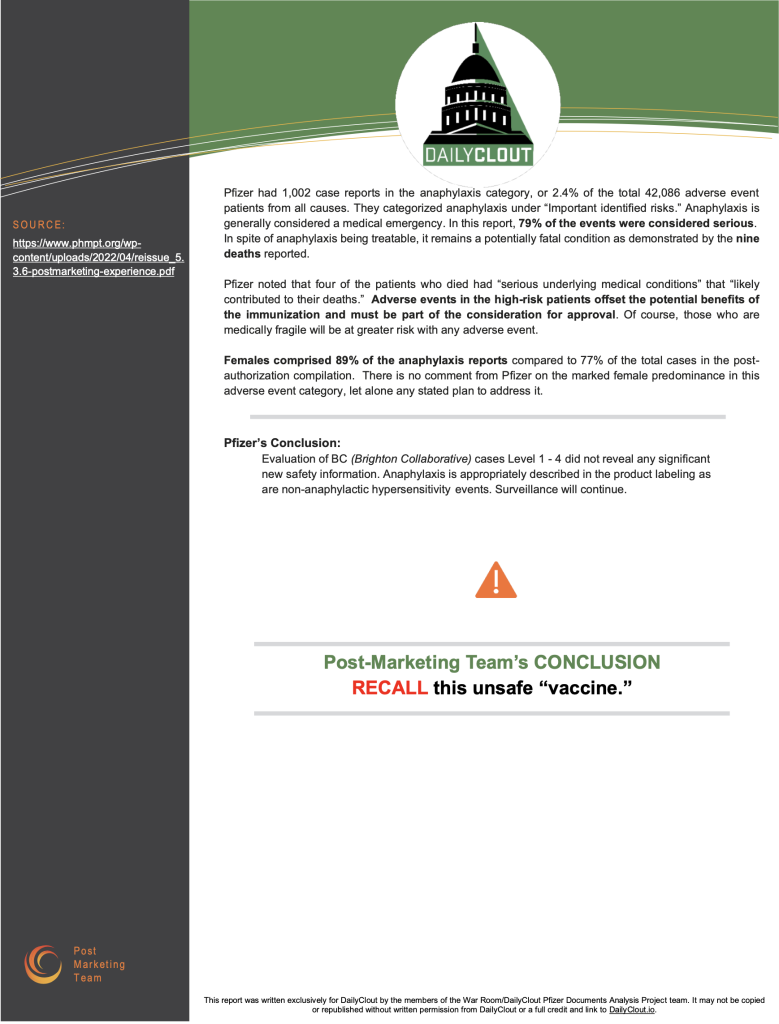
Pfizer has used a tool, the Brighton Collaboration (BC), to assess whether the symptoms of a patient are correctly identified as anaphylaxis. In the three-month data collection, there were 1,833 potential anaphylaxis patients reported; but, after screening, 831 did not meet criteria, leaving 1,002 cases reported in this time period. Pfizer reported 2,958 “potentially relevant events” from those 1,002 individuals that included the signs and symptoms of anaphylaxis.
Pfizer reported only the most frequent anaphylaxis signs and symptoms: anaphylactic reaction (435), shortness of breath (356), rash (190), redness of the skin (159), hives (133), cough (115), respiratory distress (97), throat tightness (97), swollen tongue (93), low blood pressure (72), low blood pressure severe enough to threaten organ function (shock) (80), chest discomfort (71), swelling face (70), throat swelling (68), and lip swelling (64).
The events were rated as serious in 2,341 (79%) and non-serious in 617 (21%). 1,922 events were reported as resolved or resolving (65%), 229 not resolved (8%), 48 resolved with sequelae (1.6%), and 754 had no outcome known (25%).
There were nine deaths reported.
Important Note
There are 831 patients, 45% of the total 1,833, who were determined not to be anaphylaxis and dropped from this category. Where did those patients and their adverse events go?
Post-Marketing Team’s Assessment
Pfizer had 1,002 case reports in the anaphylaxis category, or 2.4% of the total 42,086 adverse event patients from all causes. They categorized anaphylaxis under “Important Identified risks.” Anaphylaxis is generally considered a medical emergency. In this report, 79% of the events were considered serious. In spite of anaphylaxis being treatable, it remains a potentially fatal condition as demonstrated by the nine deaths reported.
Pfizer noted that four of the patients who died had “serious underlying medical conditions” that “likely contributed to their deaths.” Adverse events in the high-risk patients offset the potential benefits of the immunization and must be part of the consideration for approval. Of course, those who are medically fragile will be at greater risk with any adverse event.
Females comprised 89% of the anaphylaxis reports compared to 77% of the total cases in the post-authorization compilation. There is no comment from Pfizer on the marked female predominance in this adverse event category, let alone any stated plan to address it.
Pfizer’s Conclusion
Evaluation of BC (Brighton Collaborative) cases Level 1 – 4 did not reveal any significant new safety information. Anaphylaxis is appropriately described in the product labeling as are non-anaphylactic hypersensitivity events. Surveillance will continue.
Post-Marketing Team’s Conclusion
RECALL this unsafe “vaccine.”
Reference Information
5.3.6 AE Reporting Period
“Since the first temporary authorization for emergency supply under Regulation 174 in the UK (01 December 2020) and through 28 February 2021.”
5.3.6 AE Cases/Events
| Category | Total |
|---|---|
| Total AE cases | 42,086 |
| Total AE events | 158,893 |
Abbreviations
-
5.3.6: Pfizer source document
-
SOC: System Organ Class
-
AE: Adverse Event
-
AESI: Adverse Event of Special Interest
-
EUA: Emergency Use Authorization by FDA
-
PM: Post-Marketing
-
BNT162b2: Pfizer’s mRNA COVID-19 vaccine
-
Sequelae: An abnormal condition resulting from a previous disease, injury, or other trauma
Age Groups Defined in 5.3.6 (p. 25 footnote)
| Age group | Age range |
|---|---|
| Adult | 18–64 |
| Elderly | 65 and older |
| Child | 2–11 |
| Adolescent | 12–17 |
| Infant | 1–23 months |