



Army Leadership Shakeup Raises Questions Amid Iran Conflict
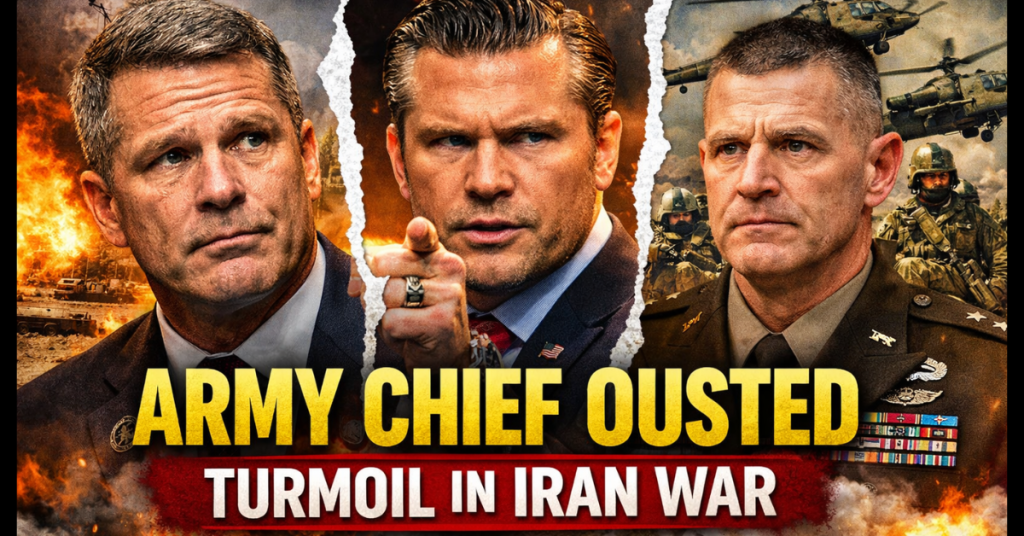
A sudden leadership change inside the U.S. military is drawing scrutiny on Capitol Hill, as lawmakers question the timing and rationale behind the removal of the Army’s top officer during an active geopolitical crisis.
This week, Rich McCormick voiced concern following Defense Secretary Pete Hegseth’s decision to push out Army Chief of Staff Randy George. The move comes as U.S. forces remain engaged in a high-stakes standoff with Iran.
Abrupt Removal During Wartime Posture
According to multiple reports, General George was asked to immediately retire Thursday evening, marking the latest in a series of high-level military personnel changes under Hegseth’s leadership.
The Pentagon has not publicly clarified the reasoning behind the decision, leaving lawmakers and analysts to speculate whether the move was strategic, political, or related to internal disagreements.
In the interim, Christopher LaNeve has stepped in to assume George’s responsibilities. LaNeve, who previously worked closely with Hegseth, is seen by some observers as a figure more aligned with the administration’s current military posture.
Congressional Concern Builds
Speaking on Newsmax, McCormick signaled unease with the lack of transparency.
“I’ve never heard him say anything contrary to what the president’s trying to achieve,” McCormick said of George. “I thought he’s done a really good job getting the Army ready for war.”
McCormick emphasized that George was widely respected within military and political circles, adding that the decision warrants immediate review.
“That’s concerning to me… I would look into it immediately because those are people I know very well,” he said.
Strategic Timing Raises Eyebrows
The leadership shakeup comes at a sensitive moment. The U.S. has been attempting to pressure Iran into negotiations amid escalating tensions, military positioning, and regional instability.
Removing the Army’s top uniformed leader during such a period is unusual and could carry operational as well as symbolic consequences.
Military continuity is often prioritized during conflict scenarios to maintain command stability, coordination, and troop confidence. Sudden changes at the top risk introducing uncertainty at a time when clarity is critical.
Broader Pattern of Military Turnover
George’s ouster is not occurring in isolation. It follows a broader pattern of leadership changes within the Pentagon, suggesting a possible restructuring effort or tightening of alignment between civilian leadership and military command.
Critics argue that repeated removals of senior officers could signal politicization of military leadership, while supporters contend that such moves may be necessary to ensure strategic cohesion.
Unanswered Questions
As of now, key questions remain unresolved:
- Was the decision driven by policy disagreements or performance concerns?
- Does the change reflect a shift in U.S. military strategy toward Iran?
- Will Congress initiate oversight or hearings into the matter?
Until more details emerge, the episode underscores the tension between civilian control of the military and the expectation of stability within its leadership ranks.