



Hazmat Teams Rush Into Pentagon After Air Quality Alarm Triggers Emergency Response
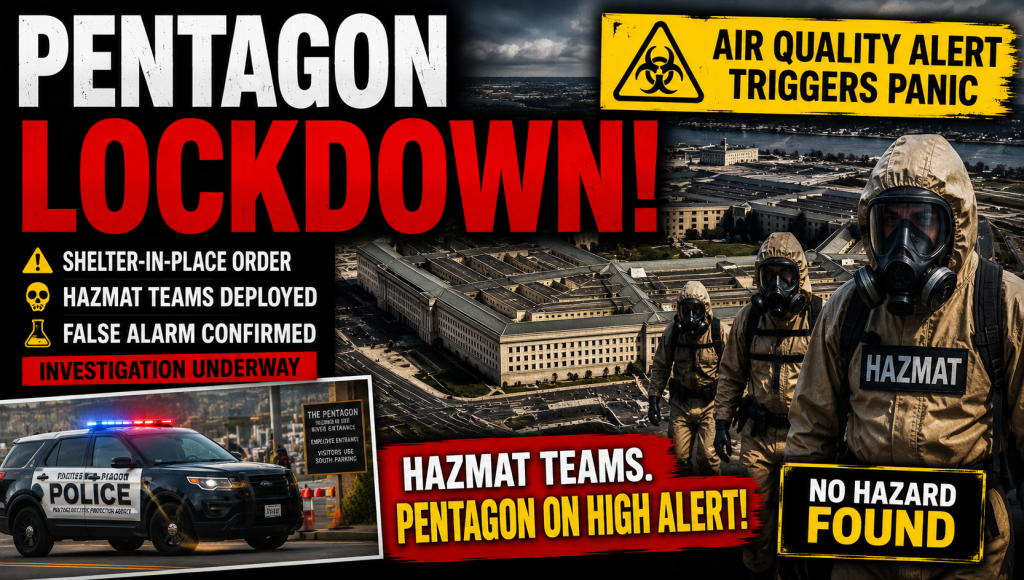
One of the most secure buildings in the world briefly went into emergency mode Thursday after Pentagon safety systems detected what appeared to be a potentially hazardous air-quality threat.
The alert prompted shelter-in-place orders, evacuations, and a large response from hazardous materials teams before officials ultimately determined there was no danger.
By early afternoon, Pentagon spokesman Sean Parnell announced that testing had confirmed no hazardous substance was present and that normal operations had resumed.
Emergency Protocols Activated
The incident began when Pentagon monitoring systems detected an air-quality anomaly inside the building.
Officials immediately activated standard safety procedures, including shelter-in-place orders for affected sections of the Pentagon while emergency crews investigated the situation. Employees in other areas were evacuated as a precaution.
Witnesses reported seeing Pentagon Police officers moving through portions of the building wearing gas masks and full chemical protective gear while Hazmat teams conducted testing.
The response affected multiple corridors and several floors of the massive military headquarters, temporarily disrupting operations for thousands of personnel.
Was It Anthrax?
While officials have not publicly identified a specific threat, reports indicated the sensor alert may have been triggered by a system designed to detect dangerous airborne contaminants.
According to reports citing sources familiar with the incident, one possibility initially investigated was the presence of anthrax or another hazardous biological agent. Further testing, however, found no evidence of any dangerous substance.
Investigators are now focusing on whether the warning was caused by a faulty sensor or another technical malfunction.
A System Designed for Worst-Case Scenarios
Although the alert turned out to be a false alarm, officials emphasized that the Pentagon’s response demonstrated exactly how the building’s security systems are designed to function.
Following the September 11 attacks, the Pentagon invested heavily in advanced detection and protection technologies capable of identifying potential chemical, biological, or airborne threats. These systems are designed to trigger immediate action even when a threat has not yet been confirmed.
That means temporary disruptions are often considered preferable to the risk of delaying a response to a genuine hazard.
Normal Operations Resume
Within hours of the initial alert, testing confirmed there was no hazardous material present in the building.
“Earlier this morning, Pentagon occupants were notified of a potential air quality issue, prompting immediate precautionary safety measures and evaluation. Subsequent testing confirmed no hazard exists, and normal operations have resumed,” Parnell said.
Officials praised first responders and emergency personnel for their rapid response while the investigation into the cause of the false alarm continues.
For a few tense hours, one of America’s most heavily protected facilities was forced to treat an air-quality warning as a potentially serious threat. In the end, it appears the system worked exactly as intended: detect first, verify second, and err on the side of caution.
Subscribe to DailyClout so you never miss an update!