



DOJ Ignored FBI Warnings Before Targeting School Board Parents
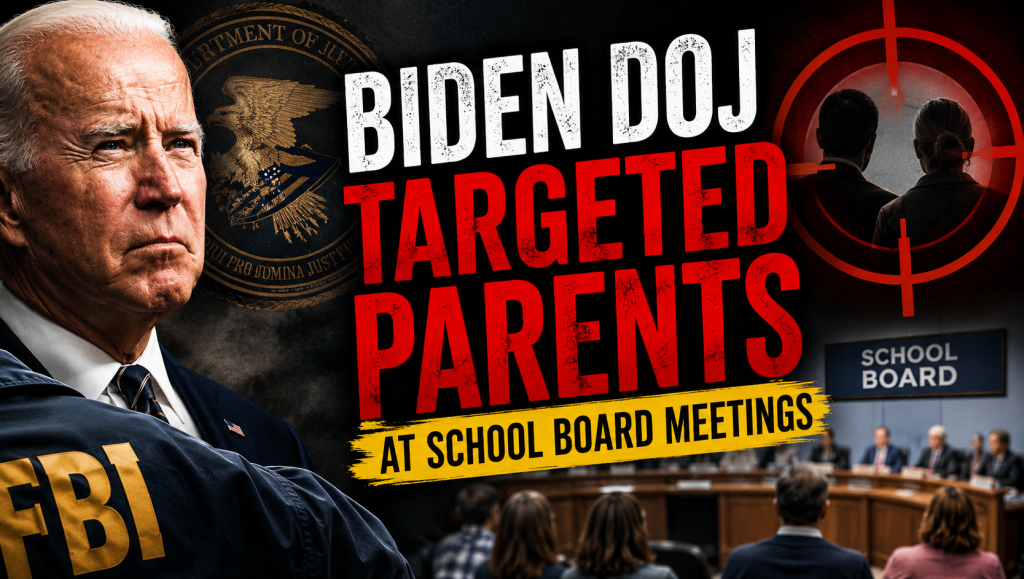
Newly released internal communications are reigniting one of the most controversial disputes of the Biden administration: whether federal law enforcement was improperly mobilized against concerned parents who spoke out at local school board meetings during the COVID-era culture wars.
The documents, obtained through litigation by the conservative legal group America First Legal (AFL), suggest that senior officials inside the FBI, the Justice Department, and even local law enforcement organizations raised concerns about Attorney General Merrick Garland’s October 2021 directive before it was publicly released. According to the newly disclosed records, those warnings were largely ignored.
FBI Officials Expressed Concern Before Memo Was Released
One of the most significant revelations involves an email sent on October 4, 2021, by then-FBI Deputy Assistant Director Jay Greenberg. In the message, Greenberg reportedly told DOJ officials the bureau had “some concern” about the planned announcement and requested additional time to find “common ground” before the memo was issued.
The memo ultimately directed federal authorities to coordinate with state and local law enforcement regarding what Garland described as a growing number of threats and acts of intimidation against school board members, teachers, and education officials.
Critics immediately argued that the directive risked treating ordinary parents as potential extremists simply for opposing mask mandates, critical race theory, or other controversial school policies.
Internal DOJ Emails Warned of Political Fallout
The newly released records also show resistance from inside the Justice Department itself.
According to AFL, one senior DOJ official warned that the initiative could severely damage election integrity efforts and make the department appear openly political. Another reportedly joked that officials might as well rename the project the “Anti-MAGA Task Force.”
Those concerns reflected a broader fear that federal law enforcement would be viewed as taking sides in a political dispute that was playing out in school board meetings across the country.
Sheriffs Said They Had Not Seen a Threat Wave
Perhaps even more damaging are communications involving the National Sheriffs’ Association.
Internal emails show that association leaders contacted DOJ officials shortly after Garland’s directive was announced, expressing surprise at the federal response. According to the correspondence, local sheriffs reported they had not observed widespread threats against school boards and had received little or no warning that the Justice Department was preparing to intervene.
That assessment appears to have conflicted with the rationale used to justify the memo, which cited a concerning increase in threats against education officials.
The EDUOFFICIALS Threat Tag
The controversy intensified later when lawmakers discovered that the FBI had created a threat-tracking category known as “EDUOFFICIALS” following Garland’s memorandum. The tag was designed to track threats involving school administrators, board members, teachers, and staff.
Republicans argued that involving the FBI’s Counterterrorism Division created the appearance that concerned parents were being monitored as potential domestic security threats. Garland repeatedly denied that parents were being investigated for protected speech and insisted the focus was solely on threats of violence.
White House Coordination Questions Persist
The newly released documents also add fuel to long-standing allegations that the effort was not confined to the Justice Department.
Previous document releases showed contacts between White House officials and the National School Boards Association, whose September 2021 letter had urged federal action regarding disruptive school board protests. That letter controversially compared some incidents to forms of domestic terrorism before the organization later apologized for portions of its language.
Critics argue that the sequence of events suggests political coordination. Supporters of Garland’s actions maintain that the department was responding to legitimate concerns about threats and harassment directed at public officials.
Why It Matters Today
Nearly five years later, the school board memo remains a flashpoint in the debate over government power, parental rights, and the politicization of federal law enforcement.
For opponents, the newly disclosed emails appear to show that federal officials moved forward despite warnings from their own agencies and local law enforcement partners. For defenders of the policy, the central issue remains protecting public officials from threats while preserving First Amendment rights.
What is no longer in dispute is that serious concerns existed inside the government before the memo was issued. The newly released records show those concerns were raised at the highest levels and that the controversy surrounding Garland’s directive was anticipated long before it became a national political battle.