



Fauci Adviser Charged in COVID Cover-Up Case
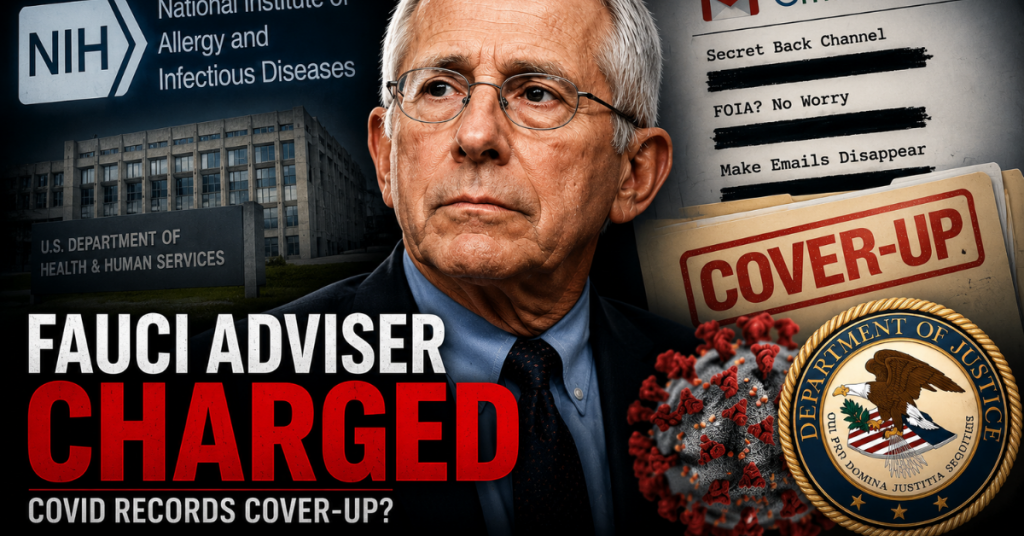
A former senior adviser to Dr. Anthony Fauci pleaded not guilty Friday to federal charges accusing him of conspiring to conceal and destroy government records tied to investigations into the origins of COVID-19, reigniting scrutiny over the handling of pandemic-era communications inside the National Institute of Allergy and Infectious Diseases (NIAID).
Dr. David Morens, 78, appeared in federal court in Maryland to answer charges alleging he participated in a scheme to evade Freedom of Information Act requests and suppress records connected to the debate over whether COVID-19 may have originated from a laboratory accident in Wuhan, China.
Federal prosecutors charged Morens with conspiracy against the United States, concealing government records, and destroying federal documents. According to the indictment, Morens and unnamed co-conspirators allegedly used private email accounts and off-channel communications to avoid federal transparency laws while discussing COVID origins and NIH grant activity.
The case has drawn major attention because Morens was a longtime senior adviser to Fauci at NIAID during the height of the pandemic and because emails cited in the indictment appear to reference what Morens allegedly described as a “secret back channel” with Fauci himself.
One of the most explosive allegations involves emails in which Morens allegedly discussed sending sensitive information to Fauci’s private Gmail account and described ways officials could allegedly avoid records requests.
According to communications previously uncovered during congressional investigations, Morens allegedly wrote:
“There is no worry about FOIAs. I can either send stuff to Tony on his private Gmail, or hand it to him at work or at his house.”
The indictment also alleges Morens received guidance on “how to make emails disappear after I am FOIA’d.”
Fauci has publicly denied knowledge of Morens’ alleged conduct. During prior congressional testimony, Fauci stated he “knew nothing” about Morens’ use of private email accounts to conduct official business.
The broader controversy extends beyond records management. Prosecutors and congressional investigators have linked the communications to debates surrounding EcoHealth Alliance, the nonprofit organization that funneled NIH grant money to the Wuhan Institute of Virology for bat coronavirus research prior to the pandemic.
Federal records show EcoHealth Alliance received millions in NIH grants between 2014 and 2020, some of which funded coronavirus experiments conducted in Wuhan. A 2023 Government Accountability Office report confirmed that EcoHealth-funded projects involved creating hybridized coronavirus strains through genetic manipulation experiments.
Congressional testimony from NIH Principal Deputy Director Lawrence Tabak later acknowledged that some of the experiments increased viral infectivity dramatically in mice, though NIH officials have denied the work directly caused the pandemic.
The indictment also references alleged efforts to suppress alternative theories about COVID’s origins, including the now widely discussed lab leak hypothesis, which was once dismissed by many media outlets and public health officials as a conspiracy theory.
In recent years, however, multiple federal agencies — including the FBI and the Department of Energy — have stated that a laboratory-related incident is a plausible explanation for the pandemic’s origins, though disagreement remains across intelligence agencies. (fbi.gov, energy.gov)
The case against Morens also revives questions surrounding Project DEFUSE, a controversial unfunded EcoHealth proposal that some scientists and lawmakers have argued resembled elements later seen in SARS-CoV-2. While no direct evidence has proven the proposal led to the pandemic, critics argue it demonstrated interest in conducting high-risk coronavirus engineering research before COVID emerged.
Morens faces up to 51 years in prison if convicted. Prosecutors say the alleged scheme obstructed public access to records sought by journalists, watchdog groups, and congressional investigators during one of the most consequential public health crises in modern history.