



Nations Clash Over WHO Pandemic Powers
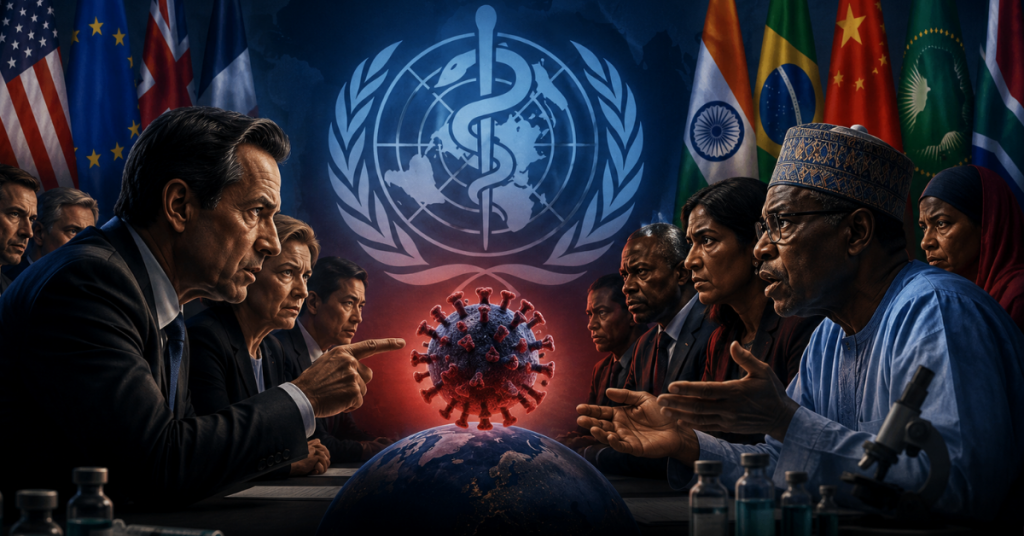
The World Health Organization’s long-debated pandemic agreement has hit another major roadblock after negotiators failed to finalize a key section governing how countries must share pathogens, vaccines, tests, and treatments during future global outbreaks.
The delay has sparked renewed warnings from global health officials that the world remains “unprepared” for the next pandemic, while critics argue the ongoing negotiations expose deep divisions over sovereignty, pharmaceutical control, and international authority.
At the center of the dispute is the proposed “Pathogen Access and Benefit Sharing” system, commonly referred to as PABS. The mechanism would determine how countries share virus samples and outbreak data with international institutions and pharmaceutical companies, and what they receive in return if vaccines or treatments are developed from that information.
The broader WHO Pandemic Agreement was formally adopted in 2025 following years of negotiations that began in the aftermath of COVID-19. However, the agreement cannot fully take effect until the PABS annex is finalized.
Negotiators had hoped to present a finalized version at this month’s World Health Assembly in Geneva, but talks stalled amid growing disagreement between wealthier Western nations and developing countries, particularly African and Global South blocs.
Developing nations have pushed for mandatory guarantees requiring pharmaceutical companies and wealthy countries to share vaccines, therapeutics, and medical technology developed from pathogen data originating in poorer regions. European nations and several pharmaceutical interests have reportedly resisted binding requirements, arguing such measures could discourage research and innovation.
The impasse highlights lingering distrust created during the COVID-19 era, when many lower-income countries accused wealthy nations of hoarding vaccines while demanding rapid access to outbreak data from abroad.
WHO Director-General Tedros Adhanom Ghebreyesus warned that the next pandemic is “a matter of when, not if,” urging member states to continue negotiations with urgency.
Former Liberian President Ellen Johnson Sirleaf and former New Zealand Prime Minister Helen Clark also issued a joint statement criticizing the failure to reach agreement, saying the lack of preparedness represents “a disservice to humanity.”
The WHO confirmed that negotiations will now continue into 2027 unless a breakthrough occurs sooner during additional meetings later this year.
The debate has also reignited broader political controversy surrounding the WHO’s role in future health emergencies. Supporters of the treaty argue the agreement is necessary to improve coordination and prevent the chaos seen during COVID-19. Critics, however, continue to raise concerns about expanding international health governance and the possibility that emergency frameworks could pressure nations into adopting uniform policies during future outbreaks.
The WHO and treaty supporters have repeatedly denied claims that the agreement would give the organization direct authority over national governments, lockdowns, or vaccine mandates. Nevertheless, mistrust surrounding pandemic-era policies, censorship disputes, and vaccine rollout controversies has continued to fuel skepticism toward the negotiations.
The delay also comes amid shifting geopolitical dynamics following the United States’ withdrawal from the WHO process under the Trump administration, a move that further complicated negotiations over global health coordination.
For now, the central question remains unresolved: if another global outbreak emerged tomorrow, who controls the data, who profits from the response, and who gets access to the resulting treatments first?