



China Helped Iran Target U.S. Bases?
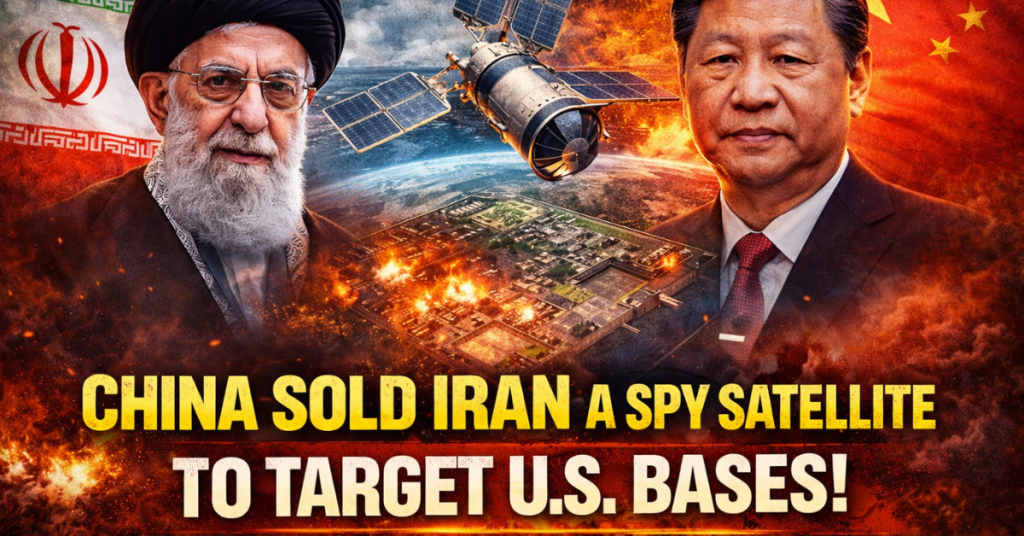
A quiet deal. A launch into orbit. And suddenly, the battlefield looks very different.
New reporting from the Financial Times, backed by multiple international outlets, suggests that Iran may have gained a powerful new advantage in modern warfare—not through missiles or drones, but through space.
The Satellite Deal That Stayed Hidden
According to the investigation, Iran’s Islamic Revolutionary Guard Corps (IRGC) secretly acquired a Chinese-built reconnaissance satellite known as TEE-01B in late 2024. The satellite was developed and launched by a Chinese firm, Earth Eye Co., before being transferred to Iranian control after reaching orbit.
This kind of arrangement—sometimes called “in-orbit delivery”—allows countries to bypass traditional scrutiny around weapons transfers. Instead of shipping hardware, the asset is simply handed over once it’s already in space.
And that’s where things get more serious.
Eyes Over U.S. Bases
Leaked Iranian military documents cited in the reports indicate that the satellite was used to monitor key U.S. military installations across the Middle East.
These weren’t casual observations. The data included:
Time-stamped coordinates
Orbital tracking analysis
High-resolution imagery
The timing matters most. The satellite reportedly captured images of targets before and after missile and drone strikes—suggesting it played a role in both planning and damage assessment.
Among the locations identified was Prince Sultan Air Base in Saudi Arabia, where U.S. aircraft were later confirmed to have been hit during attacks in March.
This represents a major shift. Iran wasn’t just launching attacks—it may have been refining them with near real-time intelligence from orbit.
A New Kind of Alliance
The implications stretch far beyond a single satellite.
The reports suggest a deeper level of cooperation between China and Iran, particularly in areas like surveillance, intelligence-sharing, and potentially military support.
China has officially denied the allegations. But analysts note that even indirect support—such as access to ground stations or commercial satellite infrastructure—can significantly enhance a country’s military capabilities.
In other words, you don’t need to send weapons if you can provide the targeting system.
Space Is the New Frontline
What makes this story especially significant is what it signals about the future of conflict.
We’re no longer just talking about boots on the ground or jets in the air. We’re talking about:
Commercial satellites used for military targeting
Private companies enabling state-level intelligence
Space-based surveillance shaping real-world strikes
This is warfare where the decisive advantage may come not from firepower, but from information.
The Bigger Picture
For the United States, the concern isn’t just that Iran gained new capabilities. It’s how quickly and quietly it happened.
A satellite launched in 2024.
A transfer that drew little attention.
And by 2026, a system allegedly helping guide attacks on U.S. assets.
That’s a short timeline for a major strategic shift.
And it raises a bigger question:
If this is what we’re seeing now, how many more capabilities are already in orbit—waiting to be used?