



Trump Won’t Rule Out Ground Troops as Iran War Escalates
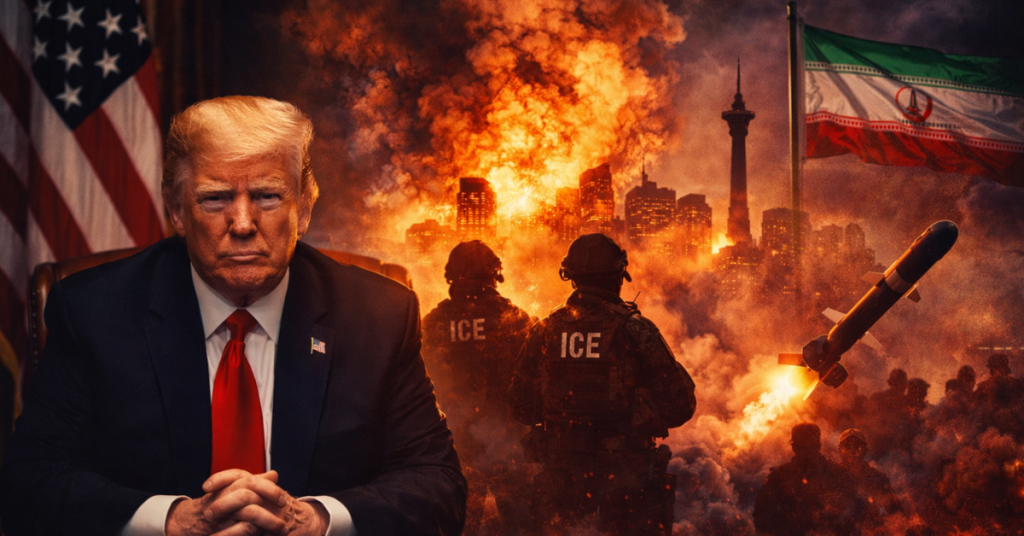
President Donald Trump said Monday he is not ruling out deploying U.S. ground forces into Iran “if they were necessary,” even as administration officials stress that no American troops are currently operating inside the country.
Speaking after the launch of what the White House has dubbed Operation Epic Fury, Trump told reporters that while ground troops are “probably” not needed, he would not pre-emptively tie his hands the way past presidents have.
“I don’t say there will be no boots on the ground,” Trump said. “If they were necessary.”
At a Pentagon briefing, Defense Secretary Pete Hegseth confirmed that there are no U.S. troops currently inside Iran, but he similarly declined to categorically rule out future deployments. He framed the current strategy as forceful but limited, emphasizing that Washington does not intend to commit to a decades-long occupation.
Leadership Targeting and Escalation
The administration claims the opening wave of strikes significantly degraded Iran’s leadership structure. Trump said dozens of senior military and political officials were killed, describing the operation as “way ahead of schedule.”
Among those reported killed in Israeli and U.S. strikes was Iran’s longtime Supreme Leader, Ali Khamenei, who had ruled since 1989. Iranian state media has not fully confirmed leadership details, but multiple Western outlets, including Reuters and the Associated Press, reported heavy targeting of command centers in Tehran over the weekend.
The Pentagon also confirmed that U.S. naval assets, including guided-missile destroyers, launched Tomahawk missiles in coordination with Israeli operations.
Nuclear Intelligence Claims
Trump said the decision to strike followed what he described as failed diplomatic talks in Geneva and new intelligence indicating Iran was resuming enrichment efforts at a previously undisclosed site.
According to administration officials cited by Reuters, U.S. intelligence assessments concluded Iran had shifted aspects of its nuclear activity away from facilities previously damaged in earlier operations. The White House argues this represented an imminent proliferation threat.
Critics, however, have urged caution. Analysts interviewed by CNN noted that intelligence claims surrounding nuclear programs have historically required careful verification, particularly given past controversies over weapons of mass destruction assessments in the Middle East.
Public Opinion Divided
Polling suggests the American public remains split. A Reuters/Ipsos survey conducted over the weekend found roughly a quarter of Americans approve of the strikes, with more than four in ten opposing them and the remainder undecided. A separate CNN/SSRS poll showed approval in the low 40s, with a majority expressing disapproval.
Trump dismissed the surveys, arguing that preventing Iran from acquiring a nuclear weapon outweighs short-term political considerations.
“You cannot let Iran have a nuclear weapon,” he said. “I have to do the right thing.”
Regional Fallout
The conflict has already produced casualties beyond Iran. The Pentagon confirmed that at least four American service members were killed in an Iranian counterstrike on a U.S. facility in Kuwait. Gulf states have heightened alert levels, and oil markets have reacted sharply, with energy analysts warning of potential supply disruptions if hostilities expand into the Strait of Hormuz.
Secretary of State Marco Rubio told lawmakers in briefings that Washington had advance awareness Israel was preparing military action and took steps to protect U.S. forces in the region.
Meanwhile, European governments, including France and Germany, have called for de-escalation, urging both sides to avoid a wider regional war.
Strategic Crossroads
The administration maintains that Operation Epic Fury is designed to decapitate leadership and degrade nuclear capacity without triggering a prolonged ground conflict. Still, by refusing to rule out boots on the ground, Trump has signaled flexibility that could shape the next phase of the war.
Military analysts note that ground forces would dramatically alter the scale of the conflict and risk drawing the United States into a broader regional confrontation involving proxy militias in Lebanon, Iraq, and Syria.
For now, the official line remains that air and naval power are sufficient. But the president’s refusal to issue blanket assurances ensures that the possibility of escalation remains firmly on the table.