



UAE Rushes Massive Oil Pipeline to Escape Hormuz Crisis
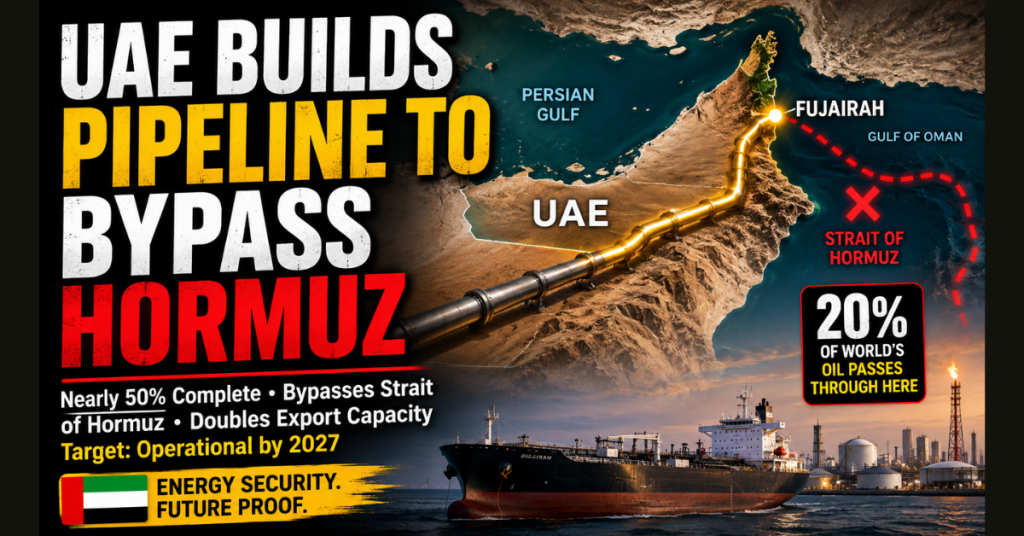
The United Arab Emirates is rapidly accelerating construction of a major new oil pipeline designed to bypass the increasingly unstable Strait of Hormuz, as Middle East tensions continue rattling global energy markets.
According to Sultan Ahmed Al Jaber, the project is already nearly 50% complete and is being fast-tracked toward a 2027 launch date. Speaking during an event hosted by the Atlantic Council, Al Jaber warned that “too much of the world’s energy still moves through too few choke points,” a clear reference to the vulnerability of Hormuz.
The move comes as the ongoing regional conflict involving Iran, the United States, and Israel has severely disrupted shipping through the strategic waterway. Roughly 20% of the world’s crude oil and large volumes of liquefied natural gas normally pass through the narrow corridor connecting the Persian Gulf to global markets.
The new “West-East Pipeline” project will dramatically expand the UAE’s ability to export oil through the eastern port city of Fujairah on the Gulf of Oman, avoiding Hormuz entirely. The pipeline is expected to double the country’s export capacity beyond the strait, building on the UAE’s existing Habshan-Fujairah pipeline, which already carries up to 1.8 million barrels per day.
The decision to accelerate the project reportedly came directly from Abu Dhabi Crown Prince Sheikh Khaled bin Mohamed bin Zayed, who ordered ADNOC to prioritize completion amid fears that instability in Hormuz could become a long-term reality.
Al Jaber painted a grim picture of the current energy situation, warning that even if hostilities ended immediately, global shipping flows through Hormuz may not return to normal until sometime in 2027.
The crisis has also sparked broader discussions across Gulf nations about creating alternative export routes that reduce dependence on one of the world’s most dangerous energy chokepoints.
For years, analysts warned that the global economy’s reliance on the Strait of Hormuz represented a massive strategic vulnerability. Now, Gulf powers appear to be preparing for a future where bypassing the strait is no longer optional — but essential.