



“Is the Cure for Cancer Already Inside Us?”
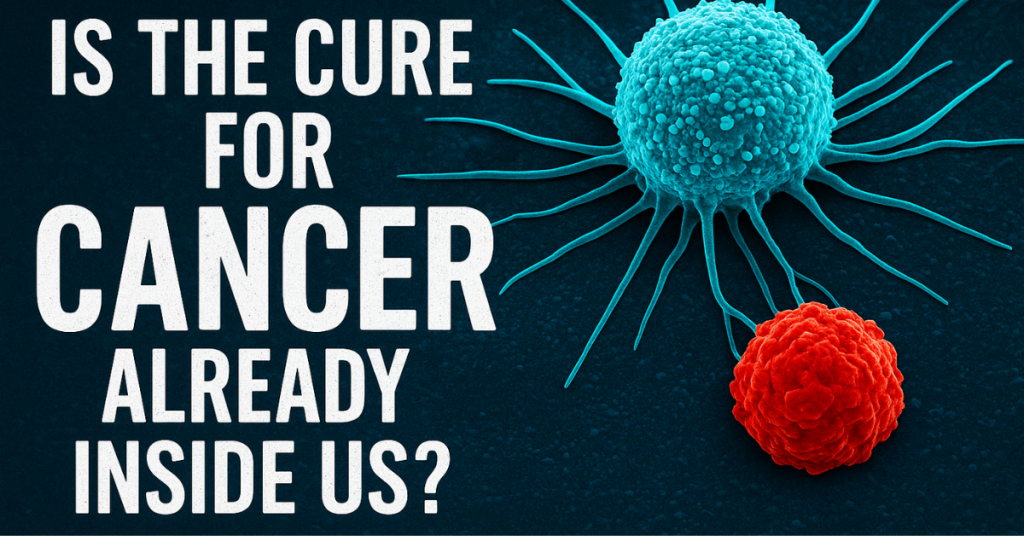
For generations, cancer has been treated with the same two weapons: chemotherapy and radiation—powerful tools that intentionally poison or burn the body in hopes of killing the tumor first. But what if the cure for cancer doesn’t come from outside the body at all? What if the solution has been sitting inside our immune system this entire time?
That’s the question explored in “Killing Cancer: The Power Within,” NewsNation’s in-depth special on Dr. Patrick Soon-Shiong and his groundbreaking cancer therapy, Anktiva—a new form of immunotherapy that supercharges the immune system’s natural killer cells to hunt down and destroy tumors.
Soon-Shiong believes this approach could make traditional chemotherapy obsolete. But regulatory hurdles, political battles, and skepticism from parts of the medical establishment continue to slow its expansion.
Here’s what his treatment actually does, why it’s controversial, and why some patients say it saved their lives.
The Vision: A Cure Already Exists Inside Us
Dr. Patrick Soon-Shiong—surgeon, scientist, entrepreneur, and billionaire—made his fortune developing Abraxane, a chemotherapy-enhancing drug approved by the FDA in 2005. Instead of retiring, he turned his attention to a much larger mission: curing cancer itself.
Raised under apartheid-era discrimination in South Africa, he says the experience shaped his lifelong determination to fight for people who feel powerless—“the underdog,” as he puts it. After becoming a leading pancreas-transplant surgeon in the U.S., he came to believe the central flaw in oncology is simple:
“Chemotherapy and radiation kill the very immune cells that protect us.”
Natural killer cells—also called NK cells—are among the immune system’s most powerful weapons. They destroy cancer cells, viruses, and infected cells thousands of times per day. A healthy adult carries roughly two billion NK cells circulating in their bloodstream.
Soon-Shiong’s argument is radical:
Cancer isn’t unstoppable. The immune system simply isn’t being allowed to do its job.
How Anktiva Works: Supercharging the Body’s Natural Defenses
Anktiva is designed to activate, strengthen, and multiply NK cells. It does this by delivering IL-15 (interleukin-15), a protein that binds to NK cells and transforms them into what Soon-Shiong calls “Incredible Hulk” versions of themselves—bigger, stronger, and more durable.
His protocol includes:
1. Harvesting a patient’s own NK cells
A blood draw provides the raw immune cells.
2. Treating them with Anktiva
The IL-15 activates and expands these cells.
3. Freezing them for repeated use
Patients can store multiple “units” of their own cells.
4. Reinfusion
In outpatient, 30-minute sessions, patients receive their supercharged NK cells back into the body to attack tumors.
This isn’t chemotherapy. It isn’t radiation. It isn’t gene editing.
It’s harnessing what the body already produces.
Early Results: Patients Who Say It Saved Their Lives
Nearly 1,000 patients have received Anktiva through trials or compassionate-use programs. According to Soon-Shiong:
-
Some bladder-cancer patients are alive 10 years later.
-
Some pancreatic-cancer patients—who often survive only months—have lived six years.
-
Some metastatic cancers have gone into complete remission.
Case 1: James Johnson — Liver metastasis disappears
Johnson originally beat throat cancer in 2015, but it returned in 2022 and spread in a way doctors had never seen. Rejected from other trials, he eventually entered Soon-Shiong’s program.
After 18 months of treatment:
-
His liver enzymes normalized
-
His lymphocyte counts rose
-
No new tumors appeared
“The man saved my life,” Johnson said.
Case 2: Billy Falcon — Tumor vanished in three weeks
Falcon, a Nashville musician, refused radiation because it could destroy his voice. After starting Anktiva:
-
His neck tumor shrank rapidly
-
Tests now show no cancer in his blood
“I saw this thing on my neck going away,” he said.
So Why Isn’t Anktiva Available to More Patients?
In April 2024, the FDA approved Anktiva—but only for a narrow group of bladder-cancer patients. Soon-Shiong argues this restriction leaves thousands unable to access a life-saving therapy.
He says the FDA’s demand for separate randomized trials for every cancer type is unnecessary, expensive, and slow—especially if the drug is activating the same NK-cell biology across cancers.
His frustration boiled over in an interview:
“I’ve got patients alive after ten years, and you want me to do a randomized trial that’ll take another five? I almost fell off my chair.”
Meanwhile, his clinic receives 10,000 calls per day from desperate families seeking help.
Politics, Power, and a Decade of Roadblocks
Soon-Shiong’s regulatory troubles didn’t start in the lab—they began in Washington.
In 2016, he says he was asked to lead the Biden-driven “Cancer Moonshot” initiative after Beau Biden’s death. But when President Obama announced the program, the funding allegedly went to traditional pharmaceutical firms instead. Soon-Shiong says he was excluded.
Since then, he has sought support from:
-
President Donald Trump
-
Saudi Crown Prince Mohammed bin Salman
-
HHS Secretary Robert F. Kennedy Jr.
He insists only presidential-level intervention can cut through FDA bureaucracy.
Critics Say He’s a “Hype Man.” He Says the Proof Is Alive.
Some medical experts claim Soon-Shiong oversells his work:
-
He relies on patient testimonies rather than traditional data
-
He has a history of ambitious projects that didn’t pan out
-
His imaging presentations sometimes appear more marketing than science
There was also a dispute in the 1990s when potential contamination forced his diabetes-research program to halt—leading to investor lawsuits that he settled.
Soon-Shiong rejects the accusation that he exaggerates. He points out:
-
His research is published in Nature
-
His data is in the New England Journal of Medicine
-
And most importantly, real living patients exist
“I want ten patients alive to walk into the Oval Office,” he said, “not another fancy paper.”
Is the Cure Already Inside Us?
Anktiva isn’t magic. It isn’t proven to cure all cancers. It isn’t approved widely enough for sweeping claims.
But it does raise a profound scientific possibility:
The human immune system may already contain the tools to defeat cancer—if we learn how to activate them.
If Soon-Shiong is right, the future of oncology won’t be built on drugs that poison tumors, but on therapies that empower the body’s own defenses.
If he’s wrong, the scientific scrutiny will uncover it.
For now, one fact is undeniable:
Patients who had run out of options say they are alive because of this treatment—and they want the rest of the world to have the same chance.