



Is Khamenei dead? What’s been reported — and what’s confirmed so far
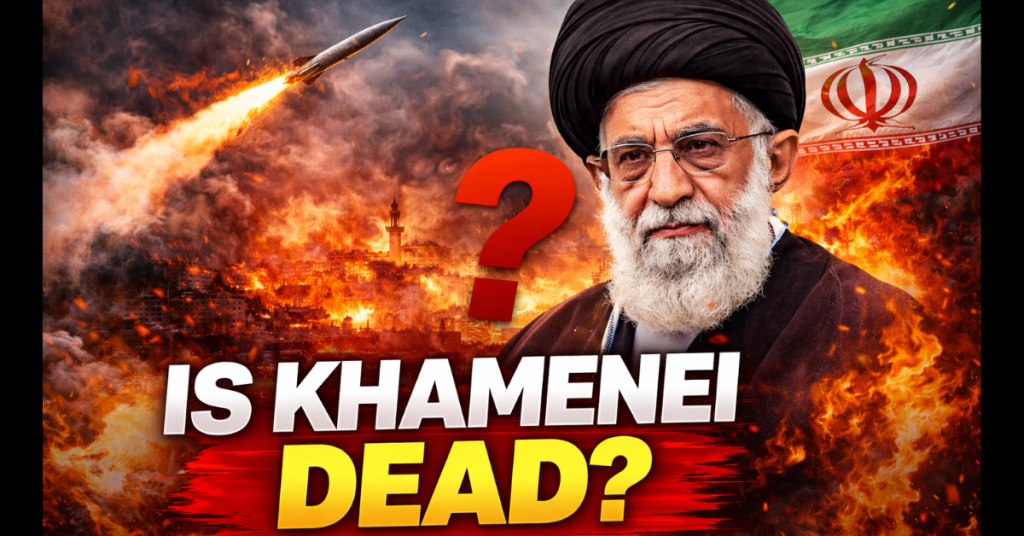
Is Ali Khamenei dead? What’s been reported — and what’s confirmed so far
Conflicting reports are circulating about whether Iran’s Supreme Leader, Ayatollah Ali Khamenei (86), was killed during the large U.S.–Israel strike campaign on Iran and the ensuing Iranian retaliation across the region.
What’s driving the “he’s dead” reports
-
Israeli claims: Multiple Israeli officials have told major outlets that Khamenei was killed in strikes that hit/leveled parts of his compound. Reuters reported a senior Israeli official said Khamenei’s body had been found, and that Israel assessed the strike as successful.
-
Netanyahu’s language: Israel’s prime minister publicly stopped short of formal confirmation in some remarks, but said there were “signs” or “indications” that Khamenei was no longer alive.
-
Trump’s public posture: Trump told media he felt the reports were correct / expressed confidence in the claim (as reported by multiple outlets).
What’s driving the “he’s alive / not confirmed” pushback
-
Iran’s denial (at least indirectly): Iran’s foreign minister told NBC that, “as far as I know,” Khamenei and Iran’s president were alive, and described the attack as illegitimate.
-
Iranian state TV signal: Iran’s state-run Al-Alam TV said Khamenei would deliver a speech “within minutes” after the strikes—an indicator Iranian state media was projecting continuity (though that claim alone is not proof of life).
-
Information conditions are degraded: Monitoring groups and major outlets reported Iran experienced a near-total internet blackout, which makes independent verification much harder and increases the odds of misinformation on all sides.
Why the fog is especially thick this time
-
Leadership-targeting + cyber disruption: The strike campaign reportedly targeted senior nodes of Iran’s security leadership and command infrastructure, while Iran’s connectivity dropped sharply—two factors that can delay reliable confirmation (or enable strategic ambiguity).
-
Narrative incentives:
-
Israel has an incentive to demonstrate “decapitation” success.
-
Iran has an incentive to deny or delay acknowledgment to prevent panic, preserve deterrence, and manage succession politics.
-
The U.S. has incentives tied to deterrence and domestic messaging.
(Those are analytical inferences; the facts remain contested.)
-
What we can say is confirmed (separate from Khamenei’s status)
-
A major U.S.–Israel strike campaign hit targets across Iran.
-
Iran retaliated with missile/drone attacks, including strikes affecting Israel and multiple regional locations tied to U.S. basing/partners, according to reporting from Reuters/AP.
What to watch for real confirmation
These are the markers journalists and intelligence-watchers typically rely on (in roughly descending order of reliability):
-
An on-camera appearance by Khamenei with verifiable timing/context (not recycled footage).
-
A formal Iranian state announcement acknowledging death (often paired with mourning protocols).
-
Constitutional succession steps moving in a way consistent with a confirmed vacancy (Assembly of Experts / interim arrangements), plus coherent command signaling.
-
Corroborated evidence from multiple independent governments (not just single-source claims).
Bottom line: As of the latest reporting, Israel and some U.S. messaging strongly assert Khamenei is dead, while Iran-linked channels and Iran’s foreign minister have signaled he is alive/uncertain, and the communications blackout makes independent confirmation difficult.