



Internet, phone lines cut out after protests spread across Iran
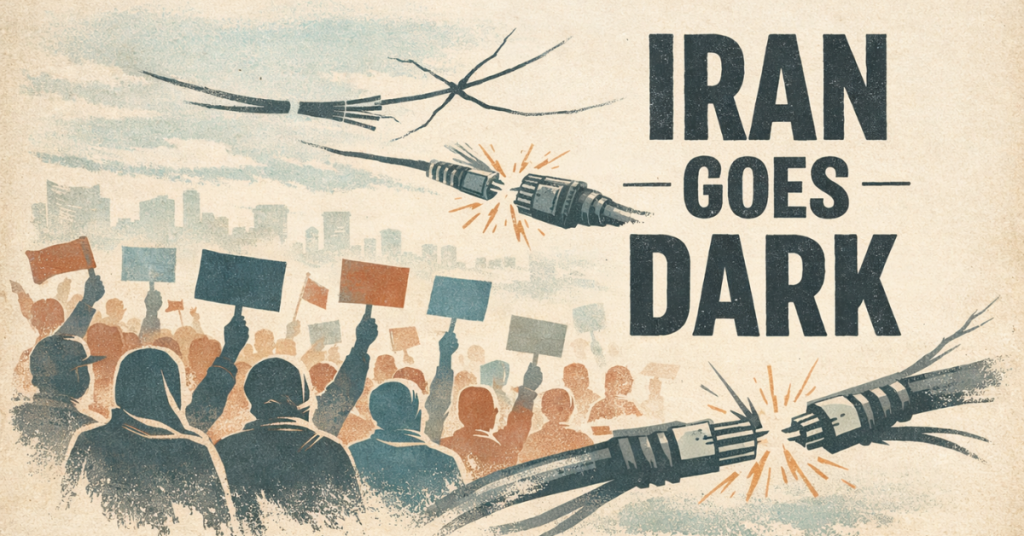
Iran’s government moved to sever internet and phone access across large parts of the country as anti-government protests spread from Tehran into smaller cities and rural towns, a step widely seen as an attempt to blunt coordination and limit images of unrest reaching the outside world.
The demonstrations intensified after Iran’s exiled crown prince, Reza Pahlavi, issued a public appeal urging Iranians to take to the streets and press their demands as a unified front. Speaking from exile, Pahlavi warned that the Islamic Republic and its security forces were being closely watched internationally, signaling that further repression would carry consequences.
The protests began late last month amid mounting economic pressure. Iran’s currency has continued to slide, inflation has eroded purchasing power, and shortages have rippled through everyday life. Merchants in Tehran’s historic Grand Bazaar were among the first to shut their shops in protest—an especially potent signal in a country where bazaars have historically played a decisive role during moments of political upheaval. Similar closures soon followed in provincial markets, amplifying the sense that anger over the economy has spilled beyond major urban centers.
Human rights groups report that the unrest has been met with force. According to the U.S.-based Human Rights Activists News Agency, dozens of protesters have been killed since demonstrations erupted, with thousands more detained. Independent verification remains difficult, in part because of the communications blackout now in place.
Monitoring groups say the blackout was deliberate. Cloudflare and NetBlocks both reported a sharp drop in connectivity consistent with state-ordered restrictions, rather than technical failure. International calls into Iran were also disrupted, with callers in neighboring Gulf states reporting they could not connect to Iranian phone networks.
The Iranian government has long relied on internet shutdowns during periods of unrest, particularly following the 2019 fuel-price protests and the nationwide demonstrations that followed the death of Mahsa Amini in 2022. Analysts note that such blackouts often coincide with the most aggressive phases of crackdowns, as authorities seek to isolate protesters and control the narrative.
International reaction has been swift. Coverage by Associated Press and other outlets has highlighted both the scale of the demonstrations and the regime’s efforts to suppress them. In Washington, the unrest comes amid renewed scrutiny of Tehran, with former and current U.S. officials signaling that violence against civilians will not be ignored. Pahlavi himself explicitly referenced Donald Trump, suggesting that global attention—and potential pressure—is focused squarely on Iran’s leadership.
Whether the blackout succeeds in slowing the protests remains uncertain. History suggests that while cutting communications can disrupt organization in the short term, it can also deepen public anger by reinforcing perceptions of authoritarian control. With economic conditions deteriorating and unrest spreading beyond Tehran, Iran’s leadership now faces a familiar dilemma: tighten repression and risk escalation, or concede reforms that could weaken its grip on power.