



Congress Names Individuals Flagged in Epstein Files, Pressures DOJ
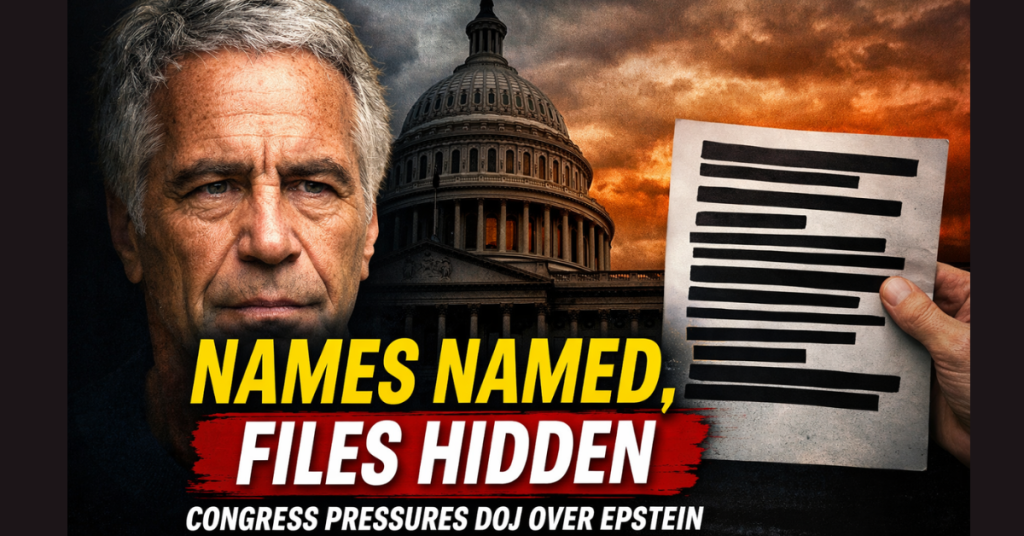
Two members of Congress intensified calls for transparency surrounding the Jeffrey Epstein investigation on Tuesday, publicly naming individuals they say appear “likely incriminated” in long-withheld government records tied to the late financier and convicted sex offender.
During remarks on the House floor, Ro Khanna, a Democrat from California, read aloud the names of six men he said emerge repeatedly in unreleased Epstein-related documents. Khanna was joined in the effort by Thomas Massie, a Republican from Kentucky, marking a rare bipartisan push to force the Department of Justice to fully disclose its Epstein files.
The lawmakers were principal sponsors of the Epstein Transparency Act, legislation designed to compel the DOJ to release all records connected to Jeffrey Epstein, including investigative files, communications, and evidence linked to his global sex trafficking network.
Names Read Into the Congressional Record
Khanna identified six individuals he said appear prominently in the documents reviewed by lawmakers and investigators:
-
Salvatore Nuara
-
Zurab Mikeladze
-
Leonic Leonov
-
Nicola Caputo
-
Sultan Ahmed bin Sulayem
-
Leslie Wexner
Bin Sulayem is an Emirati businessman and the CEO of global port operator DP World, while Wexner is best known as the longtime head of L Brands and co-founder of Bath & Body Works. Neither man has been charged with a crime in connection with Epstein.
Khanna emphasized that the act of naming individuals was not an assertion of guilt, but rather an attempt to highlight what lawmakers describe as persistent opacity surrounding the Epstein case and its broader network of associates.
DOJ Criticism and Public Frustration
The move comes amid growing bipartisan frustration with the Department of Justice’s handling of the Epstein records. Lawmakers from both parties argue that the department has failed to meet the spirit of transparency promised after Epstein’s 2019 death in federal custody.
Public skepticism intensified following a high-profile rollout last year by Attorney General Pam Bondi, in which selected influencers were given access to documents that largely consisted of previously released or publicly known material. Critics across the political spectrum characterized the effort as a public relations exercise rather than a meaningful disclosure.
Since then, pressure has mounted on the DOJ to explain why large portions of the Epstein files remain sealed, redacted, or unaccounted for, despite repeated assurances that transparency would be forthcoming.
A Bipartisan Test Case for Accountability
Khanna and Massie framed their effort as part of a broader test of institutional accountability, arguing that public confidence in the justice system erodes when politically sensitive cases are treated differently than ordinary criminal investigations.
“This is not about left versus right,” Massie has previously said of the legislation. “It’s about whether powerful people are subject to the same rules as everyone else.”
As Congress continues to press the DOJ for compliance with the Epstein Transparency Act, the decision to place specific names into the congressional record signals a new escalation—one that supporters say is intended to force long-delayed answers into the open, regardless of where they lead.