



CDC Drops Universal Newborn Hepatitis B Vaccine, Shifting Power Back to Parents
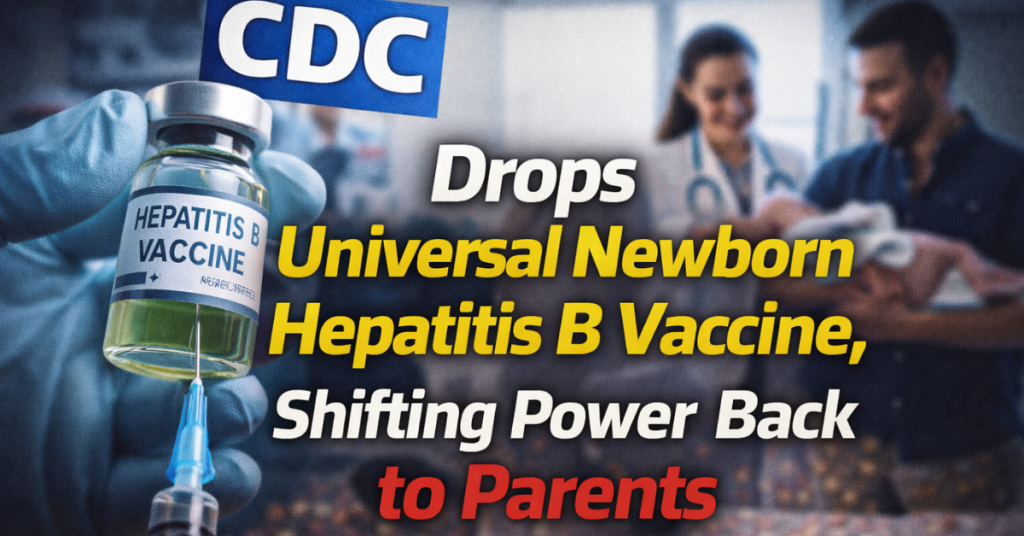
In a significant departure from decades of federal vaccination policy, the Centers for Disease Control and Prevention (CDC) has officially adopted a recommendation that eliminates the long-standing rule that all newborns in the U.S. receive the hepatitis B vaccine at birth. Under the new guidance, whether an infant receives the vaccine—including the birth dose—now hinges on shared decision-making between parents and their health care providers when the mother tests negative for hepatitis B. CDC
For more than 30 years, federal health authorities had advised that newborns be vaccinated against hepatitis B shortly after birth as a universal precaution, a strategy credited with reducing childhood hepatitis B infections by roughly 99% since its inception. WRAL News
A Policy Shift With Powerful Implications
On December 16, 2025, the CDC formally adopted a policy of individual-based decision-making—officially labeled “shared clinical decision-making”—for parents of babies whose mothers test negative for hepatitis B virus infection. Rather than issuing a blanket directive, the agency now encourages parents and physicians to weigh vaccine benefits, potential risks, and the likelihood of exposure before determining the timing or necessity of the vaccine. CDC
If parents choose not to give the birth dose, the updated guidance suggests the first hepatitis B vaccine be administered no earlier than two months of age, provided the mother is hepatitis B-negative. However, infants whose mothers are positive for hepatitis B—or whose infection status is unknown—are still strongly recommended to receive the vaccine and protective immune globulin within 12 hours of birth. CDC
Officials say the change reflects improved prenatal screening and lower overall perinatal transmission risk, while also “restoring the balance of informed consent” for parents of low-risk newborns. CDC
Controversy and Pushback Across Medicine
Experts in pediatrics and public health have reacted strongly to the reversal. Critics—including prominent physicians and hospitals—warn that rolling back the universal birth-dose recommendation could lead to more preventable infections down the line and sow confusion among parents. CIDRAP
Many argue the universal strategy is what drove dramatic declines in childhood hepatitis B infections and that risk-based approaches have historically failed to catch all at-risk infants because of screening gaps or inconsistent prenatal care. CIDRAP
The controversy is amplified by the broader context of federal vaccination policy under Health and Human Services Secretary Robert F. Kennedy Jr., who has reshaped the CDC’s vaccine advisory panel—known as the Advisory Committee on Immunization Practices (ACIP)—and has voiced skepticism toward some longstanding immunization strategies. Wikipedia+1
A Broader Shift in U.S. Vaccine Policy?
The hepatitis B guidance change fits within a larger trend toward individualized vaccine recommendations. Reports indicate that federal health authorities are considering further modifications to the U.S. childhood vaccine schedule, possibly reducing the number of vaccines universally recommended in favor of models adopted in Denmark and other countries where broader parental and physician discretion is emphasized. Reuters
Proponents of this personalized approach argue it respects parental rights and acknowledges diverse risk profiles among families. Opponents warn it could weaken public confidence in vaccine programs and prompt lower immunization rates. The Washington Post
What Parents Should Know
Under the new CDC policy:
-
Parents and doctors decide together whether a hepatitis B vaccine should be given at birth if the mother is negative for hepatitis B. CDC
-
The birth dose is still required for infants born to mothers who test positive for hepatitis B. CDC
-
If the birth dose is deferred, the first vaccine can begin no earlier than two months of age. CDC
-
Coverage and insurance payment protections for the vaccine remain intact under federal programs. CDC
Why It Matters to Families and Policymakers
This change is more than a technical tweak to federal guidance—it signals a broader reassessment of how public health agencies balance expert recommendations with parental autonomy, especially when it comes to newborns and preventive medicine.
For parents concerned about vaccine safety, informed consent, and individualized medical care, this shift may empower them to engage more actively with pediatric care decisions. For traditional public health advocates, the rollback raises concerns that decades of progress against a serious infectious disease could be jeopardized.
What happens next—whether this policy leads to broader shifts in childhood vaccination norms or spurs legislative responses—will be watched closely by families and health advocates nationwide.