


After Taking Maduro, Washington Starts Rewriting Venezuela Policy
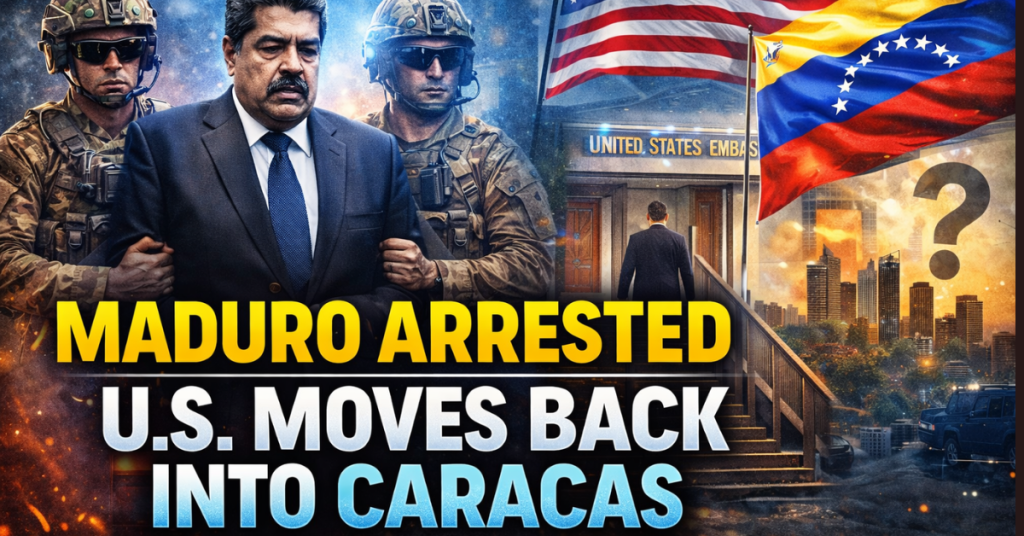
In a historic shift following the dramatic capture of Venezuelan President Nicolás Maduro, the United States has dispatched a diplomatic delegation to Venezuela to begin exploratory talks on restoring formal relations between the two nations.
On Friday, a small team of U.S. diplomats and diplomatic security personnel traveled to Venezuela for the first time since Maduro’s ouster to conduct a preliminary assessment of reopening the U.S. Embassy in Caracas. The mission, according to the U.S. State Department, aims to lay the groundwork for a phased resumption of operations in the Venezuelan capital. Acting Ambassador to Colombia John McNamara led the delegation.
The visit comes as part of broader discussions between Washington and Caracas about rebuilding diplomatic missions in both countries after years of severed relations. U.S. diplomatic operations were withdrawn from Caracas in March 2019 when Maduro’s government demanded the departure of American staff over Washington’s recognition of opposition leader Juan Guaidó as interim president. Since then, U.S. personnel have carried out Venezuela-related work from the U.S. Embassy in Bogotá.
Venezuela Responds With Its Own Diplomatic Overture
In response to the U.S. delegation, Venezuelan officials confirmed that their own diplomatic team will visit the United States for reciprocal talks, though no firm timeline has been announced. Caracas described the move as part of an “exploratory diplomatic process” aimed at addressing both parties’ interests and the aftereffects of Maduro’s removal.
Political authorities in Venezuela have also begun releasing a limited number of political detainees—a gesture described as part of wider peace efforts following significant upheaval in the country. Human rights advocates have noted that the initial releases represent only about 1% of those held, underscoring the ongoing humanitarian and political complexity of the transition.
Context: Maduro’s Arrest and U.S. Policy Shifts
The diplomatic overture follows a surprising U.S. military operation in early January that led to the capture of Nicolás Maduro and his wife, Cilia Flores, who were subsequently brought to New York to face federal allegations including drug trafficking and narco-terrorism. Maduro has pleaded not guilty while declaring his capture unlawful.
The operation and Maduro’s detention have precipitated a rapid realignment in U.S.–Venezuela relations, with the United States openly discussing embassy reopening and engagement despite deep-seated tensions spanning decades. Venezuelan leadership under acting President Delcy Rodríguez has signaled a willingness to engage diplomatically, even as questions remain about sanctions, sovereignty, and long-term political arrangements.
Strategic and Economic Implications
Analysts see the potential restoration of diplomatic relations as not just a symbolic shift but one with substantive economic implications. Venezuela has among the largest proven oil reserves in the world, and U.S. policymakers have begun courting American energy companies to invest in the country’s oil sector under assurances of security and legal protections. Such investments, however, hinge on stable governance and clear legal frameworks.
Experts note that normalizing ties with Venezuela is likely to be a lengthy process. Rebuilding trust after years of hostility—including sanctions and mutual accusations of human rights abuses—will require negotiations on issues ranging from sanctions relief to economic cooperation and governance reforms.
Looking Ahead
The arrival of U.S. diplomats in Caracas marks a significant turning point in relations between Washington and Caracas, raising hopes among some observers that a new chapter in bilateral engagement may be unfolding. However, with political detainees still held, economic instability pervasive, and the international community closely watching developments, the path to full diplomatic normalization remains uncertain.