



“The FBI’s Decade-Long Investigation of Trump”
New disclosures and ongoing reviews inside the FBI are shedding light on a decade-long series of counterintelligence investigations targeting Donald Trump, his campaign associates, and numerous figures within his political orbit.
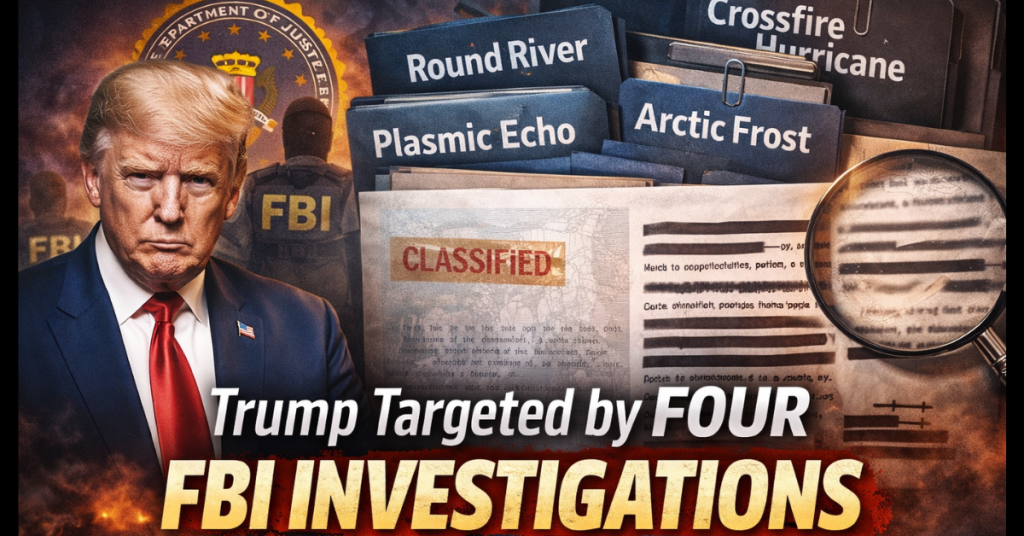
According to interviews and documents reviewed by journalists and congressional investigators, at least four major FBI operations examined Trump and his network between 2016 and 2025. The investigations, reportedly code-named Crossfire Hurricane, Round River, Plasmic Echo, and Arctic Frost, collectively scrutinized hundreds of individuals connected in some way to the former president’s political activities.
Now, under FBI Director Kash Patel, the bureau is conducting an internal review of those operations amid growing questions about whether counterintelligence authorities designed for foreign threats were used inappropriately against American citizens.
The First Probe: Crossfire Hurricane
The first and most widely known investigation, Crossfire Hurricane, began in July 2016 during the presidential campaign. The FBI opened the probe to examine whether individuals connected to Trump’s campaign coordinated with Russia’s efforts to influence the election.
The investigation eventually led to the appointment of Special Counsel Robert Mueller, whose inquiry ran for nearly two years. While Mueller documented extensive Russian interference in the election, his investigation did not establish that the Trump campaign conspired with Moscow.
A later Justice Department Inspector General review concluded that the FBI had an authorized basis to open Crossfire Hurricane, but also found 17 significant errors and omissions in the agency’s surveillance applications, particularly those used to monitor Trump adviser Carter Page.
Those findings fueled criticism from Republicans who argued the investigation demonstrated systemic problems inside the FBI and Department of Justice.
Later Investigations Expand the Scope
While Crossfire Hurricane has been heavily scrutinized for years, newly emerging information suggests it was only the beginning of a much longer chain of investigations.
According to officials familiar with internal reviews, later probes reportedly continued examining Trump-related figures through several election cycles.
One of those operations, Arctic Frost, investigated Trump’s efforts to challenge the certification of the 2020 election and communications with lawmakers ahead of January 6. Congressional oversight later revealed that investigators sought phone records belonging to several Republican senators and members of Congress as part of the probe.
The investigation drew sharp criticism from some lawmakers who argued that it represented a sweeping use of federal law enforcement powers in a politically sensitive case.
Another operation, reportedly called Plasmic Echo, examined issues related to classified documents after Trump left office. This inquiry culminated in the FBI’s high-profile search of Trump’s Mar-a-Lago residence in August 2022 after the Justice Department approved a warrant for the recovery of government records.
Meanwhile, a lesser-known probe known as Round River allegedly explored claims surrounding foreign influence and information tied to allegations about the Biden family’s business dealings overseas. Much of the material connected to that investigation remains classified, though congressional investigators have requested additional records.
Allegations of Overreach
Critics of the investigations argue that the combined scope of the probes demonstrates how intelligence authorities expanded dramatically after the September 11 attacks and were later applied to domestic political matters.
Whistleblowers and congressional investigators claim the investigations relied heavily on tools normally used in counterterrorism or espionage cases, including surveillance warrants, subpoenas for communications data, and extensive intelligence analysis of political figures.
Supporters of those investigations, however, maintain that federal law enforcement agencies had legitimate reasons to examine potential national security threats and election interference, particularly in the aftermath of Russia’s documented attempts to influence U.S. politics.
New Internal Reviews
Director Kash Patel has reportedly launched an internal review to determine how the investigations were opened, what evidence supported them, and whether any authorities were misused.
Members of Congress, including Senate Judiciary Committee Chairman Chuck Grassley, have also requested additional documentation from the FBI as part of ongoing oversight efforts.
The review could have major consequences depending on its findings. Some officials have suggested that if investigators determine civil liberties were violated, federal prosecutors could consider criminal charges under statutes that prohibit conspiracies to deprive citizens of constitutional rights.
For now, however, the investigations themselves remain the subject of competing interpretations.
To supporters of Trump, the decade-long series of probes reflects political weaponization of federal law enforcement. To defenders of the investigations, they represent legitimate efforts by national security agencies to respond to unprecedented threats and allegations during a turbulent political era.
What Patel’s review ultimately reveals could shape the next chapter in one of the most contentious episodes in modern American political and legal history.