



Democrats Balk at Kamala Harris’ Gen-Z Rebrand
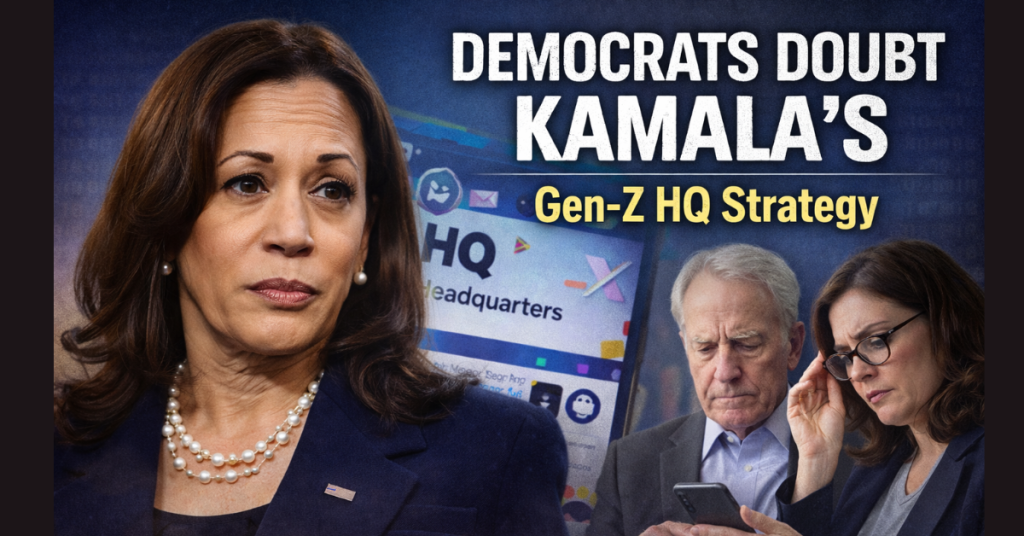
Several Democratic insiders are expressing skepticism about former Vice President Kamala Harris’s latest digital rebrand, as her campaign quietly pivots toward a Gen-Z–focused media strategy that some within her own party view as risky, premature, or poorly calibrated.
On Thursday, Harris’ team announced that her campaign’s longtime social media account, formerly known as KamalaHQ, would be relaunched as “Headquarters,” a Gen-Z–led progressive content hub designed to serve as a rapid-response outlet and digital organizing space. In a launch video, Harris described the platform as a place for young people to get news, engage with political leaders, and counter messaging from the Trump White House.
But behind the scenes, the rebrand has sparked discomfort among some Democratic operatives and former White House officials, several of whom told Daily Caller they were unconvinced the move would translate into meaningful political gains.
“Predictable Was Easier”
One former Biden–Harris White House aide described the launch as unsettling, saying it carried the feel of a premature political maneuver rather than a clearly defined communications strategy.
“I didn’t think she was going to make some presidential announcement this early, but it was telling how ominous it felt,” the former staffer said. “Everyone kind of felt nervous. It’s easier when she’s on the book tour. That’s predictable.”
Another former Democratic administration official was even more blunt, telling the outlet: “Great team, important goal, terrible candidate.”
The account, which launched with meme-style posts and aggressive rapid-response clips, has been positioned as a counterweight to Trump administration messaging, particularly on immigration, voting policy, and law enforcement. The team behind the account told independent journalist Kyle Tharp that they hope Headquarters becomes a primary news source for Gen-Z voters.
Still, some Democrats worry the strategy prioritizes virality over persuasion.
Measuring Impact—or Just Impressions?
Concerns over the effectiveness of digital-first political messaging quickly spilled into public view. Two former senior Biden White House officials openly debated the rebrand on X, highlighting a broader tension within Democratic strategy circles over how success is measured online.
Stefanie Feldman, who previously led the White House Office of Gun Violence Prevention, questioned whether projects like Headquarters could demonstrate real voter mobilization.
“How will you measure what content persuades or mobilizes?” Feldman asked. “I’ve yet to see digital folks measure success beyond views and likes.”
Her critique echoed a growing concern among party strategists that online engagement metrics can mask deeper weaknesses—particularly when posts generate attention but are met with heavy negative responses.
That anxiety was reinforced by commentary from a panel on CNN, which labeled the account’s nod to an inside “6–7” meme joke as “cringe,” questioning whether the tone resonated beyond a narrow online audience.
A Symptom of a Larger Party Debate
Not all Democrats are dismissive of the effort. Some view the rebrand as evidence that the party is at least attempting to correct weaknesses exposed during the 2024 campaign, particularly its fragmented messaging and inconsistent digital presence.
“This is a constructive signal that Democrats are taking organization and message discipline seriously,” said Laurie A. Watkins, a Democratic strategist and former Obama policy advisor. “Voters are looking for clarity and competence, not noise.”
Watkins argued that a centralized platform focused on cost-of-living pressures, healthcare, and childcare could help anchor the party’s messaging—if executed with discipline and restraint.
Others, however, see Harris herself as the limiting factor. Progress Libs CEO Maya Luna described Harris as “the microcosm of everything wrong with the Democratic Party,” suggesting that branding changes cannot resolve deeper issues around leadership credibility and voter trust.
A Strategic Crossroads
For now, Headquarters continues to function as a rapid-response account, pushing back against Trump administration policies and amplifying progressive critiques. Whether it becomes a durable organizing tool or another short-lived digital experiment remains an open question.
One former Biden–Harris staffer summed up the internal hesitation bluntly: “Stick to the aunties and the adults who come out to your book tour. Everybody who’s interested should run for president—but those who put the DNC in millions of dollars of debt probably should think twice.”
As Democrats debate how best to reach younger voters without alienating broader coalitions, Harris’ Gen-Z rebrand highlights a larger challenge facing the party: translating online energy into real-world political momentum—without mistaking attention for persuasion.