



Zohran Mamdani Appoints 9/11 Al Qaeda Defense Lawyer as Chief Counsel
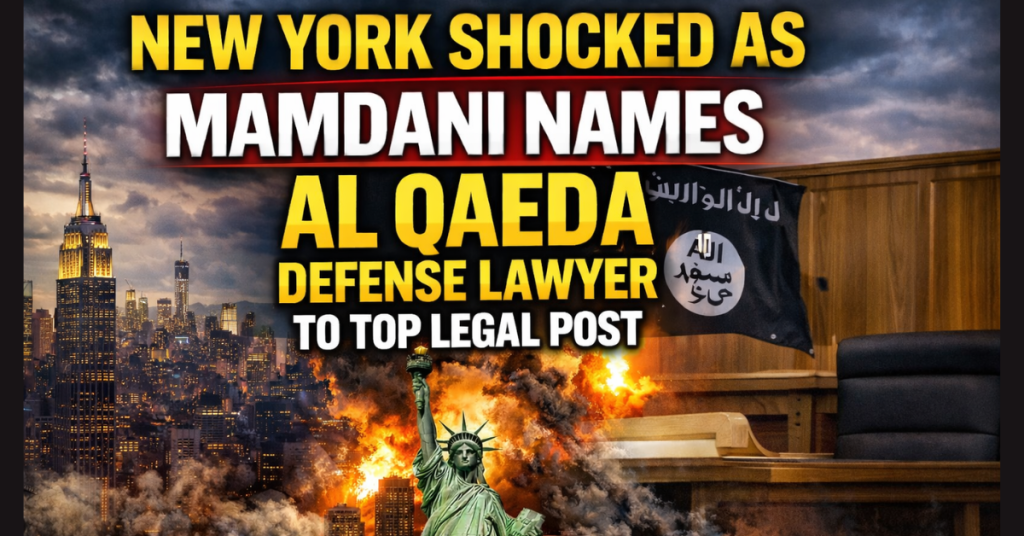
New York politics was jolted this week after Democratic Assemblyman Zohran Mamdani announced that Ramzi Kassem, a lawyer who has defended individuals linked to Al-Qaeda, will serve as his Chief Counsel.
The appointment has triggered swift backlash, particularly because Kassem previously represented detainees accused of ties to the terrorist network responsible for the September 11 attacks—an event that claimed nearly 3,000 lives, including thousands of New Yorkers.
A Choice That Cuts Deep in New York
While criminal defense attorneys often argue that legal representation does not equate to ideological support, critics say the symbolism of the appointment is impossible to ignore—especially in a city still deeply shaped by the trauma of September 11.
Kassem has been involved in legal advocacy for Guantanamo Bay detainees accused of involvement in global jihadist activity, framing his work as part of a broader civil liberties mission. Supporters argue this reflects a commitment to due process. Opponents counter that elevating such a figure to a senior government role in New York crosses a line between legal principle and political tone-deafness.
“This isn’t an abstract debate,” said one former city official. “This is New York. The scars are real. The families are still here.”
Progressive Politics Meets Public Memory
Mamdani, a rising figure on the far-left flank of New York politics, has built his brand around progressive causes, anti-policing rhetoric, and a sweeping critique of U.S. national security policy. The selection of Kassem appears consistent with that ideological framework—but critics argue it shows disregard for public trust and historical sensitivity.
The controversy is less about courtroom ethics and more about governance. A Chief Counsel plays a key role in shaping policy, advising on legal strategy, and influencing how an office approaches law enforcement, national security, and public safety.
For many New Yorkers, the concern is not whether Kassem had a legal right to represent controversial clients—but whether someone who did so should now wield influence within government institutions tasked with protecting the public.
Silence From Democratic Leadership
So far, Democratic leadership in New York has largely avoided direct comment on the appointment. That silence has only fueled criticism from first responder groups, 9/11 families, and civil society organizations who argue that the issue transcends partisan politics.
At a time when trust in institutions is already strained, critics say the move reinforces a perception that elite political circles are disconnected from the lived experiences of ordinary citizens—particularly those who bore the brunt of America’s deadliest terrorist attack.
A Test of Political Judgment
Mamdani’s decision may energize a narrow ideological base, but it risks alienating a broader electorate that expects moral clarity from public officials—especially on issues tied to national trauma and security.
Whether the backlash fades or grows may depend on how Mamdani responds. For now, the appointment stands as a stark reminder that in New York, history is not theoretical—and political choices carry weight far beyond legal abstractions.