



CDC Shifts Course: New Immunization Schedules Put Parents Back in Control
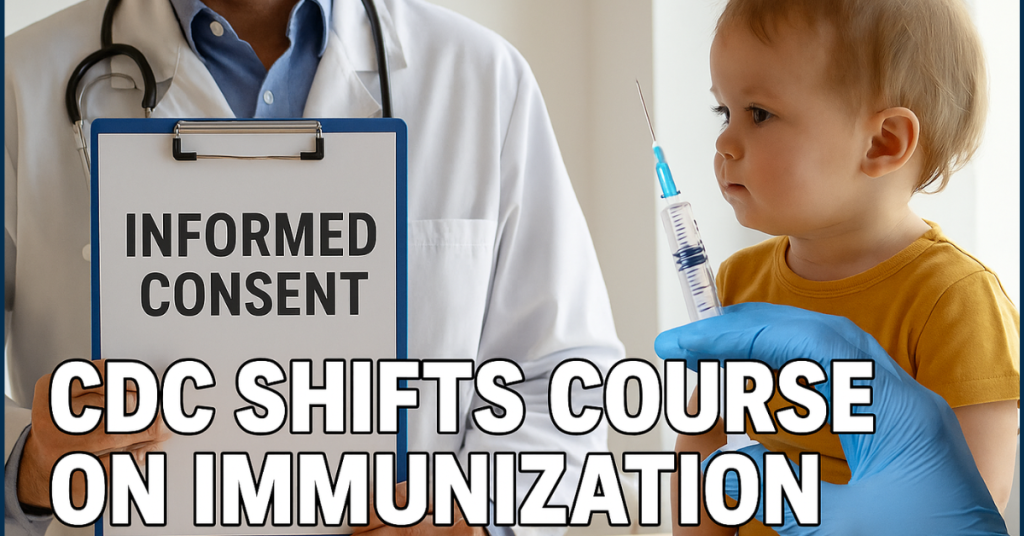
In a move that signals a dramatic departure from the one-size-fits-all mandates of the COVID era, the Centers for Disease Control and Prevention (CDC) has adopted new immunization schedules that stress individual-based decision-making for COVID-19 vaccination. At the same time, the CDC is recommending that toddlers receive standalone chickenpox (varicella) immunization rather than the previously combined measles, mumps, rubella, and varicella (MMRV) shot.
These schedules, approved by the CDC’s Advisory Committee on Immunization Practices (ACIP) and greenlighted by Acting CDC Director and Deputy HHS Secretary Jim O’Neill, will be posted on CDC.gov by October 7, 2025.
From Blanket Boosters to Informed Consent
For many parents and physicians, the most striking change is the CDC’s acknowledgment that vaccine decisions must be individualized. O’Neill himself stated:
“Informed consent is back. CDC’s 2022 blanket recommendation for perpetual COVID-19 boosters deterred health care providers from talking about the risks and benefits of vaccination for the individual patient or parent. That changes today.”
The statement marks a sharp reversal from the era when perpetual COVID-19 booster campaigns were promoted to the entire population, regardless of individual health status. Despite the massive push, CDC data show that just 23% of adults followed the most recent booster recommendation—an overwhelming rejection by the American public.
Risk-Benefit, Not One-Size-Fits-All
According to ACIP, the risk-benefit of COVID vaccination is now considered strongest for adults over age 65 and for individuals with one or more CDC-listed risk factors for severe COVID-19. For healthy individuals under 65, the benefits are far less clear, and in many cases, the risks outweigh the rewards.
This is a major shift from the CDC’s “universal booster” model, which many Americans criticized as ignoring mounting safety signals and treating all patients identically regardless of their health status.
Chickenpox Vaccine: A Standalone Approach
The new immunization schedules also reflect updated evidence regarding childhood vaccination. For toddlers ages 12–23 months, the CDC now recommends standalone chickenpox shots rather than the combined MMRV vaccine.
Why? Because CDC’s own Immunization Safety Office presented evidence showing that toddlers who receive the combination vaccine face double the risk of febrile seizures seven to ten days after vaccination compared to those who receive the chickenpox shot separately. Importantly, the combination provides no additional protection against varicella.
This admission raises questions: if the evidence was clear enough for this policy change in 2025, why were children previously subjected to a riskier vaccine combination?
What It Means for Parents and Providers
The CDC now labels this approach “shared clinical decision-making,” meaning that doctors, nurses, and pharmacists should consider each patient’s unique characteristics, risk factors, and vaccine safety data before making a recommendation.
Unlike past mandates, this approach keeps immunizations covered under federal programs (Medicare, Medicaid, CHIP, and ACA-regulated insurance) while restoring parental choice.
A Quiet Admission?
For critics of the COVID-era mandates, these changes sound like a quiet admission of past overreach. By promoting “informed consent” and acknowledging safety concerns with both COVID boosters and combination childhood vaccines, the CDC is distancing itself from the authoritarian tone of recent years.
Many will see this as validation of what skeptical parents, doctors, and independent media have been saying all along: that vaccination is not one-size-fits-all, that risks are real, and that individual choice matters.
Final Thoughts
The updated CDC immunization schedules mark a turning point in American vaccine policy. Parents now have official backing to ask hard questions, weigh risks, and insist on informed consent.
As public trust in federal health agencies remains at historic lows, only time will tell whether this shift is the beginning of a more honest, transparent conversation about vaccines—or merely a political recalibration after years of public pushback.
DailyClout.IO will continue to follow this story.