



White House Slams ‘False Alarm’ After Report of Possible Iranian Drone Attack
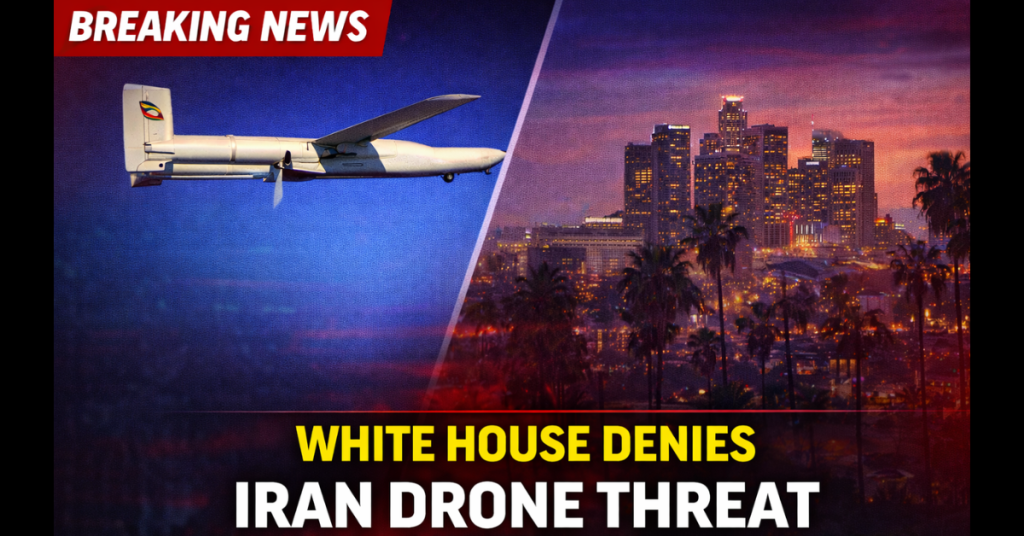
A heated clash erupted between the White House and major media outlets this week after a report suggested Iran could launch a retaliatory drone attack against California, prompting the administration to denounce the story as misleading and based on unverified intelligence.
White House Press Secretary Karoline Leavitt sharply criticized the report after it revealed that the FBI had circulated an internal alert warning that Iran might attempt a “surprise attack using unmanned aerial vehicles” launched from a vessel off the U.S. West Coast if the United States carried out strikes against Iran.
Leavitt called the report “reckless” and “completely false,” saying it created unnecessary alarm about a threat that had never been considered credible.
“There has never been a credible threat against the American homeland from Iran,” she wrote on social media, demanding a retraction and accusing the media of amplifying speculation rather than verified intelligence.
The FBI Bulletin That Sparked the Controversy
The controversy traces back to a late-February bulletin circulated among California law-enforcement agencies through federal intelligence networks.
According to the alert, investigators had received information suggesting Iran “allegedly aspired to conduct a surprise attack using unmanned aerial vehicles” launched from an unidentified ship off the U.S. coast.
However, the memo also made clear that authorities had no additional information about timing, targets, or operational details, and it emphasized the intelligence was unverified.
Such bulletins are common inside the intelligence community. Security agencies routinely distribute raw or incomplete information to local law enforcement so they can remain vigilant even when threats are uncertain.
California Officials Respond
California officials acknowledged the warning but stressed that there is no confirmed or imminent threat to the state.
Governor Gavin Newsom said authorities were aware of the information and were coordinating with federal agencies to monitor the situation.
“Drone issues have been top of mind,” Newsom said during a press conference, adding that state emergency officials were working with law enforcement to ensure readiness.
Local police departments and federal agencies also increased monitoring around sensitive locations, although officials reiterated that the alert did not identify specific targets or a timeframe.
Rising Tensions With Iran
The warning surfaced amid escalating tensions between the United States and Iran following recent U.S. and Israeli military strikes on Iranian infrastructure, which have raised fears of retaliation.
Iran has increasingly relied on drone warfare, including the Shahed-series attack drones used across the Middle East and in Ukraine by Russia, leading some security experts to consider unmanned aerial systems a possible tool for retaliation.
At the same time, analysts note that Iran historically has struggled to carry out attacks on U.S. soil and tends to rely on proxies or cyber operations instead.
Political Fight Over the Report
The episode quickly turned into a political flashpoint online.
Supporters of the administration praised Leavitt for confronting what they viewed as sensational reporting, while critics argued that dismissing intelligence warnings could risk downplaying potential national-security threats.
The White House insists the alert was based on a single unverified tip and did not reflect a credible operational plan.
For now, federal and state authorities say they are continuing to monitor potential threats while urging the public not to panic.
Despite the fierce debate surrounding the report, officials say there is no evidence of any imminent Iranian drone attack against the United States.