



Trump Says the U.S. Should Reconsider Mental Asylums
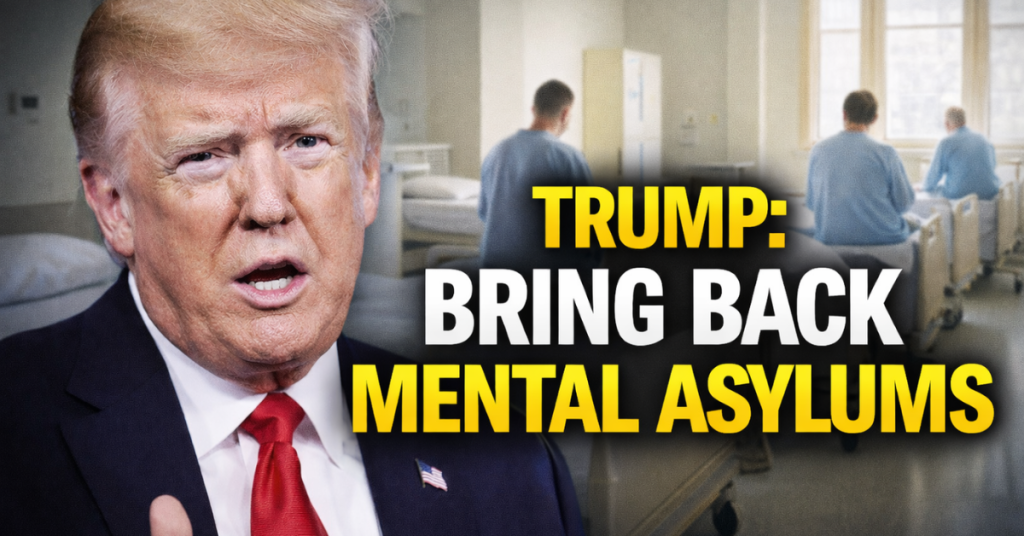
President Donald Trump has stated that the United States should reconsider bringing back mental asylums, arguing that the closure of long-term psychiatric institutions has contributed to widespread homelessness and untreated severe mental illness.
In recent remarks, Trump said the country “closed the asylums” decades ago and replaced them with systems that have failed to adequately care for individuals suffering from serious mental disorders. He pointed to the growing number of mentally ill individuals living on the streets or cycling through jails and emergency rooms as evidence that current approaches are not working.
Trump did not announce a specific policy, executive order, or legislative proposal. His comments focused on the broader idea that long-term institutional care should again be available for individuals who are unable to care for themselves or who pose a danger to themselves or others.
What Trump Has Referenced
Trump’s statements reflect criticism of the deinstitutionalization movement that accelerated in the 1960s and 1970s, when many state psychiatric hospitals were closed in favor of community-based treatment models. While those reforms were intended to improve civil liberties and reduce abuse, critics have long argued that funding for community care never materialized at the scale required.
Trump has suggested that the absence of institutional options has left many severely mentally ill individuals without effective treatment, contributing to public safety concerns and humanitarian challenges in many cities.
What Has Not Been Announced
As of now:
-
No executive order has been issued to reopen mental asylums
-
No federal program has been proposed to recreate the pre-1970s asylum system
-
No legislation has been introduced outlining how such institutions would operate
Mental health commitment laws remain primarily under state authority, and involuntary commitment is already permitted under existing legal frameworks in all states, subject to judicial oversight.
Current Status
Trump’s comments represent a public position and policy argument, not an enacted plan. Any move toward expanding institutional psychiatric care would require coordination with state governments and likely legislative action.
At present, the statements have reopened discussion around whether the United States should reconsider long-term institutional care as part of its mental health system.
DailyClout will continue to monitor developments as additional details or proposals emerge.