



Trump Orders Overhaul of U.S. Childhood Vaccine Schedule
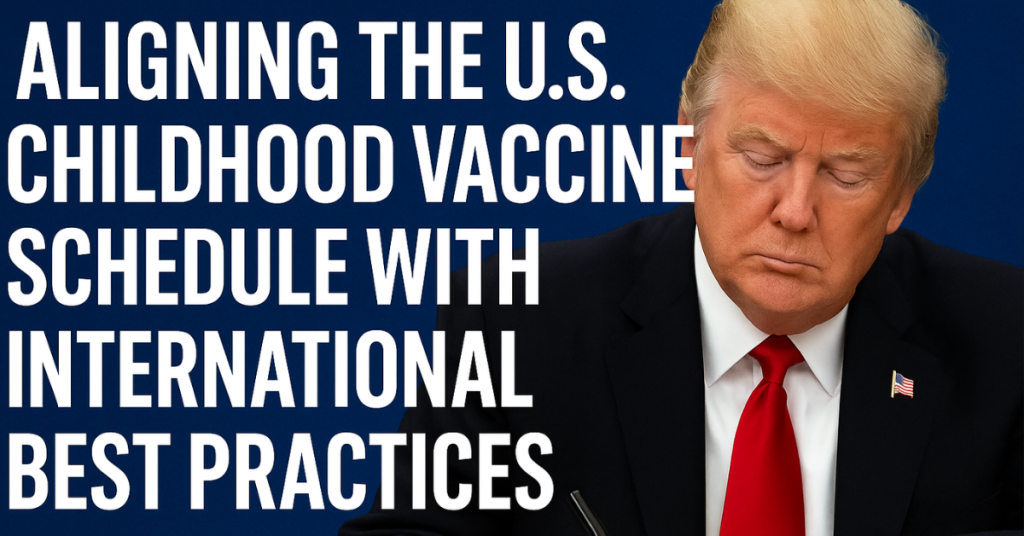
President Donald J. Trump signed a new Presidential Memorandum today directing federal health agencies to begin a full review of America’s childhood vaccine recommendations and compare them with the schedules used by peer, developed nations. The move marks the administration’s latest effort to reshape public health policy and respond to rising concerns about chronic disease, parental rights, and medical transparency.
A Mandate to Review Global “Best Practices”
Under the memorandum, the Secretary of Health and Human Services (HHS) and the Acting Director of the Centers for Disease Control and Prevention (CDC) must evaluate the vaccine schedules of countries such as Denmark, Germany, Japan, the United Kingdom, and others generally considered international leaders in healthcare outcomes.
The review will assess:
-
Which vaccines are recommended as “core” for all children
-
The scientific evidence those nations use to justify their recommendations
-
Differences in timing, spacing, and age of administration
If the HHS Secretary and CDC Director determine that another nation’s evidence-based approach is superior to current U.S. recommendations, they are instructed to update America’s childhood vaccine schedule accordingly—while maintaining access to all existing vaccines for families and clinicians who want them.
The directive represents a shift toward harmonizing U.S. vaccine policy with global norms rather than continuing America’s position as an outlier with one of the most aggressive childhood vaccination schedules in the developed world.
The U.S. as an Outlier
Today, the United States recommends that all children receive vaccines for 18 diseases, including COVID-19. That number exceeds most comparable nations:
-
Denmark: 10 diseases
-
Japan: 14 diseases
-
Germany: 15 diseases
In addition to the total number of recommended vaccines, timing and routine practices differ widely. The United States, for instance:
-
Recommends an annual influenza vaccine for all children starting at six months—a practice not shared by many peer nations.
-
Recommends universal hepatitis B vaccination at birth, even though most developed countries administer the shot at birth only for newborns whose mothers test positive for the infection.
Administration officials argue that calibrating U.S. practices to match those of high-performing nations will bring American public health back into alignment with international scientific consensus rather than relying on domestic inertia or outdated assumptions.
Part of a Broader Strategy to Improve Child Health
The vaccine-schedule review is one component of the administration’s wider initiative to combat what President Trump calls America’s escalating childhood health crisis.
MAHA Commission: Central Vehicle for Reform
In February, the President established the Make America Healthy Again (MAHA) Commission to investigate the roots of rising childhood chronic diseases—including allergies, autoimmune disorders, developmental delays, asthma, metabolic conditions, and more.
The Commission’s mandate includes:
-
Evaluating environmental, nutritional, and medical contributors to chronic illness
-
Reviewing federal public-health policies that may be outdated or unsupported by current evidence
-
Building a long-term national strategy for healthier children
Earlier this year, the Trump Administration also ended the blanket recommendation that every child receive the COVID-19 vaccine, shifting instead to a shared decision-making model between a child’s parents and clinician.
Strategic Reports Already Released
The Commission has already produced two major documents:
-
The Make Our Children Healthy Again Strategy
-
A sweeping plan outlining more than 120 initiatives designed to reverse the trends of childhood chronic disease and reform longstanding public-health policies.
-
-
The Make Our Children Healthy Again Assessment
-
A summary of current scientific knowledge, remaining uncertainties, and research priorities needed to understand the ongoing childhood chronic-illness landscape.
-
The newly signed memorandum aligns with these broader efforts by reevaluating foundational assumptions in pediatric health policy—starting with the nation’s vaccine schedule.
Toward a New Childhood Vaccine Framework
The administration argues that adopting “best practices” from successful peer countries will strengthen trust, improve health outcomes, and restore parental confidence in the public-health system. Supporters say the review is overdue, citing dramatic differences between U.S. vaccination routines and those of other countries with equal or better childhood health outcomes.
If the HHS and CDC review concludes that certain U.S. recommendations are unnecessary, improperly timed, or not supported by the strongest available evidence, the administration expects to update the childhood vaccine schedule accordingly.
For now, parents, clinicians, and policymakers await the agency findings—changes that could redefine American pediatric health policy for years to come.