

The Fall of Maduro and the Unanswered Questions Ahead
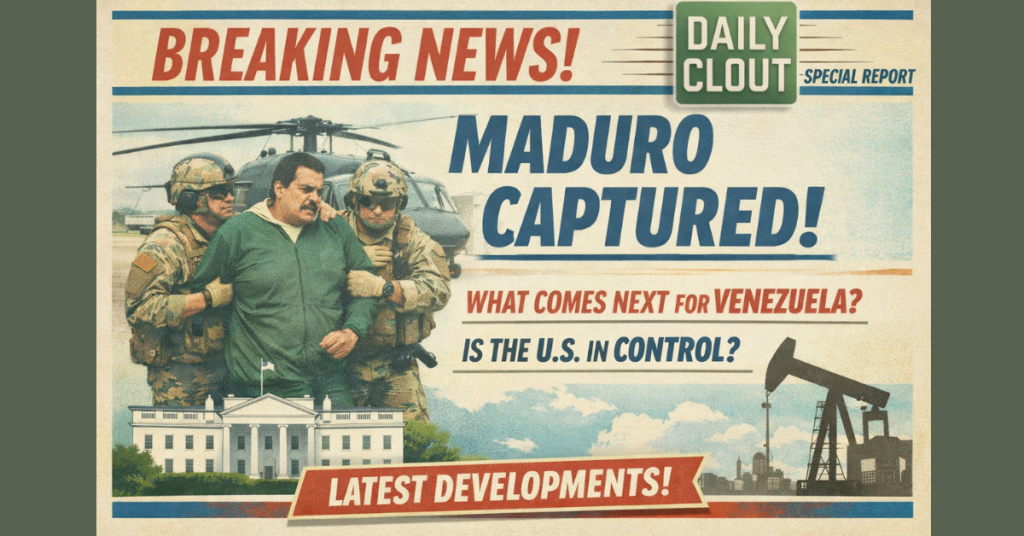
A dramatic escalation in U.S.–Venezuela tensions unfolded over the weekend when U.S. forces seized Venezuelan President Nicolás Maduro in Caracas and transferred him to New York to face federal drug-trafficking-related charges. President Donald Trump publicly framed the operation as a major success and said the United States would now “run” Venezuela during a transition. But within 24–48 hours, the questions eclipsing the tactical victory were political, legal, and humanitarian: Was the operation lawful under international rules? Who governs in Caracas now? And what happens to Venezuela’s institutions, security forces, and oil sector next? Reuters+2AP News+2
What happened
Multiple outlets report that Maduro and his wife, Cilia Flores, were captured in a U.S. military operation in Caracas and brought to the United States, where Maduro appeared in federal court and pleaded not guilty. Maduro described himself as “kidnapped,” while his defense signaled it will challenge the legality of the arrest and argue he has head-of-state immunity. AP News
U.S. messaging has presented the operation as tied to longstanding U.S. accusations that Maduro and associates are involved in narcotics trafficking and related crimes. Official U.S. statements and reporting indicate the case is proceeding through the Southern District of New York. AP News+1
Venezuelan authorities, meanwhile, said the operation involved strikes and disruptions in Caracas and reported fatalities; Reuters reported Venezuelan officials described deaths and infrastructure impacts, including power outages. Reuters+1
Trump’s claim the U.S. would “run” Venezuela — and the immediate reality
Trump’s public statements that the U.S. is “in charge” and would “run” Venezuela raised the stakes beyond a criminal apprehension and into the realm of de facto regime change and occupation-like governance. That framing matters because it changes how other countries—and international institutions—evaluate the event: as a law-enforcement action, a military intervention, or something in between. PBS+1
On the ground, however, the practical question is not only who holds Maduro, but who controls ministries, the military chain of command, and basic services in Venezuela today. Reporting points to Venezuelan officials asserting continuity under other senior leaders, while the U.S. has suggested a transition timeline without clear operational details. The gap between rhetoric and administration is where uncertainty is concentrated. PBS+2AP News+2
The international-law dispute
At the United Nations, the legality of the capture has become a central issue. Reuters reported that UN Secretary-General António Guterres warned the operation sets a “dangerous precedent,” and legal experts cited by Reuters argued it is widely regarded as unlawful absent UN authorization, Venezuelan consent, or a valid self-defense claim under Article 51 of the UN Charter. Reuters
A separate analysis by Chatham House also described the operation as posing a serious challenge to international law norms around sovereignty and the forced transfer of a sitting leader for trial. Chatham House
The U.S. position—at least as presented publicly—leans on the criminal allegations against Maduro and the claim that removing him is necessary for regional security and stability. Critics argue that even serious criminal accusations do not automatically justify unilateral military action inside another sovereign state.
Diplomatic reactions: condemnation, caution, and hedging
The diplomatic response has split along familiar lines. Reuters reported that Russia, China, and other Maduro-aligned governments condemned the operation as a violation of international law, while some U.S. partners responded more cautiously—emphasizing adherence to international law without directly rebuking Washington. Reuters
This cautious posture reflects competing interests: many governments have been critical of Maduro’s record, but also view cross-border seizures of sitting leaders as destabilizing and precedent-setting. The result is a tense diplomatic moment in which even countries that dislike Maduro may resist endorsing the method.
What happens inside Venezuela: the biggest unknowns
Even if Maduro remains in U.S. custody, the hardest questions are internal to Venezuela:
1) Chain of command and security services
If senior military or intelligence figures stay loyal to Maduro’s faction—or splinter—Venezuela could see a volatile struggle among elites. Conversely, if key commanders decide the Maduro era is over, a negotiated transition becomes more plausible.
2) Governance and legitimacy
Who has constitutional authority to govern in Maduro’s absence is contested. Maduro’s supporters say he remains the lawful president; opponents argue Venezuela’s institutions have long been compromised and require an internationally backed transition. AP News+1
3) Public order and humanitarian conditions
Any shock to governance risks worsening electricity reliability, fuel distribution, food supply, and migration pressures—problems Venezuela has wrestled with for years. Early reports of outages and casualties underscore how quickly conditions can deteriorate when major security operations hit critical infrastructure. Reuters+1
Oil, sanctions, and the “who benefits” debate
Venezuela’s oil sector is central to both Venezuelan survival and geopolitical competition. Trump’s comments—reported by major outlets—suggest an intent to reshape control and access to Venezuelan oil in the transition. Critics say this reinforces a perception of resource-driven intervention; supporters argue that restoring oil output could stabilize the economy and reduce migration pressures if managed transparently. People.com+1
The sanctions environment further complicates matters. Even a transitional authority would need clarity on:
-
which sanctions remain,
-
which licenses apply to foreign energy firms, and
-
how revenues would be handled to avoid corruption and ensure humanitarian relief.
The court fight ahead: immunity, evidence, and legitimacy
In U.S. court, the case will likely turn on jurisdiction, immunity claims, and admissible evidence—especially given the extraordinary manner of capture. AP reported Maduro pleaded not guilty and that his defense is expected to contest the legality of the operation and argue he is immune as a head of state. AP News
Even if U.S. prosecutors are confident in the underlying allegations, the optics and precedent of trying a foreign leader seized in a military operation could become a defining feature of the case—and a rallying point for Maduro’s allies.
What to watch next
Over the next days and weeks, five indicators will shape what comes next:
-
Who the Venezuelan armed forces recognize publicly (and whether units fracture).
-
Whether the U.S. clarifies a legal theory for the operation beyond criminal allegations. Reuters
-
UN actions—even if Security Council outcomes are constrained by veto politics. Reuters
-
Humanitarian conditions (power, fuel, security incidents, migration flows). Reuters
-
Oil policy signals—sanctions licensing, PDVSA governance, and revenue controls. PBS+1
Bottom line
Maduro’s capture is undeniably a watershed event: tactically stunning, politically explosive, and legally contested. Supporters of the operation argue that Maduro’s alleged criminal conduct and Venezuela’s long crisis justified decisive action. Critics argue that how the United States acted may erode international norms, destabilize Venezuela further, and set a precedent other powers could mimic. With Caracas unsettled and Washington’s “what next” still unclear, the outcome hinges less on one raid than on whether a legitimate, workable political order can emerge without spiraling into wider conflict. Reuters+2Chatham House+2