



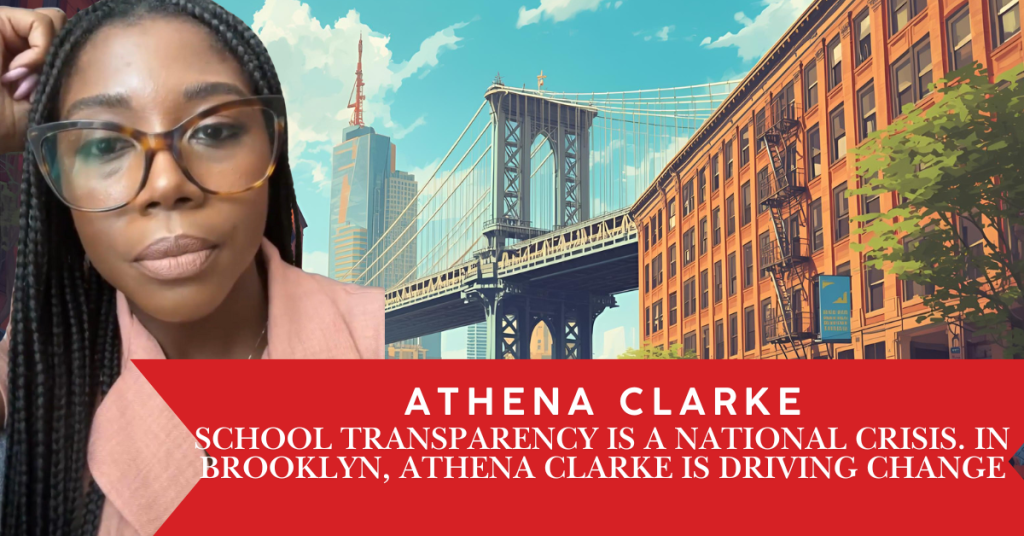
School Transparency Is a National Crisis. In Brooklyn, Athena Clarke Is Driving Change
Across the country, debates over what children are taught — and who gets to decide — have become a persistent flashpoint in local politics. Courts, statehouses, and school boards are wrestling with questions about parental notification, curriculum content, and the balance between student privacy and family authority. Recent high-court rulings and a flurry of state-level battles show this is not an isolated local dispute but a broad, structural issue facing America’s public schools.
Those national controversies matter because schooling is where civic habits are formed. When families feel shut out of decisions about lessons that touch on personal, cultural, or moral questions, trust frays and classrooms become sites of contention rather than inquiry. That dynamic has produced campaigns and proposals—from federal “Parents’ Bill of Rights” efforts to state statutes and litigation—seeking clearer rules about notification, opt-outs, and parental access to curricula. The court cases and legislative debates underscore that policymakers must design rules that respect both pedagogical integrity and legitimate parental concerns.
Brooklyn’s District 46 is one place where those national tensions have found a local leader in Athena Clarke. A first-generation New Yorker, public-school teacher, and City Council candidate, Clarke frames transparency not as a partisan slogan but as a practical governance reform: clear curriculum guides, advance notice for lessons addressing identity and morals, and structured parent advisory roles so families can review and discuss material before it reaches the classroom. Clarke’s campaign emphasizes restoring trust between schools and families through specific, implementable policies rather than platitudes.
Athena Clarke’s approach is straightforward and parent-centered. As she has put it:
“Parents deserve to be informed about what their children are learning, particularly when the curriculum includes sensitive or potentially controversial subjects. Transparency is not just a courtesy—it’s a fundamental part of building trust between educators and families.”
And on consent and advance notice:
“When schools plan to introduce content that touches on personal, cultural, or moral issues, parents should be notified in advance. This gives families the opportunity to review the material, ask questions, and determine whether it aligns with their values. In many cases, obtaining parental consent before proceeding with certain lessons ensures that educational goals are met without compromising the family’s right to guide their child’s development.”
These are not abstract commitments. Clarke’s platform proposes concrete steps: publish accessible curriculum guides online, give families advance notice and lesson summaries for sensitive units, create opt-in procedures where appropriate, and convene inclusive parent advisory panels to vet materials and propose constructive changes. Those measures aim to preserve a robust academic curriculum while restoring families’ ability to see and shape what their children are learning.
Good policy design can thread the needle between parental engagement and teachers’ professional judgment. Transparency does not have to mean a veto over basic civics, history, or science; instead, it should mean predictable, respectful processes that allow educators and parents to collaborate. When lesson plans are public and parents are given meaningful notice, the classroom becomes less a battlefield and more a shared project of community formation. That is the practical logic behind Clarke’s campaign and why local reforms can matter nationally: well-crafted local practices provide templates for districts across the country wrestling with the same issues.
If national conversation about parental rights and school transparency is to lead to durable improvement, it will require a mix of policy clarity, legal safeguards for vulnerable students, and civic patience. Leaders like Athena Clarke, who bring classroom experience and a concrete policy agenda to the debate, help move the discussion from accusation to governance. Brooklyn’s experiments in notice, consent, and parent advisory structures can be a model for other communities seeking to rebuild trust without sacrificing educational standards.
Support Athena Clarke’s campaign here!