



Rollins Greenlights New SNAP Restrictions as MAHA Push Accelerates
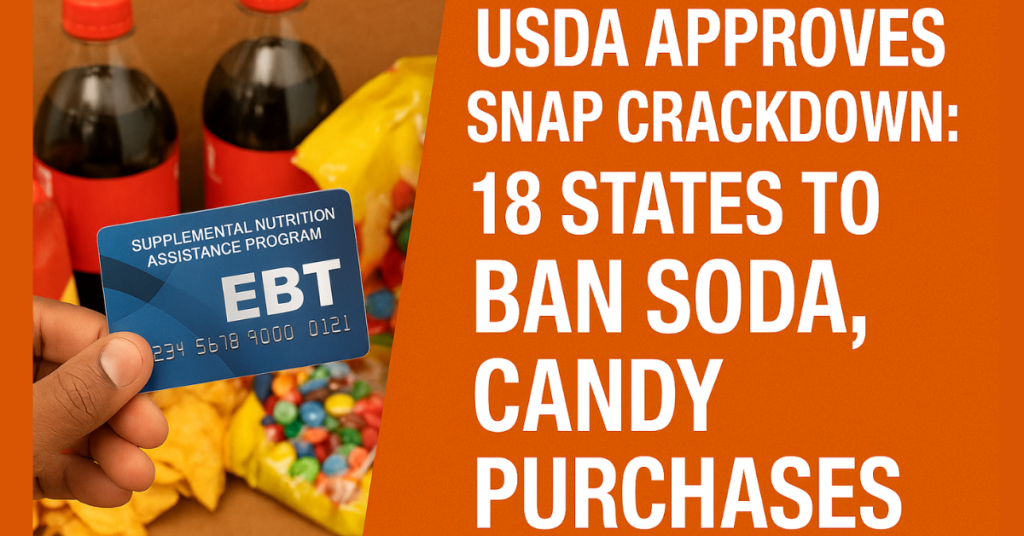
Agriculture Secretary Brooke Rollins announced Wednesday that the U.S. Department of Agriculture (USDA) has approved waivers for six additional states to restrict the use of Supplemental Nutrition Assistance Program (SNAP) benefits for purchasing items such as soda, candy, and energy drinks. The move marks the latest expansion of the Trump administration’s “Make America Healthy Again” (MAHA) initiative, which seeks to align federal food programs with nutritional and public health goals.
With the new approvals for Hawaii, Missouri, North Dakota, South Carolina, Virginia, and Tennessee, a total of 18 states now have authorization to limit SNAP purchases of high-sugar, low-nutrient foods.
“President Trump has made it clear: we are restoring SNAP to its true purpose – nutrition,” Rollins said in a statement. “Under the MAHA initiative, we are taking bold, historic steps to reverse the chronic diseases epidemic that has taken root in this country for far too long.”
A Coordinated Push to Reduce Diet-Driven Disease
The administration’s argument centers on the growing cost of chronic disease—conditions like diabetes and heart disease that are strongly linked to diet and disproportionately affect low-income populations.
Health and Human Services Secretary Robert F. Kennedy Jr., who has worked closely with Rollins on the MAHA strategy, emphasized that taxpayers effectively pay twice under the current system.
“We cannot continue a system that forces taxpayers to fund programs that make people sick and then pay a second time to treat the illnesses those very programs help create,” Kennedy said.
The restrictions allowed under the waivers differ state to state but all prohibit SNAP funds from being used to buy soft drinks, candy, and energy drinks—products critics argue contribute little nutritional value while fueling rising healthcare costs.
Supporters Call It a Logical Return to SNAP’s Purpose
Supporters of the policy say the shift restores integrity to a program originally intended to promote nutrition rather than simply provide broad food access.
Jennifer Galardi, a senior policy analyst with the Restoring American Wellness initiative at The Heritage Foundation, praised the move:
“The word ‘nutrition’ is inherent in the SNAP acronym. There is no nutritive value in soda,” Galardi said.
“If taxpayers are footing the bill to help manage the chronic disease epidemic… we shouldn’t have to foot the bill for the products that contribute to those chronic diseases.”
She added that while individual choice is important, public funds have limits.
“When those choices are taxpayer-funded and cause skyrocketing health care costs, the government can decide whether or not to restrict those choices based on their contribution—or burden—to the public good.”
States Gain Advantage in Rural Health Funding
At the USDA event, Dr. Mehmet Oz, Director of the Centers for Medicare and Medicaid Services (CMS), noted that states adopting the MAHA-aligned restrictions will receive preference in applications for a new $50 billion rural health fund created earlier this year.
The incentive is intended to encourage states to integrate nutrition policy with public health planning, especially in regions facing high rates of diet-related disease.
Dietary Guidelines and Agricultural Overhaul Also Underway
Rollins and Kennedy have also partnered on revising the U.S. Dietary Guidelines, set for release in January. Rollins said the updated guidelines will “suggest limiting highly processed foods and those high in sugar,” marking one of the most significant shifts in federal nutrition messaging in nearly a decade.
The SNAP reforms come alongside broader structural changes at USDA, including a $700 million investment in regenerative agriculture announced this week to encourage farmers to adopt conservation-driven practices that improve soil health and nutrient quality.
In contrast, earlier this year the administration canceled a $3 billion sustainable farming program, signaling a shift toward MAHA-aligned priorities rather than legacy climate-oriented projects.
A Major Realignment of Federal Nutrition Policy
Taken together, the SNAP waivers, revised dietary guidelines, and regenerative agriculture funding represent one of the most ambitious attempts in recent decades to tie federal food policy directly to public health outcomes.
Whether the state-level restrictions reduce chronic disease rates—or become a political flashpoint over government overreach—remains to be seen. But with 18 states now on board and financial incentives in place, the MAHA agenda continues to reshape how the federal government approaches food, health, and nutrition.