



Rising Tensions: Evidence Challenges ‘No Iran Threat’ Claims
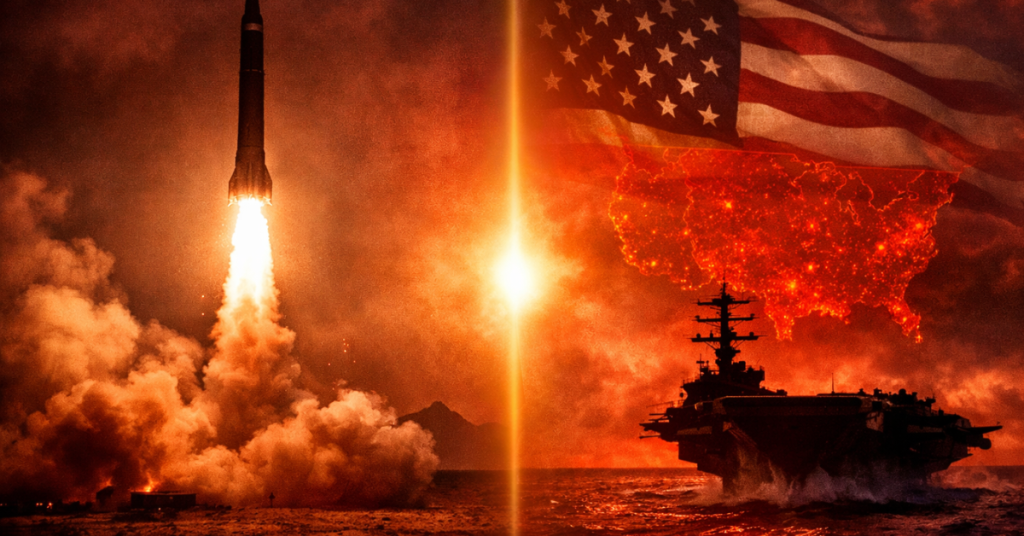
The debate over the Iran threat to the United States has intensified in recent days, as media outlets, lawmakers, and national security officials remain divided over whether Tehran posed an imminent danger warranting military action. While some critics argue that recent strikes were unnecessary, a broader body of evidence suggests Iran has maintained a pattern of hostility toward the United States for decades, with recent developments reinforcing concerns about its capabilities and intent.
Since the Iranian Revolution, Iran has positioned itself as a direct adversary of the United States, supporting proxy groups and engaging in operations that have targeted American personnel and interests. Among the most notable incidents was the 1983 Beirut barracks bombing, which killed 241 U.S. service members and has long been attributed to Iran-backed militants.
More recently, U.S. officials have pointed to alleged assassination plots tied to Iranian intelligence networks. Federal prosecutors have charged multiple individuals in connection with murder-for-hire schemes targeting American political figures, including one case in which a defendant admitted to acting on behalf of Iranian intelligence. Another suspect linked to a similar plot remains at large and is believed to be in Iran.
The question of how to interpret these actions has created a split within the national security community. Joe Kent resigned following U.S. strikes on Iranian targets, stating that Iran posed no imminent threat and that the escalation was unnecessary. In contrast, John Ratcliffe told lawmakers that Iran did pose an immediate threat, underscoring the disagreement over how intelligence should be evaluated in this context.
Former CIA officer Charles Faddis has argued that the focus on imminence may obscure a larger reality. He has said that Iran has been responsible, directly or through proxies, for the deaths of numerous Americans over many years and continues to pursue capabilities that could significantly elevate the threat.
Those capabilities include an expanding ballistic missile program and continued development of nuclear technology. U.S. officials have warned that Iran already possesses missiles capable of striking American bases in the Middle East and parts of Europe, and could eventually develop intercontinental ballistic missiles capable of reaching the United States. Donald Trump has described the prospect of a nuclear-armed Iran with long-range missiles as a “dire threat to every American.”
Concerns have also been raised about Iran’s efforts to strengthen its conventional military capabilities. Reports indicate Tehran has explored acquiring advanced anti-ship cruise missiles from China, including systems capable of threatening U.S. naval vessels in the region. Analysts note that such weapons could significantly reduce response times for U.S. defenses, increasing the risk to aircraft carriers and other assets.
At the same time, Iran has continued to deepen its relationships with foreign partners. A reported deal with Russia for advanced shoulder-fired missile systems highlights ongoing military cooperation that could enhance Iran’s defensive and offensive capabilities in future conflicts.
Domestically, U.S. authorities have taken action against individuals with alleged ties to Iranian networks. Immigration and law enforcement agencies have detained or deported several Iranian nationals in recent years, including some with reported connections to the Islamic Revolutionary Guard Corps. While officials caution that such cases do not necessarily indicate coordinated plots, they have contributed to broader concerns about potential security vulnerabilities.
The central disagreement remains whether Iran’s actions constitute an immediate threat or a long-term strategic challenge. Critics of recent military action argue that intelligence assessments did not support the conclusion that an attack was imminent. Supporters counter that Iran’s continued development of missile technology, pursuit of nuclear capabilities, support for proxy groups, and involvement in covert operations together represent a clear and growing danger.
As tensions continue to evolve, the debate over how to define and respond to the Iran threat to the United States is likely to remain a central issue in U.S. foreign policy, with significant implications for both regional stability and national security.