



Nigeria Confirms Trump-Ordered Christmas Airstrikes on ISIS
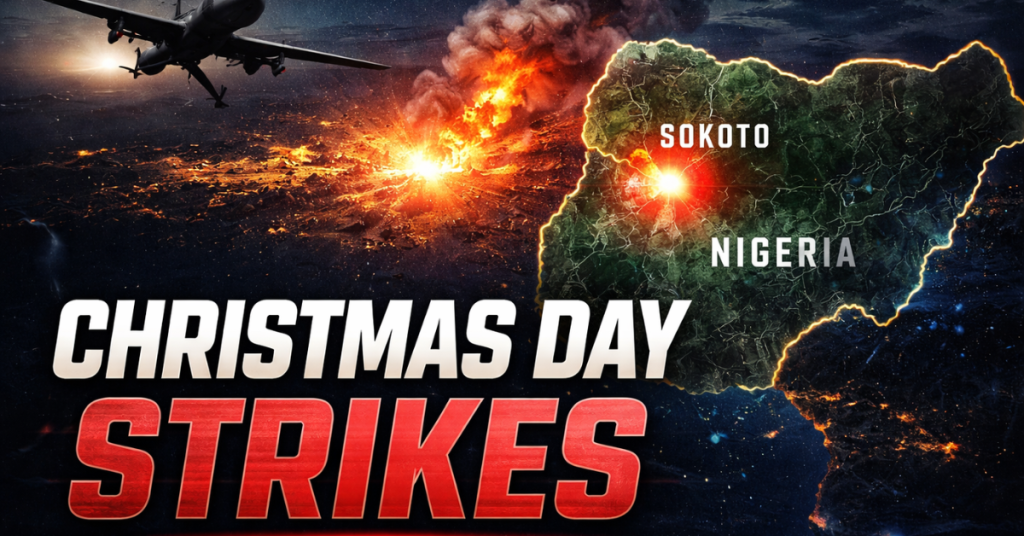
U.S. airstrikes ordered by Donald Trump on Christmas Day struck Islamic State (ISIS) camps in northwest Nigeria, with Nigerian officials confirming the operation was fully authorized at the highest levels of both governments.
Nigeria’s Foreign Affairs Minister Yusuf Tuggar said the strikes were conducted after direct coordination with Washington, including discussions with Marco Rubio, and with the explicit approval of Nigerian President Bola Tinubu. According to Tuggar, Nigeria gave the formal “go ahead” prior to the operation.
The airstrikes targeted ISIS-linked camps in Sokoto State, a region bordering Niger that has increasingly become a corridor for extremist activity. U.S. Africa Command confirmed that the operation was carried out “in coordination with Nigerian authorities” and resulted in the deaths of multiple ISIS fighters.
A Response to Rising Violence Against Christians
President Trump announced the strikes late Thursday, citing the terrorist group’s role in killing “innocent Christians.” Nigeria has long struggled with Islamist violence, particularly in its northern regions, where jihadist groups have targeted churches, Christian villages, and moderate Muslims alike.
While Boko Haram remains the most widely known extremist organization in the country, ISIS-affiliated factions operating under the banner of the Islamic State West Africa Province (ISWAP) have expanded their footprint in recent years. Analysts say these groups have increasingly exploited porous borders, local grievances, and regional instability stretching across Nigeria, Niger, and the broader Sahel.
The Christmas Day timing of the strikes underscored their symbolic weight. For Nigerian Christians, Christmas has often been marked by heightened security concerns, with past holidays marred by mass-casualty attacks. Nigerian officials framed the operation as both a tactical and moral response to that threat.
Nigerian Government Welcomes U.S. Support
Tuggar emphasized that Nigeria remains open to cooperation with any partner willing to confront terrorism decisively. “Whoever is prepared to work with us to fight terrorism, we’re ready, willing and able,” he said, signaling Abuja’s continued reliance on international military partnerships amid ongoing security challenges.
Nigeria’s armed forces have struggled to fully contain insurgent groups despite years of counterterrorism operations. Limited airpower, intelligence gaps, and difficult terrain have made foreign support—particularly U.S. surveillance and strike capabilities—a critical force multiplier.
Unlike some past U.S. operations in Africa that have drawn criticism for lack of host-nation consent, Nigerian officials were quick to stress that these strikes were invited and coordinated, not imposed.
Part of a Broader Shift in Counterterror Policy
The Nigeria strikes align with Trump’s broader approach to counterterrorism, which has favored rapid, decisive military action over prolonged nation-building or advisory missions. During his presidency, Trump repeatedly argued that terrorist networks should be destroyed at their source rather than managed through open-ended deployments.
Africa has increasingly become a focal point in that strategy. As ISIS loses territory in the Middle East, affiliated groups in Africa have grown more aggressive, particularly in Nigeria, Mali, Burkina Faso, and Niger. U.S. defense officials have warned that these regions risk becoming the next major hub for global jihadist operations if left unchecked.
Regional Implications
Security experts say the strikes may disrupt ISIS operations in northwest Nigeria in the short term, but lasting stability will depend on sustained pressure, improved governance, and regional coordination. Sokoto’s proximity to Niger highlights the transnational nature of the threat, as fighters and weapons flow freely across borders.
For now, Nigerian leaders are portraying the Christmas Day airstrikes as a successful example of sovereignty-respecting cooperation—one that sends a clear message to terrorist groups targeting civilians on religious grounds.
As Tuggar put it, Nigeria’s position is straightforward: those who attack innocent people, particularly on holy days, should expect a unified and forceful response.