
ADL Never Is Now 2026: Confronting Antisemitism and Hate through Unity, Action and Resolve.
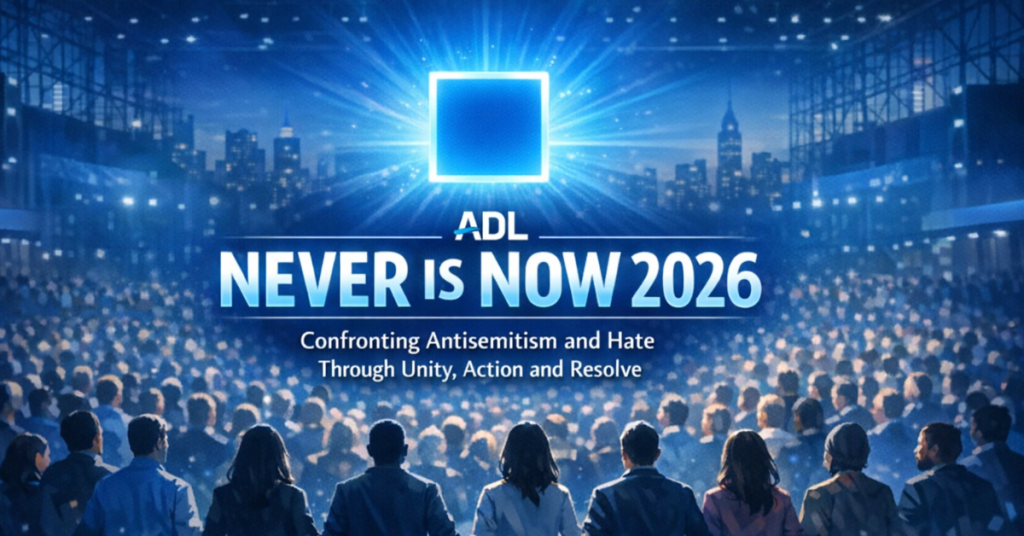
In a moment defined by global uncertainty, rising hatred, and deepening societal fractures, more than 4,000 attendees and leaders from across the worlds of business, technology, faith, media, sports, and culture gathered in New York City for what became not just a conference—but a call to action. The Never Is Now Summit 2026, hosted by the Anti-Defamation League at the Jacob K. Javits Center, unfolded as a powerful and wide-ranging assembly confronting antisemitism in modern times.
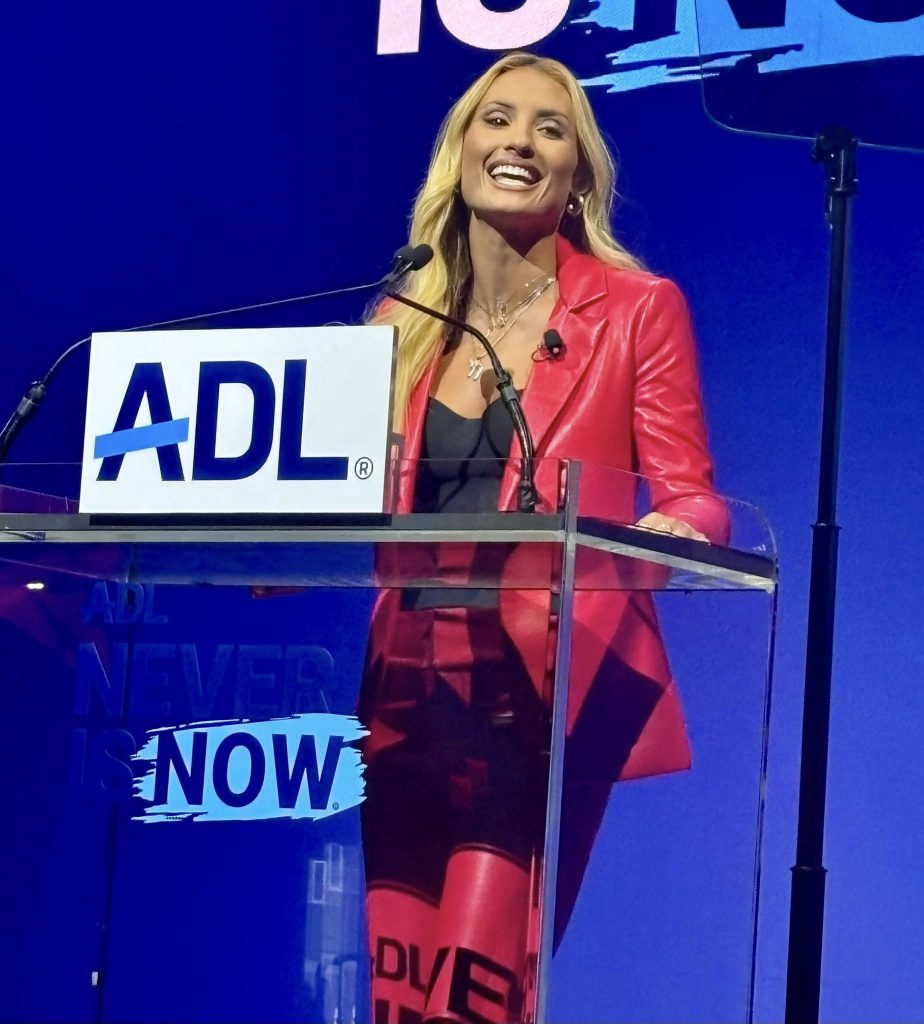
From the opening moments, the tone was unmistakable. Emcee Montana Tucker—an American actress, singer, global influencer with millions of followers on her social media, and the granddaughter of Holocaust survivors—brought both energy and gravity to the stage. She reminded the audience that memory alone is not enough, that the stories of the past must be actively carried forward into the present. Drawing from her own family’s survival and her work educating millions online, Tucker framed the summit not as a passive experience, but as a responsibility.
That sense of urgency was reinforced immediately by ADL CEO Jonathan Greenblatt, who delivered a sobering assessment of the current landscape. Delivering his “State of Hate” address, antisemitism, he warned, is no longer confined to the margins—it is pervasive, normalized, and increasingly dangerous. From deadly attacks around the world to the quiet but chilling reality of Jewish identity being concealed even in modern institutions, Greenblatt made clear that this moment demands more than awareness; it demands action. His framework—protect, advocate, educate—was not presented as theory, but as a coordinated strategy already being deployed through advanced technology, legal action, and policy pressure.
Throughout the two-day gathering, that strategy came to life in real time. Conversations moved seamlessly from the main stage to breakout rooms filled with educators, legal experts, faith leaders, and young activists. Panels examined everything from campus hostility and media bias to the role of artificial intelligence in amplifying or combating hate. A major focus was the ADL’s growing use of data science and AI to track antisemitic threats, alongside its widely discussed Campus Antisemitism Report Card—an accountability tool now influencing behavior at universities nationwide.
Yet the summit was not only about systems and strategy; it was about people, and the moral clarity required to stand up in a difficult moment. One powerful highlight came when Emmanuel Acho, an American sports analyst, former professional NFL football player and author, took the stage to receive the inaugural Ally Award. Speaking with conviction, an energized Acho described allyship as an active choice—one that often comes with personal cost. He shared a story of being confronted in public simply for standing with the Jewish community, a moment that gave him a deeper understanding of the fear many Jews experience daily. His message resonated across the room: justice requires those unaffected to feel the same urgency as those under attack.
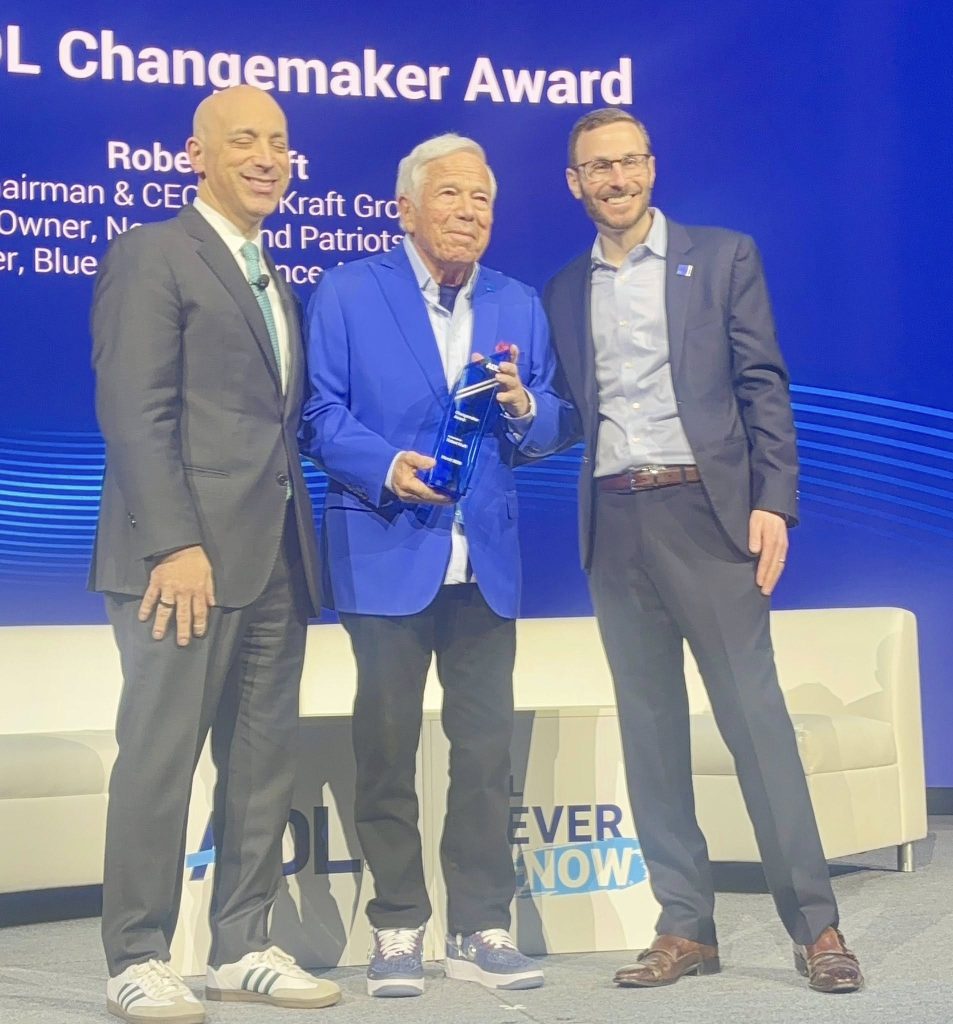
That theme of responsibility extended into the business and philanthropic world, uniting leaders from every sector in society, where Robert Kraft was honored with the Changemaker Award. Kraft, CEO of the Kraft Group, most notably owner of the New England Patriots and founder of the Blue Square Alliance Against Hate, spoke about the power of unity and the symbolism of the blue square as a visible stand against antisemitism and all forms of hate.
His presence underscored the growing role of corporate leadership in confronting social crises—not from the sidelines, but at the forefront. A blue square pin was available for every attendee. More than symbolic, it reflects a broader call for collective responsibility and public solidarity in confronting hate.
Moments of reflection and humanity were woven throughout the program. Music legend Gloria Gaynor brought the audience to its feet before delivering deeply personal remarks that emphasized the inherent dignity of every human being. Fighting emotion, she spoke of values instilled in her from childhood—that dignity is not something granted or revoked, but something permanent—and the crowd responded with sustained applause. It was a reminder that beyond policy and politics, the fight against hate is ultimately rooted in how society chooses to value human life.
Voices from media and entertainment also played a central role in the conversation. Actor Jerry O’Connell made a special appearance, sharing personal reflections that highlighted the increasingly hostile environment faced by those willing to speak out, and his emotional assessment of accompanying his Jewish friend to view the October 7 compilation film.
Across panels, journalists, influencers, and content creators examined how narratives are shaped in the digital age—where misinformation spreads rapidly and where individuals, not just institutions, are now on the front lines of truth-telling.
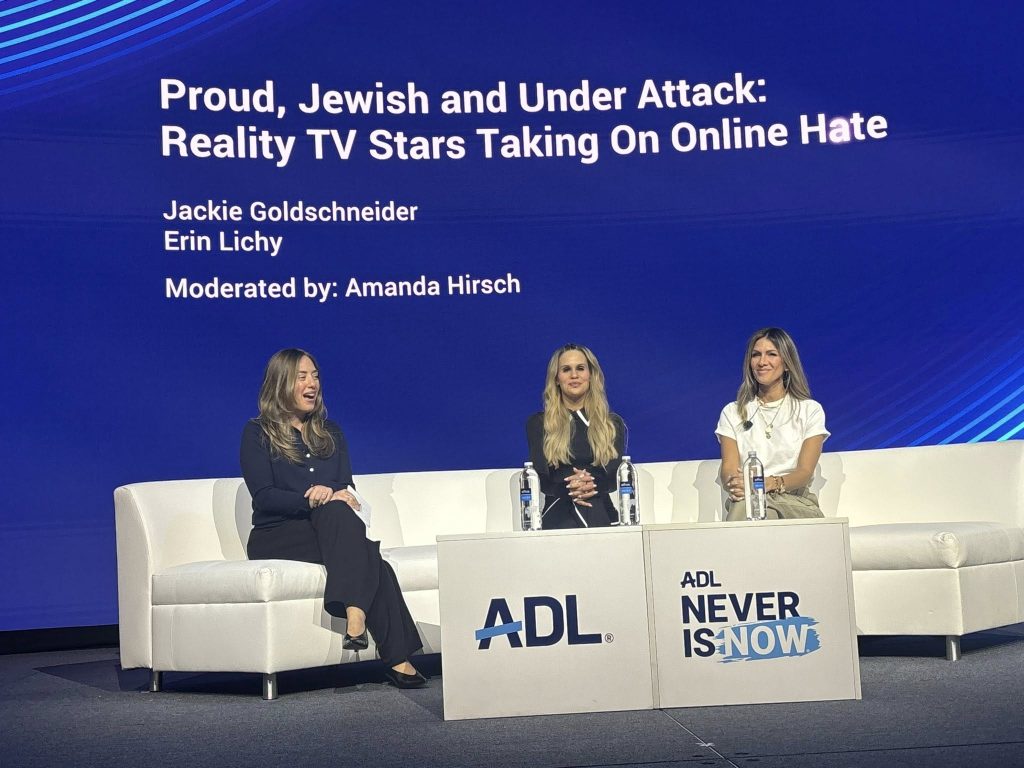
Other notables, include a speech against hate and for inclusivity from CEO of Gap, Inc. Richard Dickson, and even TV reality stars. Appearing on stage was the panel “Proud, Jewish and Under Attack: Reality TV Stars Taking on Online Hate,” featuring Erin Lichy and Jackie Goldschneider, moderated by Amanda Hirsch, highlighting the realities of confronting antisemitism in the public eye.
The summit also featured powerful video remarks from international leaders, underscoring the global dimension of the fight against antisemitism. Israel’s Ambassador Yechiel Leiter delivered a message framing antisemitism as an ancient and evolving force, explaining that while it has taken different forms over thousands of years, today it often manifests as anti-Israel and anti-Zionist sentiment—yet remains rooted in the same underlying hatred.
Additional video messages were delivered by U.S. Ambassador Mike Huckabee and Israel’s President Isaac Herzog, reinforcing the importance of unity between Israel and Jewish communities worldwide. Herzog, reminded us that “Never Again is not just a slogan, but a covenant” of the Jewish people.
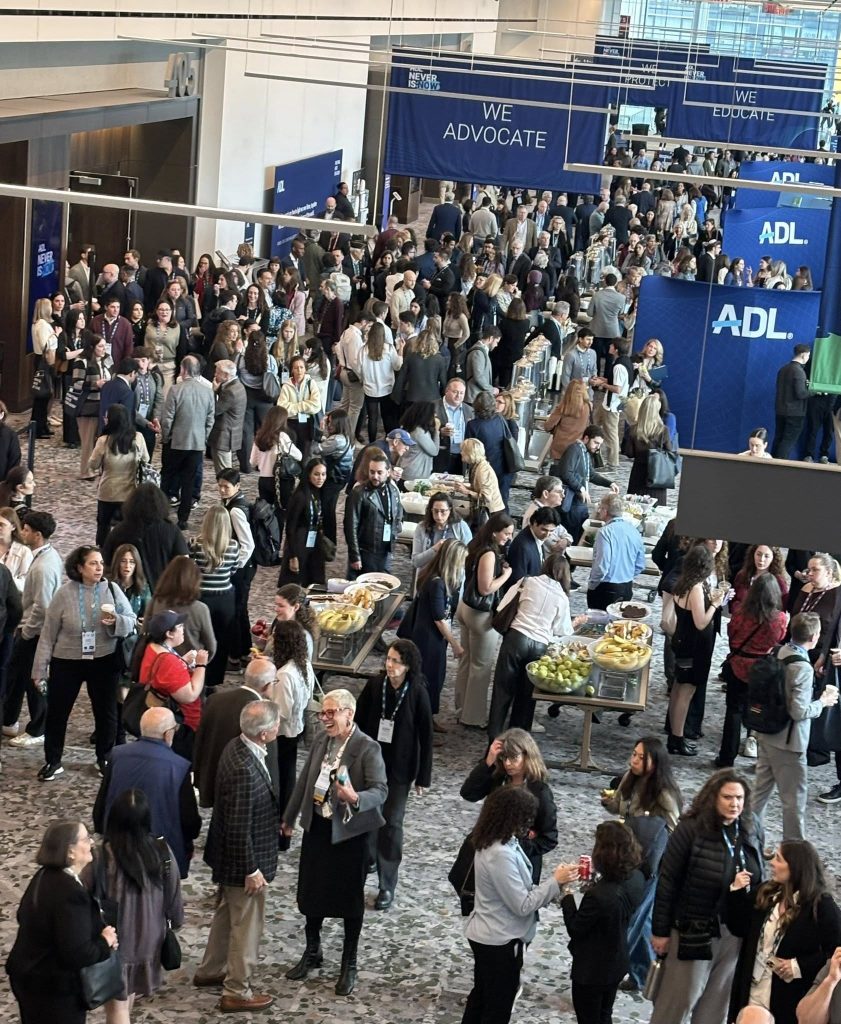
The summit’s reach and enthusiasm extended onto the convention floor, where a wide range of exhibits, advocacy groups, and vendors filled the space. The “Shop ADL” area added to the experience, offering materials and resources that allowed participants to take the mission beyond the summit.
Figures spotted like Moshe Davis and Fred Kreigsman former officials in Mayor Adams’ administration, outspoken lawyer Abraham Hamra, hip-hop artist Kosha Dillz and other social media voices such as Tessa Veksler engaged in breakout sessions and conversations that reflected the diversity of the movement. Religious leaders, student activists, and cross-cultural partners emphasized coalition-building, particularly the importance of strengthening relationships between Jewish communities and allies across faiths and backgrounds.
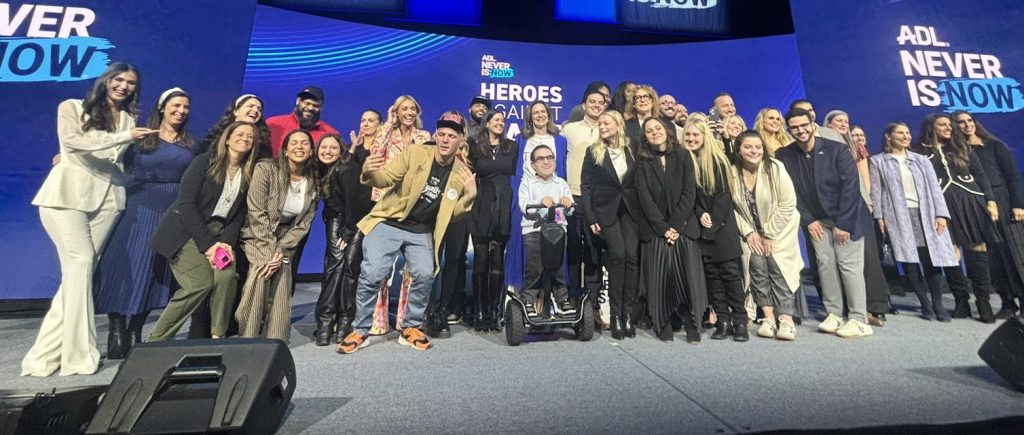
By the time the summit moved into its closing sessions, the atmosphere had shifted from urgency to determination. What began as a gathering to confront a crisis had transformed into something larger—a coordinated movement fueled by shared purpose. The recurring message, echoed from the stage and in conversations throughout the halls, was that this work does not end when the conference does.
And as attendees filtered out of the Javits Center, returning to their respective spheres of influence, this was not just a moment to witness. It was a moment to lead—one that called on every individual to carry the fight forward, to speak up, stay involved, share experiences, and commit to educating and advocating in ways both big and small.
Subscribe to DailyClout so you never miss an update!