



Minnesota in the Crosshairs as FBI Widens Fraud Investigations
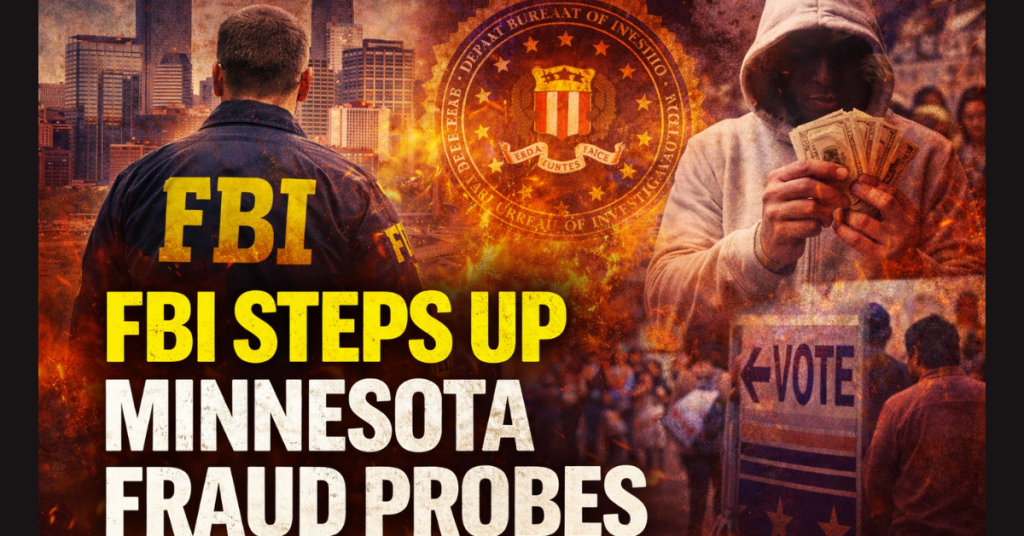
The FBI has expanded its operational footprint in Minnesota, citing the need to pursue large-scale fraud involving federal aid programs, a move that comes amid intensifying political rhetoric over immigration, public spending, and federal oversight.
Federal officials say the increased presence is focused on investigating alleged misuse of pandemic-era relief funds, welfare programs, and other taxpayer-backed assistance initiatives. According to law-enforcement sources, some of the cases involve complex financial networks, shell organizations, and coordinated schemes that exploited gaps in federal and state oversight.
While fraud investigations of this scale are not new, the timing has drawn attention. Minnesota has become a focal point in broader national debates over immigration enforcement, refugee resettlement, and the management of public benefits, placing federal law enforcement activity under heightened political scrutiny.
Critics argue that years of lax oversight and rapid expansion of aid programs created ripe conditions for abuse, while supporters of the investigations say the FBI’s actions are long overdue and necessary to protect taxpayers and restore trust in public institutions.
State officials have pushed back against suggestions that Minnesota is uniquely vulnerable, noting that federal fraud has been uncovered across multiple states. However, law-enforcement sources acknowledge that Minnesota’s dense web of nonprofit organizations and social-service administrators has complicated efforts to track how funds were ultimately used.
The expanded FBI operations also intersect with broader concerns about the role of federal agencies in politically sensitive environments. Some observers warn that aggressive enforcement risks being interpreted through a partisan lens, particularly as national debates over election integrity, immigration policy, and federal authority continue to escalate.
At the same time, federal officials insist the investigations are narrowly focused on financial crimes, not ideology. They point to detailed forensic accounting, grand jury subpoenas, and coordinated efforts with inspectors general as evidence that the cases are driven by evidence rather than politics.
The developments place Minnesota at the center of a growing national question: how to balance aggressive enforcement against fraud with public confidence that federal power is being exercised evenly and transparently.
As investigations continue, both state and federal authorities are bracing for additional indictments, asset seizures, and political fallout—outcomes likely to fuel further debate over accountability, governance, and the limits of federal intervention.