



Minnesota Fraud Scandal: Congress Says Walz Ignored Warnings
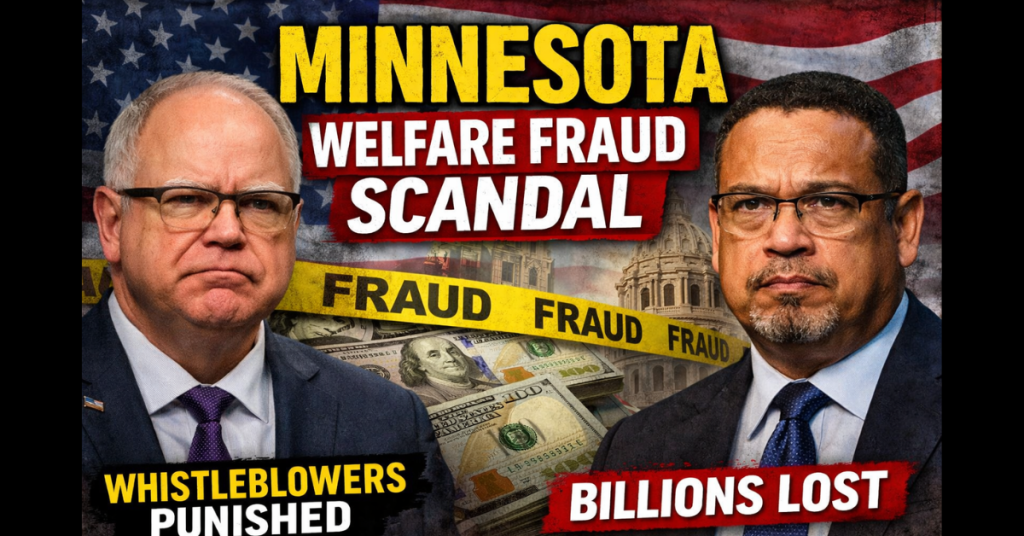
A new report from the House Committee on Oversight and Government Reform has ignited a political firestorm in Washington and Minnesota, alleging that senior state officials, including Governor Tim Walz and Attorney General Keith Ellison, were aware of large-scale fraud in federally funded welfare programs for years but failed to act decisively to stop it.
The report, titled “The Cost of Doing Nothing: How Tim Walz and Keith Ellison Fueled Minnesota’s Fraud Explosion,” draws on testimony from nine current and former Minnesota officials and documents collected during a congressional investigation. According to the committee, the evidence suggests that state leaders knew about fraud concerns as early as 2019 but allowed questionable payments to continue for years.
Walz and Ellison were scheduled to testify before Congress as lawmakers attempt to determine what state officials knew and when they knew it.
Billions in Taxpayer Funds Allegedly Lost
The House investigation centers on what lawmakers describe as one of the most significant breakdowns in public oversight of social programs in recent memory.
According to the committee’s findings:
-
Fraud tied to Minnesota social service programs may total as much as $9 billion or more, including potential losses in Medicaid and related programs.
-
The now-infamous “Feeding Our Future” case alone involved roughly $250 million in alleged fraud, where defendants claimed to serve meals to children during the pandemic but instead diverted funds to luxury purchases and real estate.
-
In total, dozens of defendants have been charged, and the number of individuals implicated continues to grow as investigations expand.
Federal officials have called the Feeding Our Future case the largest pandemic-era fraud scheme uncovered in the United States.
Warnings About Fraud Date Back Years
One of the most significant revelations in the Oversight Committee report is the timeline.
Investigators say internal complaints and warnings about fraud in Minnesota programs surfaced well before the pandemic.
According to testimony reviewed by the committee:
-
State officials received credible fraud warnings by 2019 within the Department of Human Services.
-
Concerns reached the Minnesota Department of Education by April 2020, meaning senior leadership would likely have been informed.
-
State agencies had legal authority to suspend payments to suspected fraudulent providers, yet continued sending funds.
Investigators say funding continued even after officials identified “serious deficiencies” in the programs.
The Feeding Our Future Case
At the center of the controversy is the nonprofit Feeding Our Future, which administered pandemic food aid programs in Minnesota.
Federal prosecutors allege that participants:
-
Claimed to serve thousands of meals to children daily
-
Submitted falsified attendance records
-
Diverted taxpayer funds into personal accounts
In some cases, money allegedly financed luxury vehicles, homes, and overseas transfers.
Despite early warning signs, the Minnesota Department of Education continued payments to the organization after a legal dispute, citing fears that cutting funds could lead to a lawsuit.
Congressional investigators say no court order actually required the state to resume payments.
Allegations of Whistleblower Retaliation
Another major component of the congressional report involves claims that employees who tried to raise alarms about fraud faced retaliation.
According to the committee:
-
Multiple whistleblowers said they were discouraged from reporting concerns
-
Some were warned they could be labeled “racist” or “Islamophobic” if they questioned certain fraud schemes
-
Others said they were sidelined or removed from investigations
The committee says it has spoken with dozens of whistleblowers during the course of the investigation.
Walz and Ellison Defend Their Record
Governor Walz and Attorney General Ellison have rejected claims that they ignored fraud.
In congressional testimony and public statements, Walz has argued that Minnesota has spent years cracking down on fraud and prosecuting offenders, pointing to hundreds of fraud-related convictions across state programs.
Minnesota officials also argue that the issue has been politicized in Washington, particularly after federal officials moved to withhold hundreds of millions of dollars in Medicaid funding while demanding anti-fraud reforms.
Walz recently proposed a new anti-fraud package that would expand investigative authority, increase penalties for public benefits fraud, and strengthen oversight of grant programs.
A Growing National Political Fight
The investigation has become the latest flashpoint in a broader national debate about pandemic spending, government oversight, and fraud in public assistance programs.
Republican lawmakers argue the Minnesota case shows what happens when oversight breaks down in large federal programs.
Democrats counter that fraud exists in many states and that the issue is being used to justify cuts to social programs that millions rely on.
With congressional hearings ongoing and multiple federal prosecutions still underway, the full scope of the alleged fraud may not be known for years.
But the Oversight Committee’s report has already ensured one thing: Minnesota’s welfare programs, and the political leadership responsible for overseeing them, will remain under intense scrutiny in Washington.