



Lindsey Graham Pressures Saudi Arabia to Join War on Iran
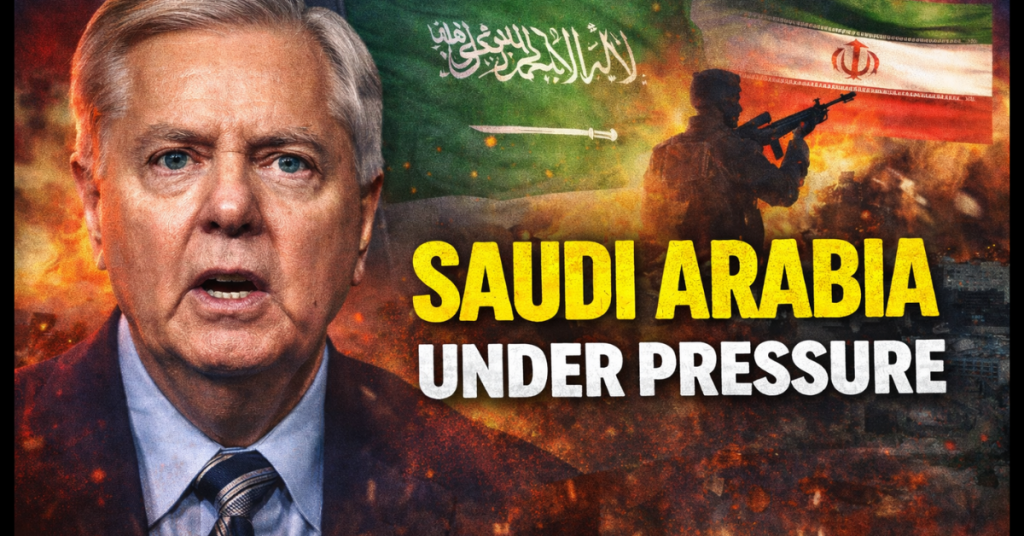
Sen. Lindsey Graham is escalating pressure on one of America’s most important Middle Eastern partners, warning that the U.S. could reconsider its security relationship with Saudi Arabia if the kingdom refuses to join military operations against Iran.
The South Carolina Republican, long known as one of Washington’s most hawkish voices on Iran, issued the warning as regional tensions continue to surge following U.S. and Israeli strikes on Iranian targets and retaliatory attacks across the Gulf.
The dispute highlights a growing divide between Washington’s interventionist faction and Gulf governments that are increasingly reluctant to be pulled into a direct war with Tehran.
Graham Questions U.S.–Saudi Defense Partnership
The Lindsey Graham Saudi Arabia Iran war debate intensified Monday when the senator publicly criticized Riyadh for what he described as a limited response to Iranian aggression.
Posting on X, Graham questioned why the United States should continue providing security guarantees if Saudi Arabia refuses to actively participate in military operations against Iran.
“Why should America do a defense agreement with a country like the Kingdom of Saudi Arabia that is unwilling to join a fight of mutual interest?” Graham wrote.
The senator also claimed the American embassy in Riyadh was being evacuated because of sustained Iranian attacks against Saudi territory, though official confirmation of that evacuation has not yet been publicly released.
Graham argued that while the United States is spending billions and risking American lives to confront Iran, Saudi Arabia has largely confined itself to diplomatic support and defensive measures.
Iran’s Retaliatory Campaign Across the Gulf
Iran’s response to the initial U.S.-Israeli strike campaign has not been limited to Israel or American forces. Multiple Gulf states have reported attacks on military installations and energy infrastructure in recent weeks.
Missile and drone strikes have targeted:
-
U.S. military positions in Iraq and the Gulf
-
Oil production facilities across the region
-
Energy infrastructure linked to global supply chains
According to security analysts, Iran’s strategy appears aimed at expanding the conflict’s economic impact while signaling that any war with Tehran will affect the entire region.
Energy markets reacted sharply to the strikes, with oil prices spiking amid fears that attacks on Gulf infrastructure could disrupt global supply.
Saudi Arabia’s Strategic Calculation
Despite facing threats from Iran for decades, Saudi Arabia has historically tried to avoid direct war with Tehran.
Riyadh has invested heavily in missile defense systems and regional partnerships but has also pursued diplomatic channels to reduce tensions. In 2023, Saudi Arabia and Iran restored diplomatic relations in a deal brokered by China, an agreement that briefly lowered tensions between the longtime rivals.
Analysts say that history may explain why Saudi leaders are hesitant to join an open military campaign.
Saudi Arabia’s economy remains heavily dependent on oil exports, and major attacks on its energy infrastructure, such as the 2019 drone strike on Abqaiq oil facilities, demonstrated how vulnerable the kingdom can be to asymmetric warfare.
Entering a direct conflict could expose the country to a prolonged cycle of retaliatory strikes.
Gulf States Face Growing Pressure
The broader Lindsey Graham Saudi Arabia Iran war controversy reflects mounting pressure from some U.S. lawmakers for Gulf states to take a more active role in regional security.
Several members of Congress have argued that countries benefiting from U.S. security guarantees should contribute more directly to military operations that affect their region.
At the same time, Gulf governments have grown increasingly cautious about being drawn into conflicts led by outside powers.
Countries including Qatar, Oman, and Kuwait have historically positioned themselves as mediators in regional disputes, while even Saudi Arabia has tried to balance confrontation with diplomacy.
A Test for U.S. Influence in the Gulf
The disagreement could become a significant test of Washington’s influence in the region.
For decades, the United States has maintained extensive security relationships across the Gulf, including major bases, weapons agreements, and defense partnerships designed to counter Iranian influence.
However, geopolitical dynamics are shifting. Gulf states have increasingly diversified their foreign relationships, expanding ties with China, Russia, and other global powers.
If Washington attempts to pressure regional allies into a direct confrontation with Iran, analysts warn it could accelerate that shift.
A Region on Edge
For now, the conflict remains fluid. Iranian strikes continue across parts of the Gulf, while U.S. forces maintain a heightened military presence in the region.
Whether Saudi Arabia ultimately joins military operations could shape the next phase of the confrontation.
If Riyadh stays on the sidelines, the debate in Washington over the future of the U.S.–Saudi security relationship is likely to intensify.
And if the kingdom does enter the conflict, it could transform a regional crisis into a far broader war.