



Iran Declares Tourist Sites Worldwide Fair Game
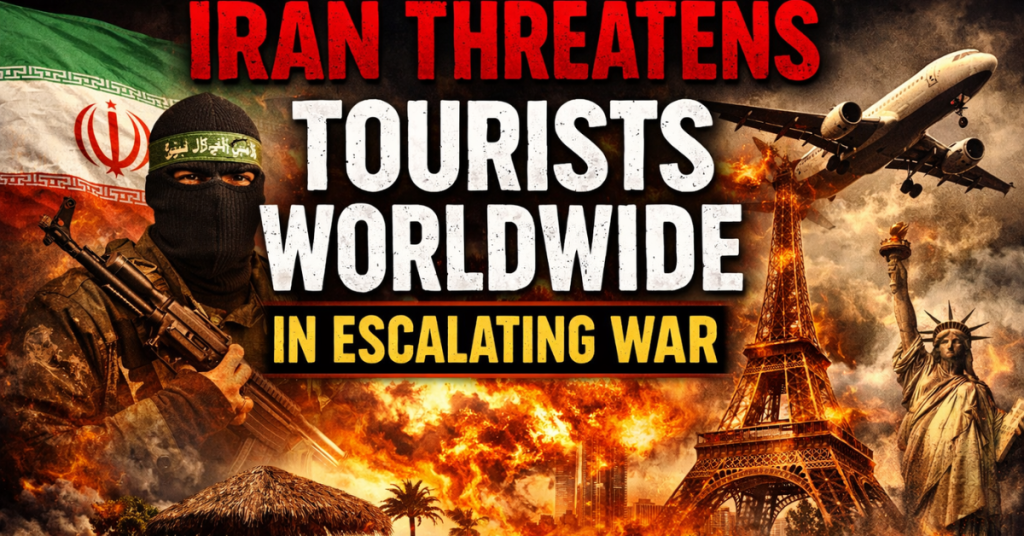
Iran signaled a dangerous new phase in its confrontation with the United States and Israel on Friday, warning that “parks, recreational areas and tourist destinations” around the world would no longer be safe for Tehran’s enemies. The statement, delivered by Iranian military spokesman Gen. Abolfazl Shekarchi, suggests the regime may be trying to expand the war psychologically as much as militarily, shifting attention from the damage it has suffered at home to the fear it can still generate abroad.
The threat matters because it points to something larger than rhetoric. For years, Iran and its network of allied militants have relied on asymmetrical pressure when direct conventional options were limited.
Friday’s message revived concerns that Tehran could once again lean on proxy-style intimidation, sabotage, or terror threats outside the immediate war zone in an effort to raise the cost for Washington and Jerusalem. AP specifically noted renewed fears that Iran could use militant attacks beyond the Middle East as leverage to pressure its adversaries into ending the conflict.
The timing is also revealing. The warning came nearly three weeks after U.S.-Israeli strikes began on February 28, amid repeated claims from American and Israeli officials that Iran’s military infrastructure, weapons industry, and energy facilities have been badly degraded. Yet Tehran is clearly trying to project endurance, not collapse. Iranian officials also insisted Friday that missile production continues despite the sustained bombing campaign, pushing back on claims that their offensive capacity has been crippled.
That messaging campaign appears aimed at several audiences at once. Domestically, Iran wants to show its population that it remains capable of resisting. Regionally, it wants Gulf states and neighboring governments to understand that the war can still spread. Internationally, it wants the West to believe that even if its fixed sites are hit, its capacity for disruption is far from over. Reuters separately reported that the U.S. is sending additional naval and Marine forces into the region as the conflict intensifies, underscoring that Washington is treating the escalation as an active and widening threat, not a symbolic exchange.
For travelers, the threat lands in an already tense security environment. The U.S. State Department issued a Worldwide Caution on February 28 following the start of U.S. combat operations in Iran, warning Americans abroad to exercise increased caution and monitor embassy security alerts. The State Department has also maintained a Level 4 “Do Not Travel” advisory for Iran, citing terrorism, unrest, kidnapping, and wrongful detention risks. Those warnings do not confirm a specific imminent attack on tourist sites outside the region, but they do show that U.S. officials already view the broader environment as unstable and potentially dangerous.
What Iran appears to be doing now is strategic theater with a very real edge. By threatening leisure spaces rather than only military or energy targets, Tehran is trying to widen the sense of vulnerability and remind its enemies that modern conflict is not confined to battlefields. Whether the regime can actually execute attacks on a global scale is still unclear. But even without immediate action, the statement alone serves Iran’s purpose: unsettle civilians, spook governments, strain tourism and security systems, and suggest that no place tied to its adversaries is entirely beyond reach.
Sources consulted: Associated Press, Reuters, U.S. State Department, and additional reporting carrying AP updates.