



Epstein Was Under DEA Investigation — And Nobody Knew
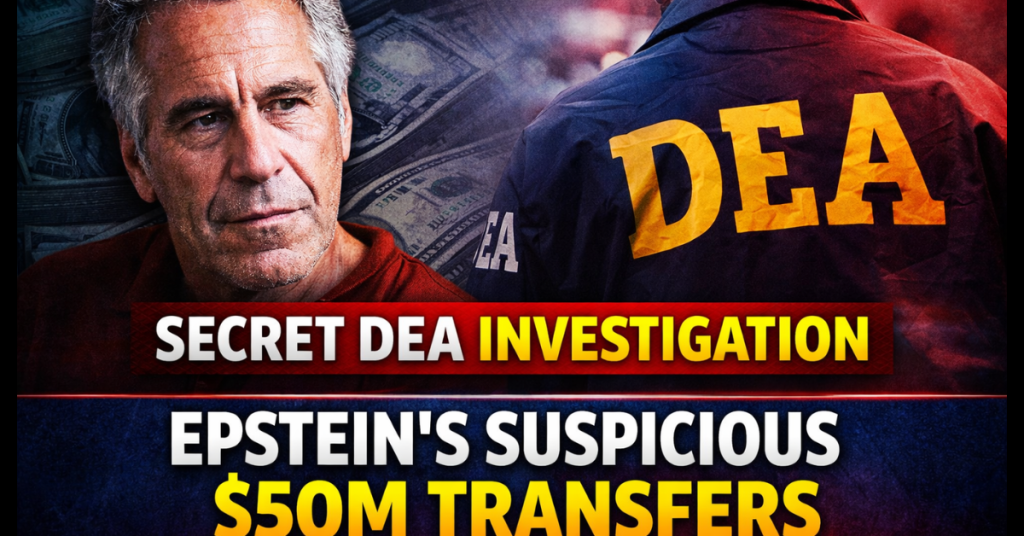
A previously undisclosed Drug Enforcement Administration (DEA) investigative file has revealed that convicted sex offender Jeffrey Epstein was the subject of a long-running federal probe examining suspicious financial transfers potentially connected to illegal drug trafficking and prostitution networks, adding another layer to the already complex web of investigations surrounding the disgraced financier.
According to documents reviewed by CBS News and confirmed through Justice Department records, the DEA opened a case involving Epstein in December 2010 that remained active for at least five years, running parallel to — and apparently separate from — the better-known federal sex trafficking investigations that ultimately led to his 2019 arrest.
A Financial Investigation With a Drug Nexus
The 69-page memorandum, marked “law enforcement sensitive,” indicates Epstein was investigated alongside 14 unnamed individuals suspected of participating in questionable wire transfers tied to criminal activity in New York City and the U.S. Virgin Islands — locations closely associated with Epstein’s business operations and residences.
The document states:
“DEA reporting indicates the above individuals are involved in illegitimate wire transfers which are tied to illicit drug and/or prostitution activities.”
Law enforcement officials familiar with DEA procedures told CBS News that the agency typically requires a demonstrable narcotics connection before opening a case, suggesting investigators believed financial transactions linked to Epstein may have intersected with drug distribution or money-laundering activity.
The investigation was assigned a DEA case number and classified as “judicial pending,” terminology generally used when agents are seeking court authorization for subpoenas, surveillance measures, or search warrants.
Millions in Suspicious Transfers
One of the most significant revelations contained in the file is the identification of roughly $50 million in suspicious wire transfers occurring between 2010 and 2015.
The transactions reportedly moved through accounts tied to multiple international jurisdictions, including:
-
The Cayman Islands
-
France
-
Switzerland
-
New York-based financial institutions
Much of the financial data remains redacted, including the identities of individuals connected to the transfers and the ultimate beneficiaries of the funds.
Financial crime experts note that cross-border transfers through secrecy jurisdictions often trigger federal scrutiny because they can indicate money laundering, tax evasion, or payments connected to illicit enterprises.
Overlapping Federal Investigations
The DEA document also references several other federal probes involving Epstein, highlighting how multiple agencies were examining aspects of his activities simultaneously — sometimes without apparent coordination.
Among the investigations cited:
-
FBI investigation opened in 2006 and still active as of 2015
-
Immigration and Customs Enforcement (ICE) inquiry in West Palm Beach (2006–2008)
-
A Las Vegas ICE investigation active through early 2010
-
A Paris-based ICE operation known as Operation Angel Watch, opened in 2013
Sources familiar with the later 2018 federal sex-trafficking prosecution reportedly told CBS News that prosecutors handling that case were unaware of the earlier DEA probe, raising new questions about information sharing between agencies.
Former federal prosecutors say such compartmentalization, while common in complex investigations, can prevent investigators from seeing the full scope of alleged criminal activity.
Organized Crime Task Force Involvement
The memo appears to originate from a DEA request sent to an Organized Crime Drug Enforcement Task Forces (OCDETF) Fusion Center in Virginia — an interagency hub designed to coordinate intelligence among federal, state, and local law enforcement agencies targeting large criminal enterprises.
Requests to fusion centers are typically associated with investigations deemed significant or multi-jurisdictional rather than routine background checks, according to former federal investigators.
The heavily redacted nature of the file leaves unanswered whether charges were ever pursued or why the probe did not result in public indictments.
Renewed Questions About Oversight
The discovery of the DEA investigation adds to longstanding questions about how Epstein managed to avoid sustained prosecution for years despite repeated law enforcement scrutiny across multiple jurisdictions.
Epstein first faced serious legal consequences in 2008 after pleading guilty in Florida to state prostitution charges as part of a controversial non-prosecution agreement widely criticized as overly lenient. More than a decade later, federal prosecutors in New York charged him with sex trafficking minors — a case that ended abruptly when Epstein died in federal custody in August 2019 while awaiting trial.
The newly surfaced document suggests federal authorities may have been examining financial and organized-crime dimensions of Epstein’s activities even as separate investigations unfolded.
What Remains Unknown
Key details remain concealed behind redactions, including:
-
The identities of the 14 additional investigative targets
-
The precise nature of the suspected drug connections
-
Whether financial institutions filed suspicious activity reports triggering the probe
-
Why the investigation appears not to have resulted in charges
Legal analysts say further document releases or congressional inquiries could clarify whether investigative leads were abandoned, transferred, or folded into later cases.
For now, the DEA file underscores how Epstein’s activities drew attention from multiple branches of federal law enforcement long before his final arrest — and suggests the full scope of investigations into his financial networks may still be emerging years after his death.