



Did Politics Skew Intel on China’s 2020 Election Role?
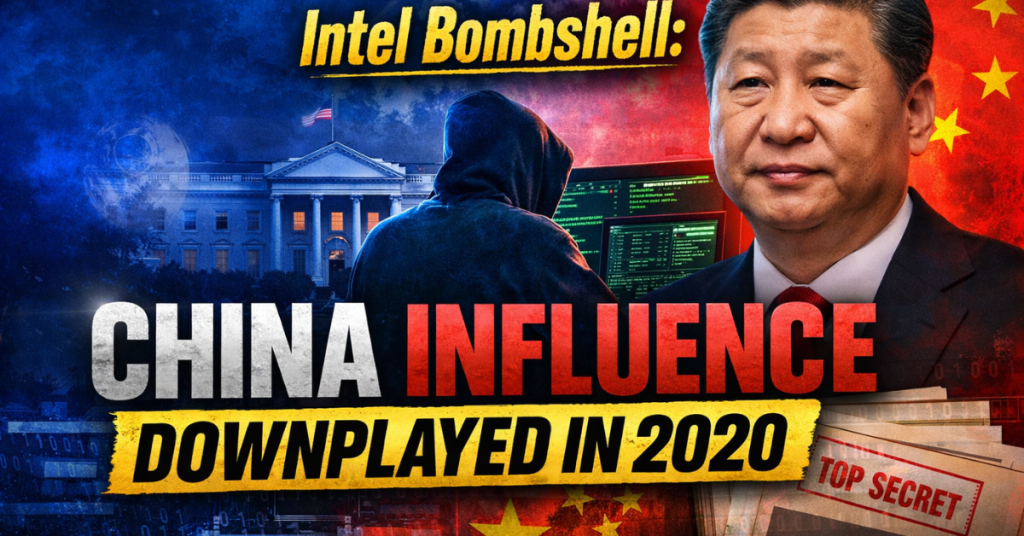
New scrutiny is being placed on how the U.S. intelligence community handled China election influence 2020, following revelations that internal analysts may have softened or withheld conclusions about Beijing’s actions.
At the center is a January 2021 review by intelligence ombudsman Barry Zulauf, which found that some analysts were reluctant to elevate findings on China—in part due to disagreement with then-President Donald Trump’s policies.
According to Zulauf’s findings, analysts feared their intelligence could be used to justify a tougher U.S. stance toward China. This raised concerns not just about foreign interference—but about internal bias shaping national intelligence outputs.
Conflicting Intelligence: Majority vs Minority View
The official March 2021 Intelligence Community Assessment (ICA) concluded that China did not directly interfere in the 2020 election.
However, a dissenting minority—led by cyber intelligence officials—argued that China did attempt to influence the outcome, particularly by:
-
Amplifying anti-Trump narratives
-
Using state media and social media campaigns
-
Targeting U.S. public opinion
This split revealed a deeper issue: different standards were applied to China and Russia, even when behaviors were similar.
Former Director of National Intelligence John Ratcliffe publicly backed the minority view, stating that China did seek to influence the election, and that internal pressures may have suppressed alternative analysis.
Cyber Activity and Voter Data Concerns
Separate intelligence and cybersecurity findings reinforce the broader concern around China election influence 2020.
-
The ODNI confirmed that Chinese intelligence actors analyzed U.S. voter registration data to model public opinion.
-
Cybersecurity firm Mandiant reported large-scale activity by APT41 targeting U.S. government systems.
-
Microsoft identified thousands of attempted cyber intrusions linked to Chinese actors (APT31).
While agencies maintain there was no evidence of altered vote counts, these activities point to a broader strategy:
data collection, influence shaping, and long-term positioning.
Global Pattern of Chinese Election Interference
The U.S. was not alone.
Recent intelligence and government findings show that China has engaged in influence efforts across multiple democracies:
-
Canada (2019): Intelligence agencies confirmed covert interference networks tied to Beijing.
-
Australia & Taiwan: Targeted disinformation campaigns identified by researchers.
-
Cambodia & Hong Kong: Early operations linked to pro-CCP messaging networks.
One major operation, known as Spamouflage (or Dragon Bridge), has been repeatedly tied to Chinese state actors and was active during the 2020 U.S. election cycle—pushing narratives critical of U.S. leadership.
DOJ and Intelligence Findings After 2020
Subsequent investigations have added more context:
-
The Department of Justice indicted multiple Chinese nationals linked to APT31 and MSS operations, targeting political figures and campaign staff.
-
Federal agencies confirmed that foreign actors—including China—accessed political networks and data systems.
-
However, a joint DOJ/DHS/FBI report concluded that no foreign government altered the outcome or voting infrastructure.
This distinction has become central to the debate:
Influence vs. interference
Perception shaping vs. vote manipulation
Why the Debate Still Matters
The controversy surrounding China election influence 2020 is no longer just about foreign activity—it’s about how intelligence is interpreted, filtered, and delivered.
Key unresolved questions include:
-
Were analysts applying different standards to China vs Russia?
-
Did political views influence intelligence reporting?
-
Are current systems equipped to detect subtle influence operations, not just direct interference?
Even more concerning, later intelligence assessments indicated that Chinese leadership expanded influence operations after 2020, believing there would be less risk of retaliation.
The Bigger Picture: Modern Influence Warfare
Unlike traditional election interference, modern influence campaigns often avoid direct tampering.
Instead, they focus on:
-
Shaping narratives
-
Amplifying division
-
Collecting and analyzing voter data
-
Influencing long-term public opinion
This makes detection harder—and accountability even more complicated.