



Casey Means Grilled on Vaccines in Heated Hearing
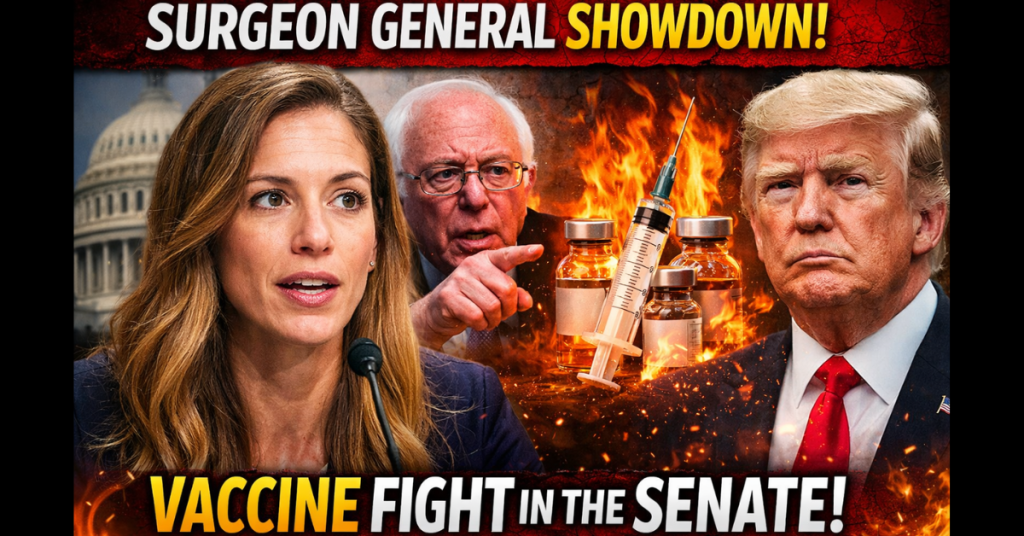
Dr. Casey Means, President Donald Trump’s nominee for U.S. surgeon general, entered her Senate confirmation hearing this week attempting to strike a careful balance on one of America’s most politically charged public-health issues: vaccines.
While Means told lawmakers she believes “vaccines save lives,” her emphasis on individualized medical decision-making — rather than strong universal recommendations — quickly became the central fault line of a contentious confirmation process that now reflects deeper national disagreements about science, trust, and federal health authority.
A Hearing Defined by Vaccine Messaging
Appearing before the Senate Health, Education, Labor, and Pensions (HELP) Committee, Means repeatedly described herself as supportive of vaccination while stressing that medical decisions should ultimately be made through discussions between patients and their physicians.
“I’m supportive of vaccination,” Means said, adding that parents should consult pediatricians before administering medications or vaccines to children.
Her answers satisfied few senators on either side of the aisle.
Republican committee chair Sen. Bill Cassidy, himself a physician, pressed Means on whether she would actively encourage measles vaccinations amid outbreaks that have threatened America’s elimination status for the disease. Means affirmed vaccines’ importance but stopped short of explicitly urging parents to vaccinate — a distinction critics said could weaken public-health messaging.
Democrats, led by ranking member Sen. Bernie Sanders, questioned whether Means possessed the clarity and scientific authority traditionally expected from the nation’s top medical communicator.
Between Public Health and Personal Autonomy
Means’ testimony highlighted a philosophical shift emerging inside federal health policy debates: whether the surgeon general should function primarily as a directive public-health voice or as an advocate for individualized medical autonomy.
Throughout the hearing, Means framed her approach around informed consent and restoring trust between patients and medical institutions. She argued that Americans increasingly distrust health authorities because they feel excluded from medical decision-making.
That position aligns closely with the broader “Make America Healthy Again” agenda promoted by Health and Human Services Secretary Robert F. Kennedy Jr., with whom Means has collaborated politically and philosophically.
Supporters say this approach could rebuild credibility after years of pandemic-era polarization. Critics warn it risks diluting clear guidance during infectious disease crises.
Autism Questions Resurface Old Battles
The most contentious exchange came when senators asked Means whether vaccines cause autism — a claim repeatedly rejected by decades of scientific research.
Means acknowledged existing evidence supporting vaccine safety but declined to definitively rule out environmental contributors still being studied, stating that “science is never settled.”
Public-health experts argue ambiguity on this issue is especially sensitive because the surgeon general’s office historically plays a key role in countering misinformation during outbreaks.
Former Surgeon General Richard Carmona and other health leaders have voiced concern that unclear messaging could undermine vaccination campaigns at a time when immunization rates are declining nationwide.
An Unconventional Nominee
Beyond vaccines, senators scrutinized Means’ unconventional career path.
A Stanford-trained physician, Means left her surgical residency before completion and later became a wellness entrepreneur and metabolic health advocate with a large online following.
Unlike many previous surgeon generals, she currently does not hold an active medical license and has no government experience — factors critics argue could complicate leadership of the U.S. Public Health Service.
Means has pledged to divest from private health ventures and cease promotional activities tied to her business interests if confirmed.
Supporters counter that her outsider background is precisely why she appeals to an administration seeking to disrupt what it views as a reactive healthcare system overly focused on treatment rather than prevention.
A Symbol of a Larger Health Policy Shift
The intensity surrounding Means’ nomination reflects more than a single appointment. The surgeon general role carries limited regulatory authority but enormous symbolic influence — shaping public perception during crises ranging from smoking and HIV to COVID-19.
Historically, surgeon generals have used the position to deliver clear national health directives, particularly on vaccination. Whether Means would redefine that role toward advisory dialogue rather than firm recommendations remains a central question senators must now decide.
Her confirmation battle also arrives amid falling childhood vaccination rates and renewed measles outbreaks, raising stakes far beyond Washington politics.
What Comes Next
The HELP Committee is expected to vote on Means’ nomination in the coming weeks, setting up what could become one of the most ideologically charged surgeon general confirmations in modern history.
At issue is not simply whether Means supports vaccines — she says she does — but what kind of voice America wants guiding public health: a directive authority speaking with scientific certainty, or a facilitator encouraging personal medical choice.
The outcome may shape how future administrations define public health leadership in an era where trust in institutions is as contested as the science itself.