



California Ordered to Pay $4.5 Million After Losing “Gender Secrecy” Case
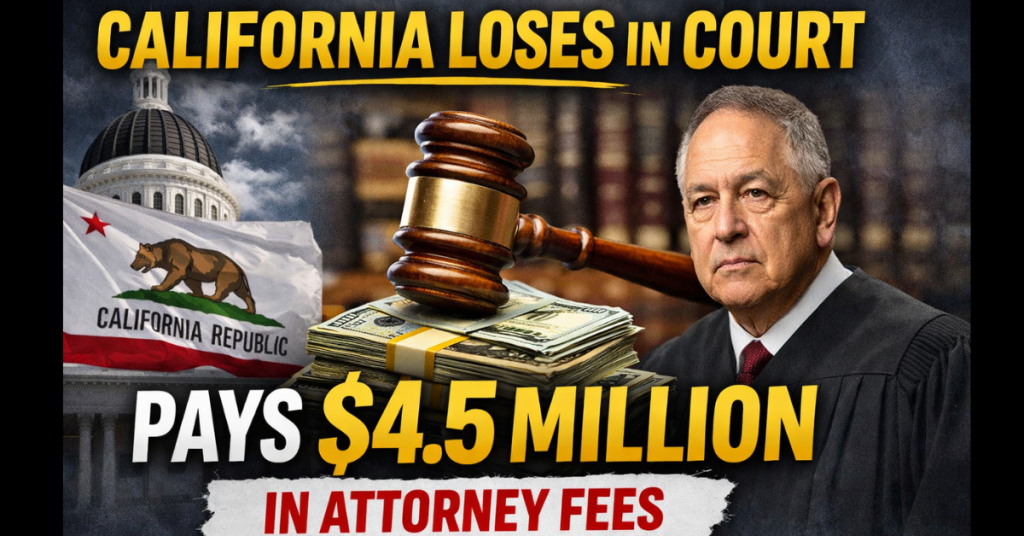
A federal judge has ordered the State of California to pay $4.52 million in attorney’s fees after losing a high-profile legal battle over school policies related to student gender identity and parental notification.
The ruling, issued by U.S. District Judge Roger Benitez, follows years of litigation in a case that has become a focal point in the national debate over parental rights, education policy, and gender identity in schools.
A Costly Legal Defeat
The case, known as Mirabelli v. Bonta, challenged policies that allowed schools to withhold information from parents regarding a child’s gender identity or transition at school.
Judge Benitez awarded the full amount requested by plaintiffs’ attorneys, placing responsibility for the unusually large fee on California’s litigation strategy. He cited the state’s repeated filings, appeals, and procedural challenges as contributing to the mounting legal costs, describing the conduct as “litigation intransigence.”
According to court filings and reporting, state officials repeatedly attempted to dismiss or delay the case—even after prior rulings went against them—leading the court to conclude that the plaintiffs’ legal expenses were reasonably incurred.
The Underlying Constitutional Fight
At the core of the dispute is whether schools can keep information about a student’s gender identity confidential from parents.
In earlier rulings, Benitez issued a permanent injunction blocking such policies, finding they interfered with parental rights and violated constitutional protections.
He concluded that:
- Parents have a fundamental right to direct the upbringing of their children
- Schools cannot actively mislead or withhold key information from families
- State policies that encourage secrecy between schools and parents raise serious constitutional concerns
Other reporting on the case noted that the ruling applied broadly across California, effectively prohibiting school employees from concealing a student’s gender identity from parents.
Supreme Court and Appeals Battle
The case did not remain confined to a district court.
In March 2026, the U.S. Supreme Court intervened, allowing the lower court’s ruling to take effect while litigation continues, signaling that the constitutional questions raised may ultimately reshape national standards.
Meanwhile, California officials—including Attorney General Rob Bonta and Superintendent Tony Thurmond—have continued to defend the policies, arguing they are necessary to protect student privacy and safety.
Appellate courts have issued temporary stays and conflicting interpretations along the way, underscoring the legal complexity and national stakes of the issue.
Why the Fee Award Matters
Legal experts note that attorney fee awards of this size are uncommon, particularly with an added “multiplier” enhancement, which courts reserve for cases deemed exceptionally significant.
The plaintiffs’ legal team argued—and the court agreed—that the case involved:
- Major constitutional questions
- High public importance
- Extended and contentious litigation
As a result, California taxpayers—not the officials who pursued the case—will ultimately bear the financial cost.
A National Flashpoint
The ruling adds fuel to an already intensifying national debate.
Supporters of the decision argue it reinforces parental rights and limits government overreach in family matters. Critics warn that mandatory disclosure could place vulnerable students at risk in unsupportive households.
With similar policies being debated across multiple states, the outcome of this case—and others like it—may shape how schools balance student privacy, parental authority, and constitutional rights for years to come.