



Brooklyn GOP’s Lincoln Day Gala Signals Ambitions Beyond Borough Lines — and a Fight to Flip New York Red
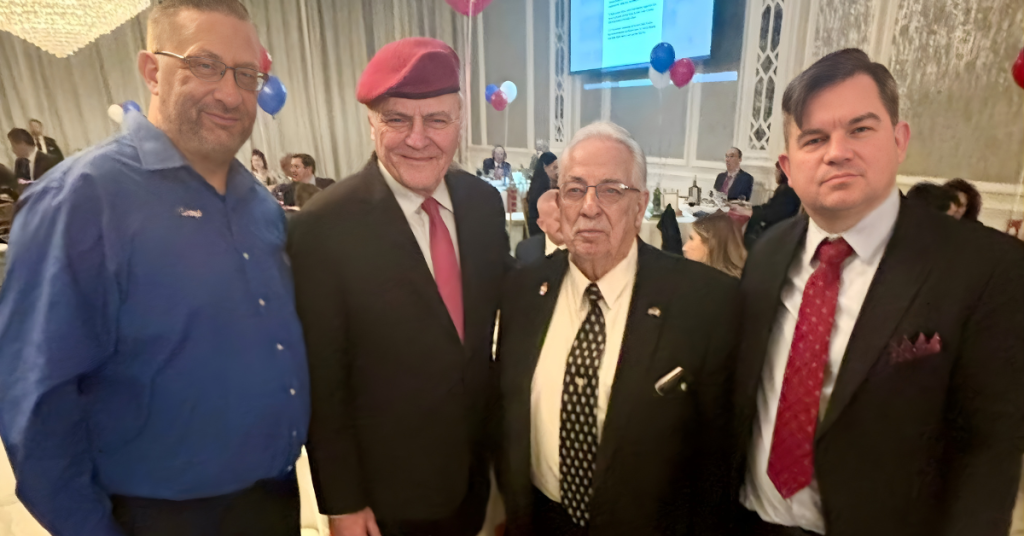
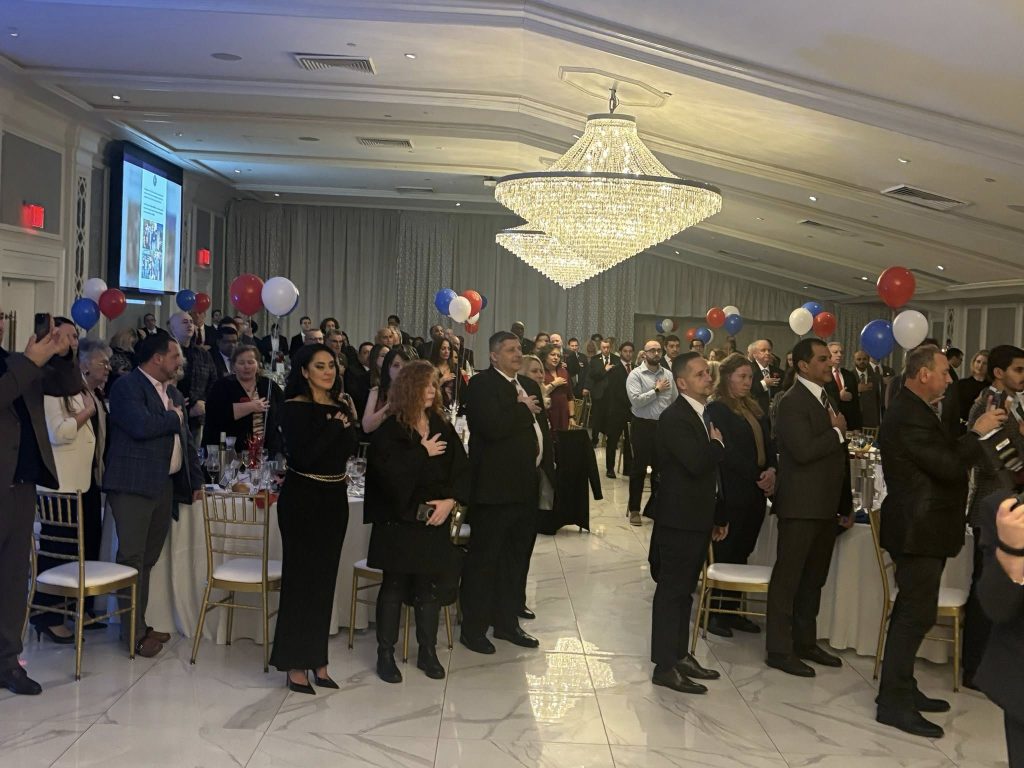
What took place at Mill Basin’s El Caribe last week was more than a local party dinner. The packed ballroom at El Caribe Country Club became the backdrop for something larger: a declaration that New York Republicans believe 2026 could mark a political turning point not only for Brooklyn, but for the entire state.
Hosted by the Kings County Republican Party under Chairman Liam McCabe, the first-ever Brooklyn GOP Lincoln Day Gala brought together a full statewide ticket, members of Congress, state legislators, civic coalitions and young activists. The headliner, Nassau County Executive Bruce Blakeman, used the evening to frame the coming gubernatorial contest as a referendum on affordability, crime policy and energy mandates.
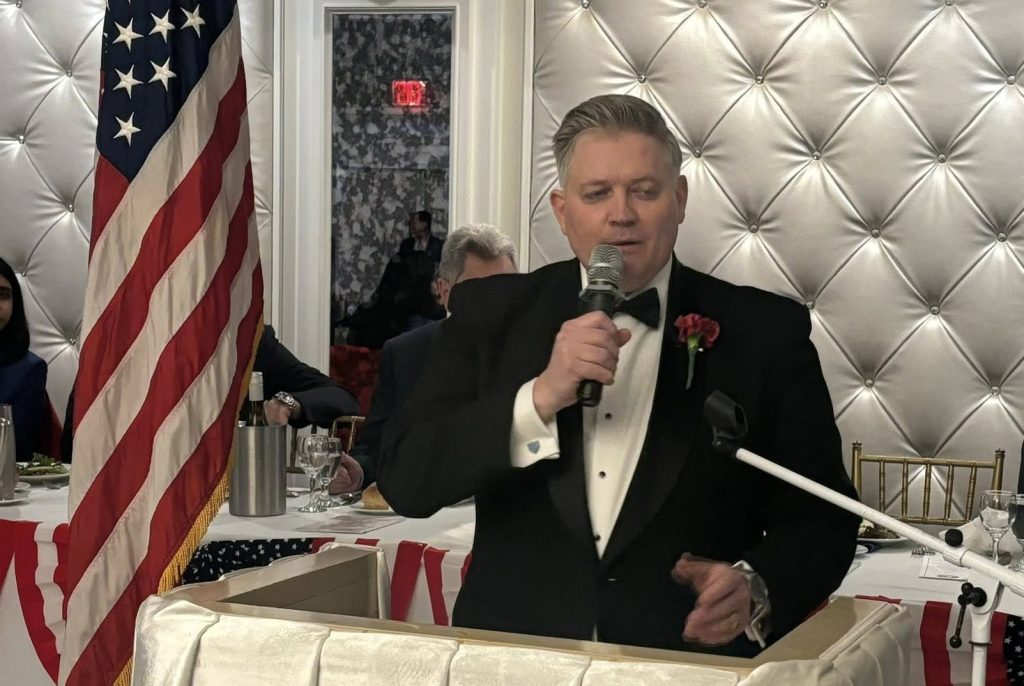
Blakeman argued that flipping the governor’s mansion would fundamentally alter New York’s trajectory. A Republican governor, he suggested, would serve as a check on what party leaders describe as the “radical” policies advanced by Governor Kathy Hochul — particularly on taxation, energy regulations and criminal justice reforms.
For attendees, the argument was straightforward: New York is the nation’s highest-taxed large state, energy costs are rising under aggressive climate mandates, and public safety remains a dominant voter concern. A Republican executive in Albany, they contend, could halt further tax hikes, roll back elements of the state’s climate agenda that they believe drive up utility bills, stop sanctuary state policies, and push back against progressive criminal justice reforms.
A Blakeman victory in 2026 would also have significant downstream implications for New York City. Republican leaders at the gala argued that a GOP governor would serve as a counterweight to what they describe as the radical tax-and-spend agenda of Democratic Socialist mayor, Zohran Mamdani. Speakers warned that policies targeting high earners and corporations — framed by critics as class warfare rooted in Marxist ideology — risk accelerating capital flight, shrinking the tax base, and undermining the city’s and state’s long-term economic stability.
The implications extend beyond Albany.
If Republicans were to capture the governorship in a traditionally blue state, it would reverberate nationally. New York has long been viewed as a Democratic stronghold; a GOP victory at the top of the ticket would signal shifting suburban coalitions, growing outer-borough dissatisfaction and a recalibration of voter priorities in high-cost metropolitan states.
Speakers repeatedly referenced Nassau County as a proof point. Under Blakeman’s leadership, Republicans argue, the county has emphasized backing law enforcement, resisting tax increases and prioritizing public safety. They say that model could be scaled statewide. In fact, Blakeman can claim the mantle of Nassau County being named the safest county in America.
Located on Long Island, it consistently earns this top spot, as ranked by US New & World Report, due to high per-capita spending on police, fire, and EMS services, along with low crime rates that are significantly below the national average.
The political contrast was also drawn sharply at the city level. Party leaders criticized what they described as socialist-leaning policies associated with mayoral candidate Zohran Mamdani and other progressive Democrats. They warned that without stronger executive leadership at the state level, New York City’s regulatory, housing and public safety challenges could intensify.
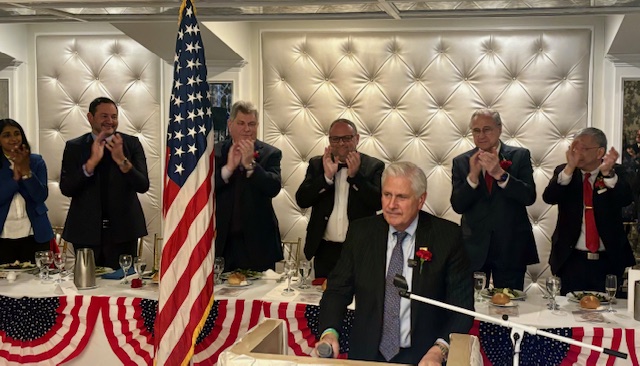
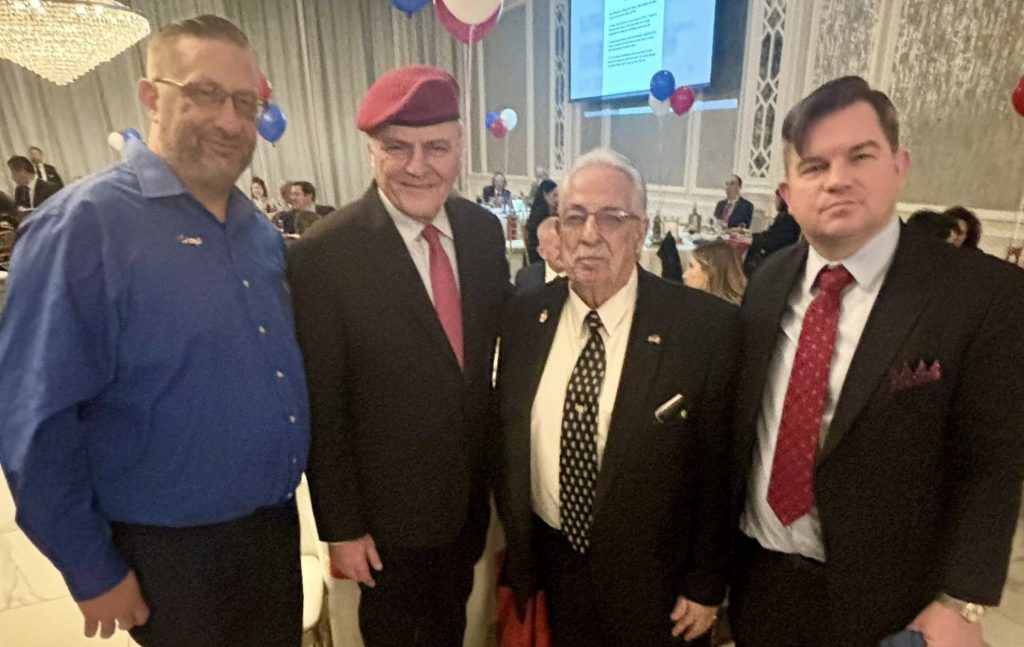
The room was filled with elected officials from every level of government, including Congresswoman Nicole Malliotakis; State Senator Stephen T. Chan; Assemblymembers Michael Novakhov, Lester Chang, and Alec Brook-Krasny; along with New York State Republican Chairman Ed Cox. Former and current party leaders, district leaders, and civic members were present, reflecting what organizers described as an unusually unified front heading into the next election cycle.
Attendees also included young Republicans, immigrant community leaders, faith-based organizations and other Brooklyn political figures. The gala drew grassroot energy of political action clubs such as New Yorkers First headed by Ron Canterino, The DJT Club, led by Jimmy Wagner, The Community First Republican Club, founded by former Councilman Ari Kagan, was well represented, as were the New York Young Republicans and various other coalitions, including the Georgian American Republican Alliance and Pakistan American Republican Party.
Malliotakis, the only Republican representing a New York City congressional district, framed the fight as existential for outer-borough representation, as she herself faces a redistricting battle, which is heading towards the Supreme Court.
Meanwhile, attorney general candidate Saritha Komatireddy and comptroller candidate Joseph Hernandez emphasized prosecutorial accountability and fiscal oversight, reinforcing a broader message of restoring institutional balance.
Beyond speeches, the symbolism mattered.
Organizers described the event not as nostalgia for Lincoln’s legacy alone, but as a recommitment to constitutional governance, interethnic coalition-building and grassroots mobilization.
For New York Republicans, the strategy is clear: consolidate suburban strength, grow outer-borough turnout, and nationalize issues of affordability, energy costs and public safety. If successful, they argue, a Republican governor in Albany would not only check Hochul’s agenda but also reshape the balance of power in a state that has for years set the tone for progressive policy nationwide.
Whether the enthusiasm inside El Caribe translates into votes remains to be seen. But if the Lincoln Day Gala was any indication, Brooklyn Republicans are positioning themselves not as a minority party managing decline — but as a movement preparing for a statewide fight.
A Blakeman victory in 2026 would also have significant downstream implications for New York City. Republican leaders at the gala argued that a GOP governor would serve as a counterweight to what they describe as the radical tax-and-spend agenda of Democratic Socialist mayoral candidate Zohran Mamdani. Speakers warned that policies targeting high earners and corporations — framed by critics as class warfare rooted in Marxist ideology — risk accelerating capital flight, shrinking the tax base, and undermining the city’s long-term economic stability.
Party strategists see New York as a bellwether. If a Democratic Socialist model were to expand unchecked in America’s largest city, they argue, it could embolden similar movements in other major municipalities already flirting with progressive taxation schemes and aggressive redistribution policies. Conversely, a Republican win at the gubernatorial level could signal resistance to that trend — shaping not only state governance, but the broader national debate over economic policy, public safety, and the future direction of a Democratic Party that critics say is drifting further left.
The path to flipping New York remains steep. Democrats retain overwhelming enrollment advantages statewide. But recent elections have shown tightening margins in suburban counties and surprising Republican gains in parts of Brooklyn, Queens and Staten Island.
For Brooklyn Republicans, the message was clear: flipping the governor’s mansion would not only alter Albany’s policy direction — it would reshape the political balance between city and state, potentially influencing the trajectory of urban governance nationwide.