



Anti-ICE Protesters Storm Minneapolis Church During Worship
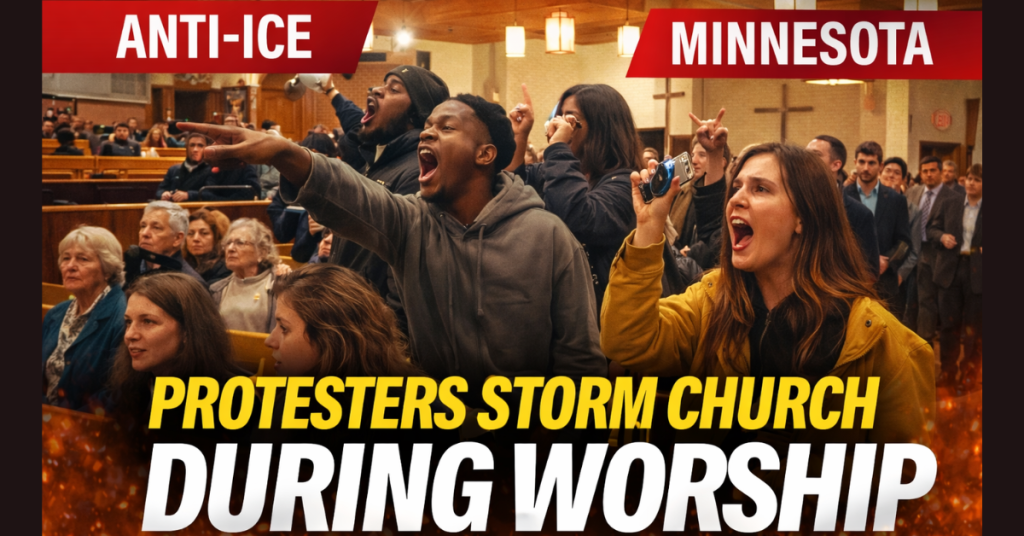
Anti-ICE demonstrations in Minnesota escalated over the weekend when protesters entered a Christian church in Minneapolis and disrupted a Sunday worship service, shouting slogans and confronting parishioners during prayer. The incident has drawn condemnation from religious leaders, civil-liberties advocates, and federal officials, while intensifying an already volatile debate over immigration enforcement, protest tactics, and religious freedom.
What Happened at Cities Church
On Sunday, several dozen protesters entered Cities Church during a worship service and interrupted congregants with chants including “ICE out” and “Justice for Renee Good.” Video footage livestreamed by Black Lives Matter Minnesota shows protesters shouting over prayers and sermons, with parishioners—some visibly shaken—remaining seated as the disruption continued.
According to multiple reports, the protesters accused the church of failing to oppose federal immigration enforcement actions in the state and demanded that church members publicly challenge ICE operations.
Context: Protests Following Renee Good Shooting
The incident follows days of intensified protests in Minneapolis and surrounding areas after the fatal shooting of Renee Good by an ICE agent. Federal officials have stated that the agent opened fire after Good allegedly attempted to ram the officer with her vehicle—an account disputed by protest organizers.
Demonstrations have since spread across the Twin Cities, including sit-ins at retail locations and confrontations near federal buildings, as calls to halt immigration enforcement have grown louder.
Allegations Involving Church Leadership
Protesters claim that one of the church’s pastors, David Easterwood, also holds a leadership role within the local ICE field office—an allegation that has fueled online outrage. Easterwood was reportedly present during the service disruption. Federal authorities have not publicly confirmed the protesters’ claims, and no evidence has been released establishing a direct conflict between the pastor’s religious role and ICE operations.
Religious Leaders Respond
Dr. Joe Rigney, a former pastor at Cities Church, criticized the protest tactics in interviews with national media, describing the incident as alarming and inappropriate.
“To watch people disrupt, frighten children, and harass churchgoers who are simply trying to worship God is remarkable—and disturbing—in America,” Rigney said, emphasizing that the church does not engage in partisan politics.
Federal and State Reactions
The U.S. Department of Justice confirmed it is reviewing the incident. Attorney General Pam Bondi posted on X that intimidation of religious worshippers and attacks on law enforcement would be met with “the full force of federal law.” Assistant Attorney General Harmeet Dhillon likewise stated that the DOJ considers the matter a serious constitutional issue involving freedom of assembly and worship.
Minnesota Governor Tim Walz issued a statement through a spokesperson condemning the disruption of religious services while reiterating support for peaceful protest. The spokesperson emphasized that while public dissent is protected, interrupting worship services crosses a line.
Legal and Constitutional Questions
The episode has reignited debate over the boundaries between protected protest activity and unlawful disruption. Legal scholars note that while the First Amendment safeguards protest and speech, it also protects the free exercise of religion—rights that can come into conflict when demonstrations enter private religious spaces.
Federal civil rights statutes and state trespass laws may apply depending on how authorities classify the incident, particularly if parishioners felt threatened or unable to continue worship.
A Broader Pattern of Escalation
The church disruption reflects a broader escalation in protest tactics nationwide, where demonstrations increasingly target private institutions—churches, homes, and businesses—associated with public officials or law enforcement. Critics argue this trend risks undermining public sympathy for protest causes, while supporters contend it is necessary to force moral accountability.
What Happens Next
The DOJ’s review will determine whether federal charges or civil actions are warranted. Meanwhile, Minnesota officials face growing pressure to balance de-escalation, constitutional protections, and public safety as protests continue.
At stake is more than a single incident: the confrontation highlights deep tensions over immigration policy, protest boundaries, and the role of religious institutions in political conflict—issues likely to remain flashpoints in the months ahead.