



What the St. Paul Church Incident Reveals About Protecting Worship
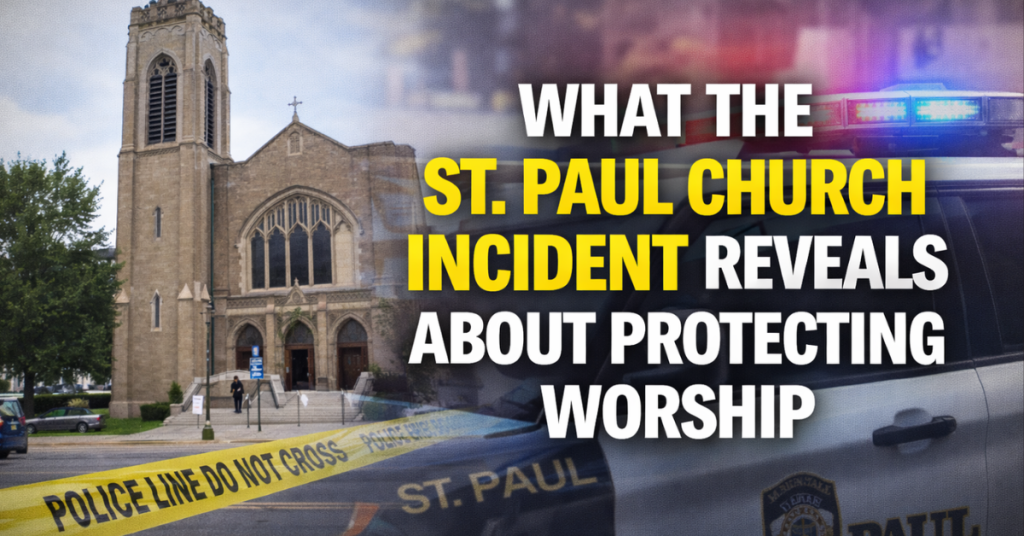
An incident at a church in St. Paul, Minnesota, reported yesterday, has renewed debate over the security of religious institutions and the broader issue of religious freedom in the United States. While details of the event continue to be reviewed by authorities, the episode has prompted renewed political discussion about how churches are protected under U.S. law and what role federal legislation may play in safeguarding the right to worship.
Some lawmakers and advocacy groups argue that the incident reflects a broader vulnerability facing religious institutions amid increasing political polarization. They warn that protections for churches and faith-based organizations should not be taken for granted and point to international examples where religious freedom has been significantly restricted under centralized political systems.
Comparisons to China’s Religious Policy
Advocates raising concern frequently reference China’s system of religious regulation, where worship is permitted only under strict state oversight. In China, religious organizations are required to register with the government, comply with ideological guidelines, and accept state monitoring. Independent or unregistered churches—often referred to as “house churches”—have faced closures, fines, and arrests of clergy.
Human rights organizations have documented cases in which religious gatherings were disrupted or disbanded, religious leaders detained, and places of worship demolished for operating outside approved frameworks. These policies are enforced through national law and reflect the Chinese government’s view that independent religious authority can pose a challenge to state control.
Supporters of stronger religious protections in the U.S. argue that these examples illustrate how freedom of worship can erode when governments gain broad regulatory authority over civil institutions.
The SAVE Act and Its Supporters’ Argument
In response to concerns about religious liberty, proponents are calling for passage of the SAVE Act, legislation intended to strengthen legal protections for religious institutions and worshippers. Supporters argue that the bill would reinforce existing constitutional safeguards by clarifying limits on government interference in religious practice.
Advocates of the legislation contend that protecting religious freedom requires proactive legal measures, particularly in periods of political and cultural conflict. They argue that without clear statutory protections, churches and faith-based organizations may face increased regulatory or enforcement pressure.
Critics of the SAVE Act, meanwhile, have questioned whether additional legislation is necessary given existing First Amendment protections, and have raised concerns about how such laws might be applied.