



ACIP Weighs Major Changes to Childhood Vaccine Schedule
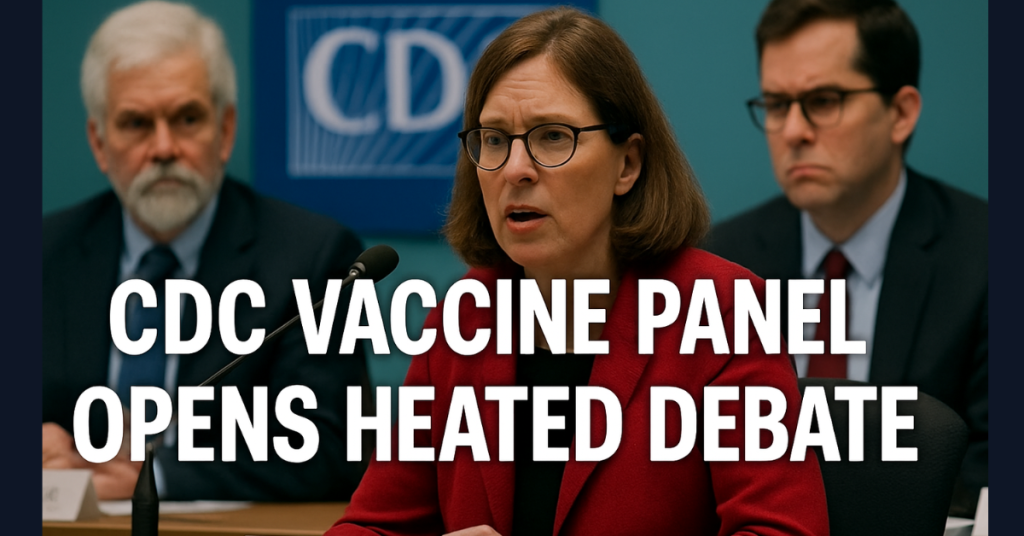
The CDC’s Advisory Committee on Immunization Practices (ACIP) opened its two-day meeting this week with some of the most contentious votes in recent memory. On the table were possible changes to the childhood vaccine schedule for the Measles, Mumps, Rubella, and Varicella (MMRV) vaccine, as well as the birth-dose of the Hepatitis B (Hep B) vaccine.
Already, the first day revealed confusion, dissent, and a growing recognition that public trust in vaccine policy is under strain.
MMRV Vote: No Longer for Children Under Four
The first vote of the day was narrowly approved: ACIP agreed, 7-4, to update the schedule so that children under age 4 should not receive the combined MMRV vaccine. Instead, they would continue to receive separate MMR and varicella shots. Dr. Robert Malone abstained, citing his role as an expert witness in an ongoing whistleblower lawsuit against Merck over the mumps vaccine component.
A second vote on whether the Vaccines for Children (VFC) program should restrict MMRV eligibility to ages 4–12 was rejected, with eight members voting no, one in favor, and three abstaining. Some members openly admitted they did not have the full text of the proposal in front of them at the time of the vote — an error that underscored the procedural confusion hanging over the meeting.
Hepatitis B: Trust, Not Safety, at Stake
Discussion around the Hep B birth dose grew especially tense. Votes on Hep B recommendations were postponed until Friday after discrepancies emerged between ACIP and VFC guidance.
Dr. Malone argued that the public’s loss of trust, not a specific safety signal, was driving the committee to reconsider the universal Hep B birth dose:
“The immediate provision of this vaccine at the time of birth, often without true informed consent, has resulted in a significant decrease in public support for vaccination.”
Several members echoed the sentiment that evidence gaps remain. Retsef Levi asked why there are no large, randomized trials to settle the debate, while Dr. Kirk Milhoan urged “an abundance of caution” when making decisions for newborns. Pediatrician Hillary Blackburn noted that any fever in an infant under 28 days is considered a medical emergency, and questioned the wisdom of exposing healthy newborns to that risk.
At the same time, pharmaceutical representatives from Merck and Sanofi urged the committee to stay the course, insisting the Hep B strategy remains both “safe and effective.”
Public Comment: “Secretary Kennedy Must Go”
Nine individuals were selected to speak from over 5,000 written submissions. While most comments reinforced vaccine safety messaging, one former CDC staffer used the opportunity to call for the removal of Health Secretary Robert F. Kennedy Jr., who last June dismissed all 17 prior ACIP members for conflicts of interest.
Parents, students, and advocacy groups also testified. Some likened vaccination to “wearing a seatbelt,” while others raised deeply personal stories of family loss during COVID. Strikingly, none of the public comments questioned vaccine safety outright — but the undercurrent of mistrust and dissatisfaction with policy decisions was evident.
Key Questions Still Unanswered
-
Why is there so little long-term safety data on vaccines given at birth?
-
Should policy emphasize “no evidence of harm” or demand “evidence of no harm” before recommending universal newborn vaccination?
-
How should parents weigh the risks of febrile seizures and other adverse events against the very low risk of diseases like chickenpox?
-
Why are dissenting medical voices — including liaison members — being excluded from ACIP working groups?
These questions remain unresolved as ACIP prepares to reconvene tomorrow for further debate on Hep B and to discuss recommendations for COVID-19 vaccines in children.
Bottom Line
The first day of ACIP’s September meeting revealed deep fractures in America’s vaccine policy debate. Experts clashed over safety data, conflicts of interest, and the erosion of public trust. While pharmaceutical companies pressed to maintain current policies, a growing number of doctors and researchers called for transparency, informed consent, and stronger evidence before vaccinating the most vulnerable — newborns.
ACIP will return tomorrow at 8:30 a.m. Eastern to vote on Hep B recommendations and address COVID-19 vaccines. For many parents and practitioners watching closely, the core issue is no longer simply safety — it’s trust.