



IDF Mobilizes After Suspected Border Infiltration Near Eilat
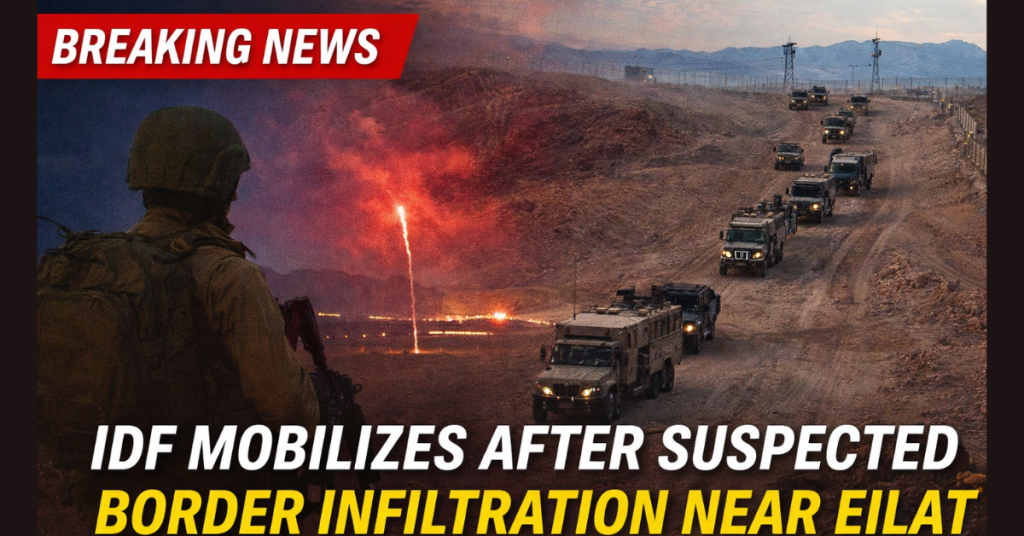
A high-alert security situation near Israel’s border with Jordan on Tuesday evening was ultimately declared a false alarm by the Israel Defense Forces (IDF), following intensive military and police activity triggered by suspected infiltrators crossing into southern Israeli territory.
Initial reports indicated that ten suspects had crossed near the communities of Paran and Yahel in the Arava region, prompting the IDF to deploy elite ground units along with Israeli Air Force jets and drones to the scene in what was effectively a full-scale search operation. Road access to and from Eilat was temporarily halted as a precaution.
By Tuesday evening, the IDF confirmed that the incident was not a terror attack but rather involved Jordanian Border Police officers chasing criminal suspects back across the border. Once this clarification was made, traffic flows resumed and the alert was lifted.
What Happened and Why It Raised Alarm
According to Israeli military statements, the alert was raised after unidentified individuals were observed entering Israeli territory from the east. Given the volatile security environment along many of Israel’s borders, such movements immediately trigger heightened response protocols.
While this specific incident did not involve hostile actors, previous events along the Jordan frontier demonstrate why authorities take potential infiltrations so seriously:
-
In October 2024, two militants reportedly entered from Jordan near Neot HaKikar and engaged in a firefight with Israeli forces, injuring soldiers before being neutralized.
-
In September 2024, a lone gunman at the Allenby Bridge crossing shot Israeli border workers, killing three before being killed by security forces.
These sorts of incidents — though infrequent — underscore real historical and contemporary security vulnerabilities along stretches of the Israel-Jordan frontier.
Border Security Today: Cooperation and Caution
Relations between Israel and Jordan are complex. Both countries maintain formal peace agreements and cooperate on security across their 200-mile border, yet occasional incidents — both genuine and misidentified — highlight the fragile balance. Jordan’s own military periodically reports thwarting attempts to illegally cross its border from other directions.
The recent false-alarm infiltration illustrates this tension well: an aggressive military response on one side was triggered by law enforcement activities on the other — not by armed aggression.
Intelligence and coordination channels likely prevented a misinterpreted event from spiraling into a broader confrontation, demonstrating both the importance and fragility of daily security cooperation between Jerusalem and Amman.
What Comes Next?
For residents along the Arava and other frontier communities, vigilance remains high even when alerts turn out to be false alarms. The IDF and Israel Police will no doubt continue refining detection and response protocols as security technology and border monitoring capabilities evolve.
At the same time, such incidents feed broader debates inside Israel about border infrastructure, rapid response readiness, and the strategic posture along routes that historically have seen conflict as well as peace.