



America’s Food Freedom Revolt Just Took a Major Step
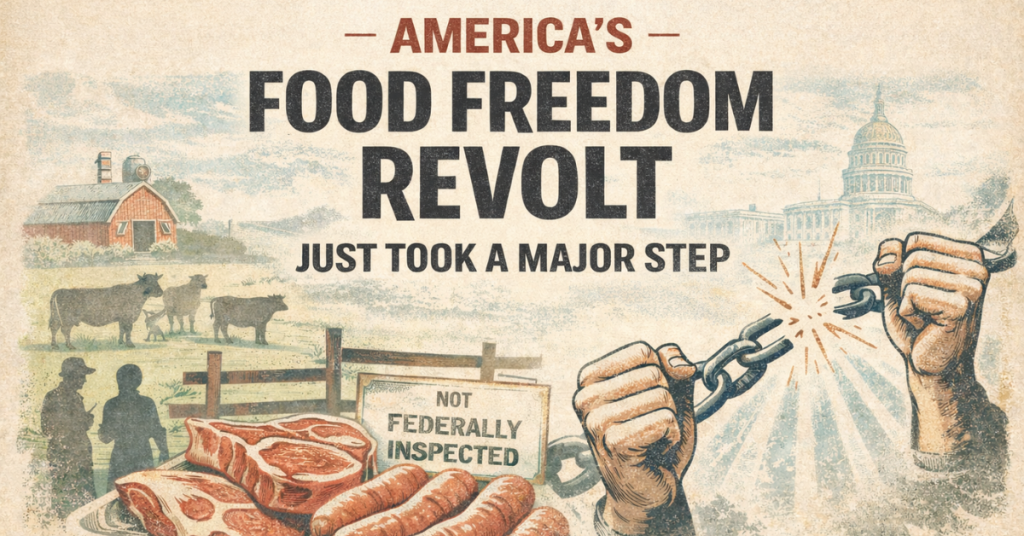
In a decisive vote that could reshape how Americans think about food regulation, the New Hampshire House of Representatives has passed HB396 by a wide 214–119 margin, legalizing the in-state sale of custom-slaughtered red meat directly from farmers to consumers.
At the heart of the bill is a simple but consequential idea: if a farmer raises an animal and a buyer knowingly purchases that meat for personal use within state lines, the federal government should not stand in between them. Under HB396, these transactions are permitted without a USDA inspection stamp, so long as the meat is clearly labeled “Not Federally Inspected” and does not cross state borders.
Supporters argue this is not deregulation for its own sake, but a restoration of common sense and local accountability. For generations, families bought meat from neighbors, local butchers, and nearby farms—long before federal meat inspection regimes centralized food production into a handful of massive processors. HB396 reopens that door, carefully, transparently, and voluntarily.
The bill’s passage comes amid growing concern about food supply fragility. COVID-era shutdowns, processing bottlenecks, and mass livestock culls exposed just how centralized—and brittle—the modern food system has become. When a small number of federally approved facilities control most meat processing, disruptions ripple nationwide. Advocates of food freedom say local processing is not just about choice, but resilience.
Opponents, however, warn that allowing meat sales without federal inspection could increase health risks. Backers counter that the bill does not eliminate standards; it shifts responsibility. Buyers must be informed. Sellers remain liable under state law. And crucially, no one is forced to participate—those who want USDA-inspected meat can continue buying it as before.
The legislation also represents a broader constitutional argument. Because HB396 applies only to intrastate commerce, its authors contend it respects the limits of federal authority under the Commerce Clause. In other words, if the transaction never leaves New Hampshire, Washington should not dictate its terms.
For small farmers, the implications are significant. USDA inspection requirements are often prohibitively expensive for low-volume producers, effectively locking them out of legal markets. By allowing custom slaughter sales within the state, HB396 lowers the barrier to entry, potentially revitalizing rural economies and encouraging more decentralized food production.
The bill now heads to the New Hampshire Senate, where the debate is expected to intensify. If approved and signed into law, New Hampshire would join a growing number of states pushing back against one-size-fits-all food regulations in favor of localized, transparent alternatives.
Whether HB396 becomes law or not, its House passage sends a clear signal: food freedom is no longer a fringe issue. It is rapidly becoming a frontline debate about health, sovereignty, federalism, and who ultimately controls what ends up on the American dinner table.
Subscribe to DailyClout so you never miss an update!